EN

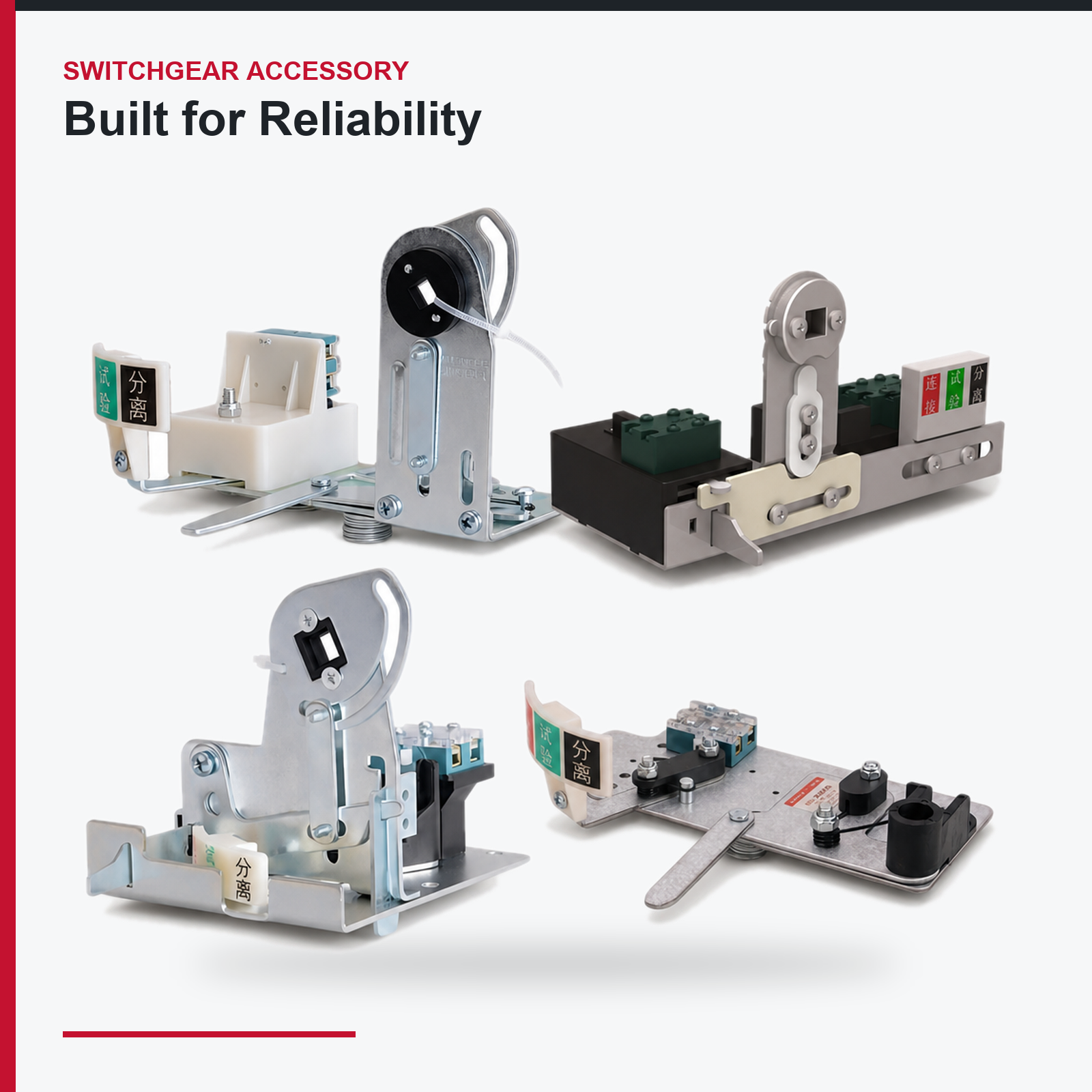
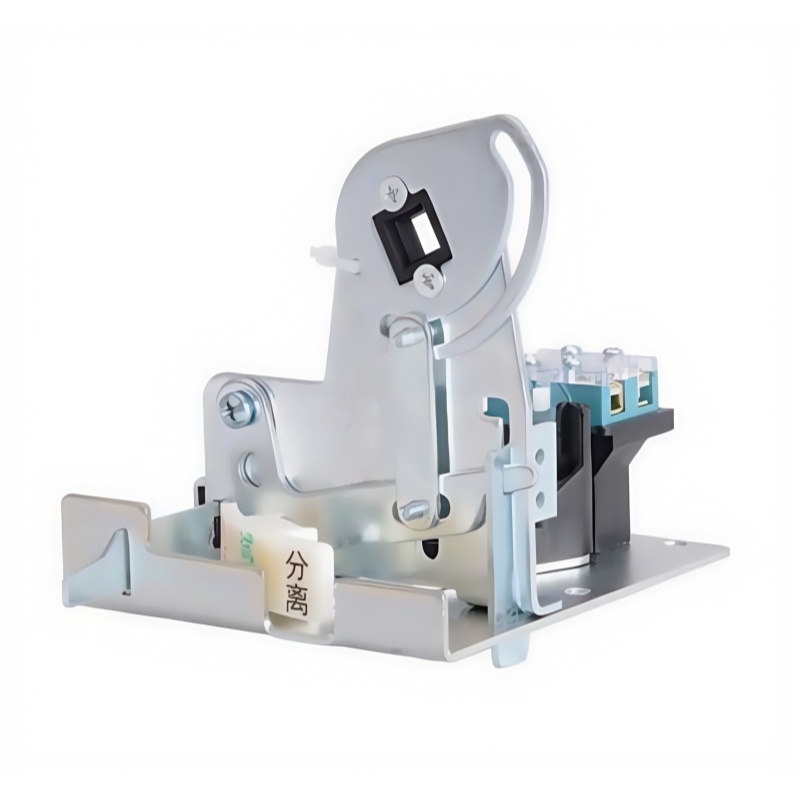
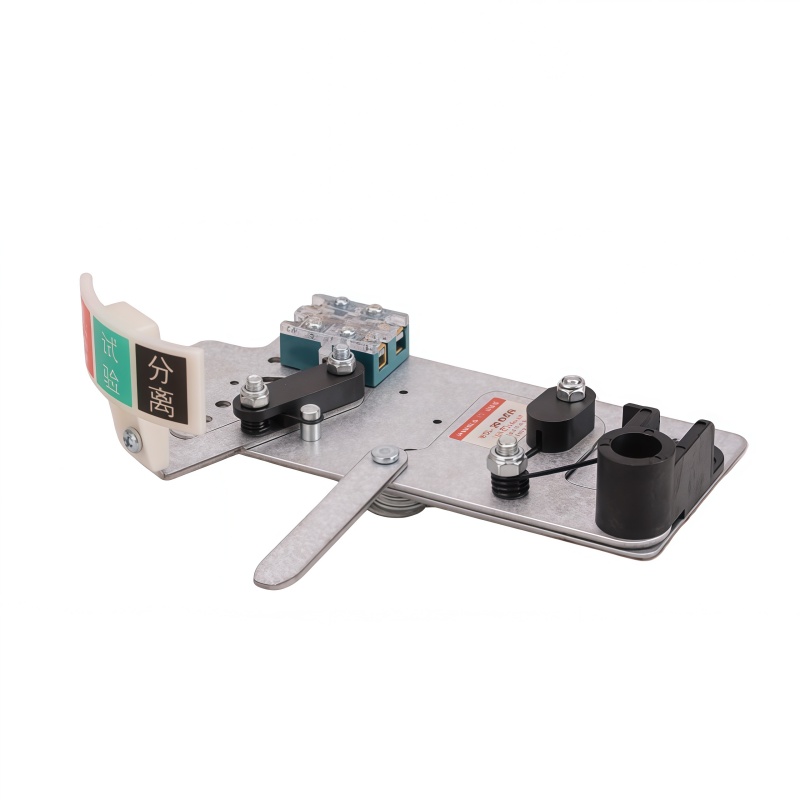
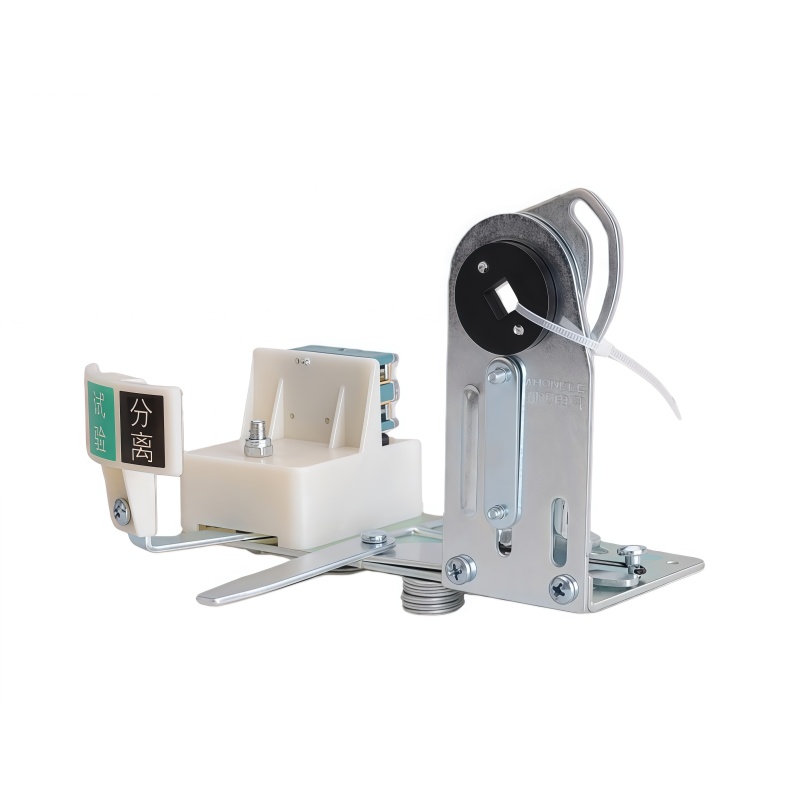
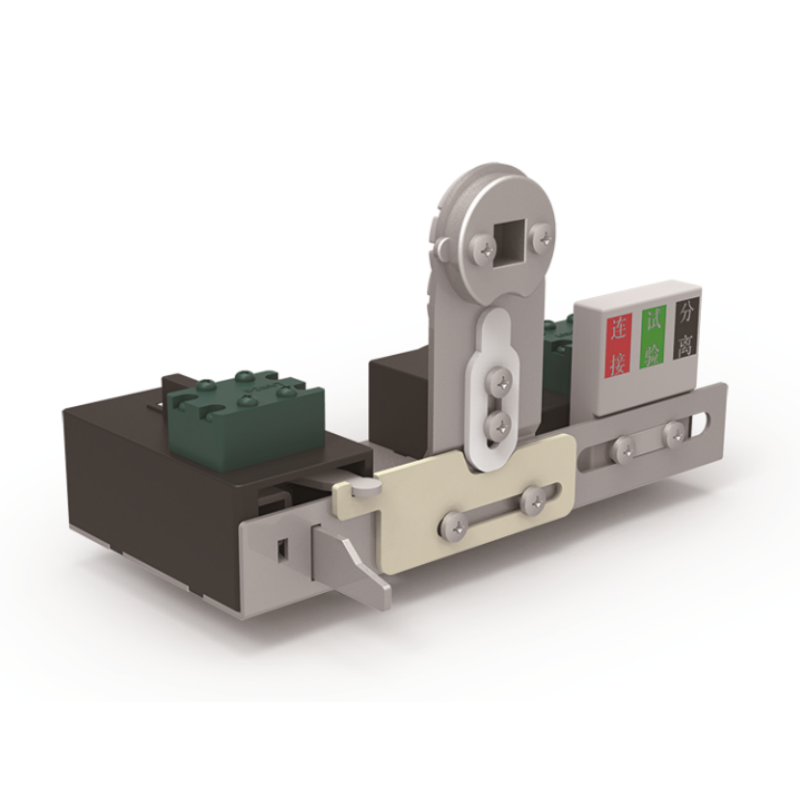
Hand-Pull Racking Mechanism - Three-Position Drawer Operation, 100,000 Cycles
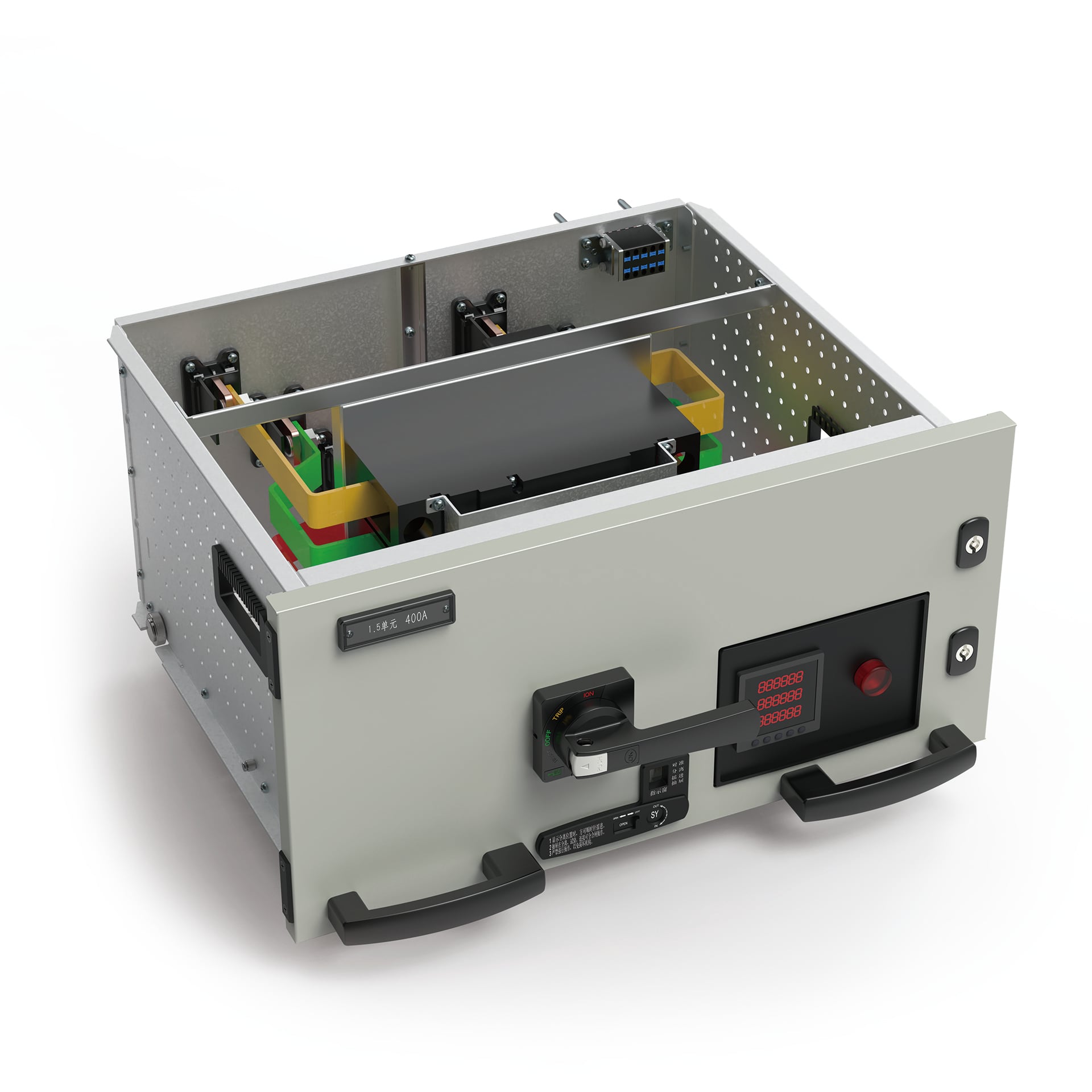
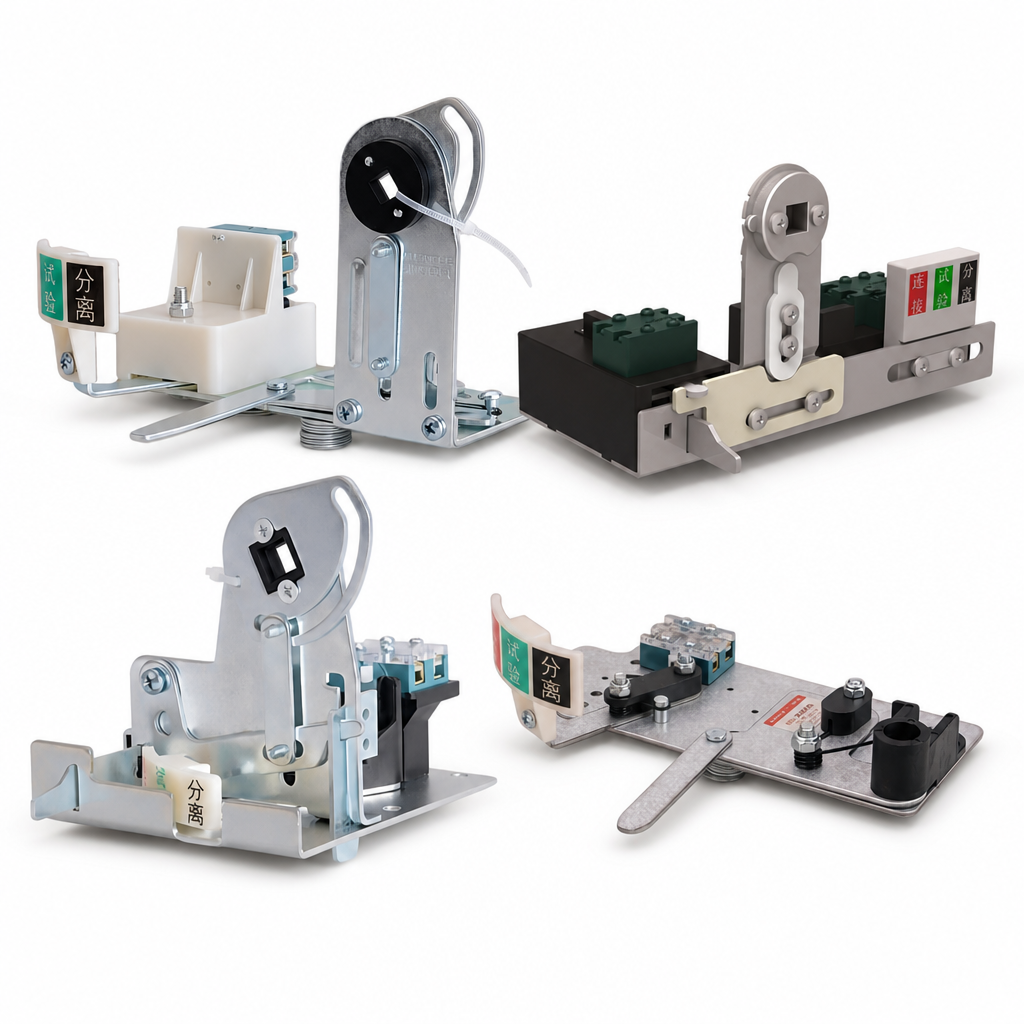
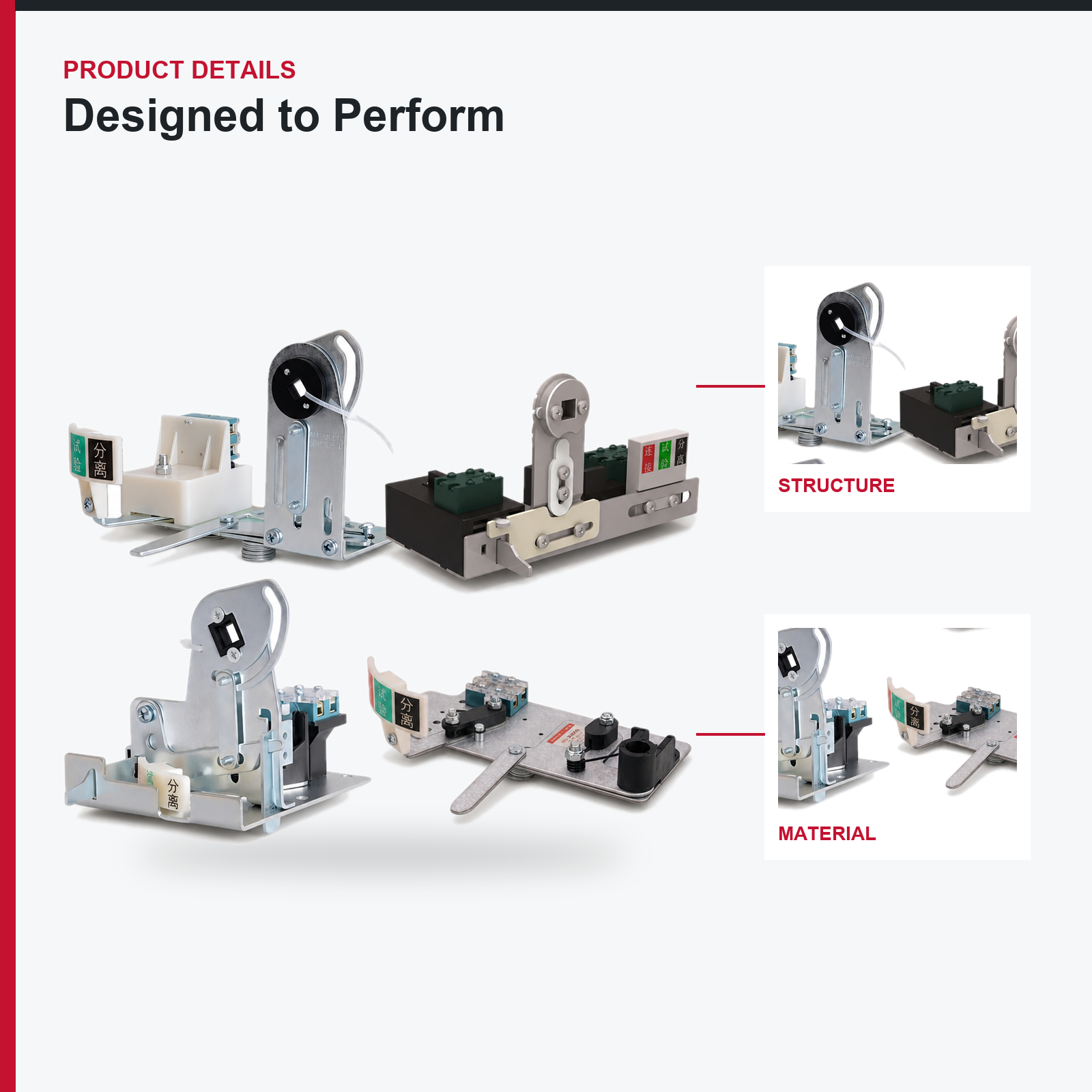
Hand-pull racking mechanism for withdrawable LV drawers. Three-position Connect/Test/Disconnect, positive latching, interlock and padlocking. 100,000 cycles.
- Overview
- Applications
- Technical Data
- Services
- Quality Control
- Recommended Products
Hand-Pull Racking Mechanism - Three-Position Drawer Operation, 100,000 Cycles
Hand-pull mechanism is what moves a withdrawable drawer between Connect, Test and Disconnect, and holds it positively in each. It is the single most safety-critical mechanical component in a withdrawable board, and it is the component that most clearly separates a properly engineered drawer from a locally improvised one.
WHY IT DECIDES WHETHER A WITHDRAWABLE BOARD IS WORTH BUYING
The entire commercial case for a withdrawable board is that a feeder can be isolated, tested and replaced quickly and safely without shutting the section. That case rests completely on this mechanism. If the drawer does not latch positively in Test, the operator cannot trust the position. If the interlock allows racking with the device closed, the drawer breaks load current on isolating contacts that were never designed for it. If the racking force is uneven, the isolating contacts do not seat squarely and start to heat.
WHY WE MAKE IT OURSELVES
This is precision mechanical work - cam geometry, latch engagement, spring rates, contact alignment tolerance - and it is not reliably available on the open market at consistent quality. It is one of the 2,000-plus components we develop in-house, with patents behind the mechanism design, because a bought-in mechanism of unknown provenance puts the whole board's safety case at risk.
THE THREE POSITIONS, AND WHY EACH MATTERS
Connect - power and control circuits both engaged, drawer in service. Test - power contacts separated, control circuit still engaged, so the feeder logic can be tested and the starter sequence proved without energising the motor. Disconnect - both separated, with an isolating distance, and the drawer padlockable for maintenance. The Test position is what allows commissioning and fault-finding on a live board, and it is the position cheap mechanisms most often fail to hold reliably.
WHAT WE SUPPLY
Complete mechanism assemblies for the MOLDVOLT 1/2, 1, 1.5 and 2 unit drawers and the M-Blokset 4M/2, 3M and 6M modules, including handle, cam, latch, position indicator, interlock lever and padlocking provision. Supplied assembled and gauged, with a fit-up drawing and the racking force specification, so your workshop can verify every drawer against a number rather than a feel.
PRIMARY APPLICATIONS
- Drawer racking in GCK motor control centres.
- Drawer racking in GCS withdrawable distribution boards.
- Drawer racking in MNS switchgear.
- Module racking on the M-Blokset platform.
- Replacement mechanism for refurbishment of existing withdrawable boards.
- Spare parts stock for plants operating withdrawable switchgear.
- CKD drawer kits supplied to panel builders assembling their own units.
WHERE IT IS USED IN OPERATION
Every time a plant electrician isolates a feeder for maintenance, tests a starter sequence during commissioning, or swaps a failed unit for a spare. On a busy motor control centre in a process plant this can be several operations per week over a twenty-year life, which is why endurance to 100,000 cycles is a specification and not marketing.
REGIONAL FIT
- Middle East: continuous-process plants in desalination, district cooling and petrochemicals operate drawers frequently; witnessed factory acceptance testing on Saudi SEC and comparable projects includes verification of three-position operation and interlock function.
- Africa: mining and cement plants where a spare drawer swap avoids a technician visit to a remote site. Dust resistance of the mechanism is a real requirement, not a theoretical one.
- Russia and CIS: cold-climate lubricant specification so the mechanism stays free at low temperature in unheated or partly heated switchrooms.
- Eastern Europe: CE marked assemblies to EN 61439-2, where interlock function is part of the assembly verification.
NOT SUITABLE FOR
Fixed-type boards such as GGD, XL-21 and JXF, which have no drawer compartments - use the Manual Operating Mechanism there. Cross-platform use: MOLDVOLT and M-Blokset mechanisms are not interchangeable with each other.
TECHNICAL DATA - Hand-Pull Racking Mechanism
Compliance: IEC 61439-1, IEC 61439-2, GB 7251.1
| Category | Item | Parameter Details |
| FUNCTION | Positions | Connect / Test / Disconnect |
| Position latching | positive detent in each position, with mechanical indication | |
| Operation | manual handle, tool-free | |
| Position indicator | visible with the door closed on gasketed configurations | |
| COMPATIBILITY | MOLDVOLT drawer range | 1/2 unit, 1 unit, 1.5 unit, 2 unit |
| M-Blokset module range | 4M/2, 3M, 6M | |
| Note | the two platforms use different mechanisms and are not interchangeable | |
| INTERLOCKS | Racking interlock | racking is prevented while the device is closed |
| Device interlock | closing is prevented between defined positions | |
| Door interlock | door cannot be opened with the drawer in Connect (defeatable by tool for authorised access) | |
| Padlocking | in Disconnect position, up to 3 padlocks, shackle 4 - 8 mm | |
| MECHANICAL PERFORMANCE | Mechanical endurance | 100,000 operating cycles |
| Racking operating force | specified per drawer size and verified on every unit | |
| Contact alignment tolerance | gauged against the module drawing | |
| Earth contact sequence | earth makes before, and breaks after, the power contacts | |
| MATERIALS | Cam and latch | hardened steel, zinc plated |
| Handle | glass-reinforced polyamide over steel core | |
| Springs | stainless steel | |
| Bearings and guides | self-lubricating, maintenance free in normal service | |
| Salt spray on plated parts | 96 h minimum | |
| ENVIRONMENT | Ambient temperature | -5 ℃ to +40 ℃ standard; -25 ℃ to +55 ℃ with alternative lubricant specification |
| Relative humidity | up to 95% | |
| Dust protection | guide and cam surfaces shielded against ingress | |
| Altitude | up to 2000 m | |
| VERIFICATION ON EVERY UNIT | Position test | three-position operation confirmed with positive latch in each |
| Interlock test | function verified in both directions | |
| Racking force | measured and recorded against specification | |
| Contact engagement | depth gauged against the module drawing | |
| Earth sequence | earth contact make-before / break-after verified |
OPTIONS
Low-temperature lubricant for Russia and CIS | position indication microswitch
for remote signalling | additional padlocking provision | spare cam and latch
sets for long-term maintenance stock | OEM branding
THE PARTS YOU CANNOT RELIABLY BUY LOCALLY
Ask any panel builder in our markets what actually holds up a production batch and it is rarely the breaker. It is the busbar support that arrived cracked, the clamp that does not fit the bar size on the drawing, the handle that has no matching lock, the hinge that does not carry a loaded door. We manufacture over 2,000 of these components ourselves, with 38+ patents behind them, precisely because the open market does not supply them consistently.
1. FULL-RANGE SUPPLY FROM ONE SOURCE
Insulators, busbar holders, cable clamps, hinges, locks, handles, operating mechanisms, isolating contacts, mounting rails and cabinet hardware - one supplier, one packing list, one container. You stop chasing eight vendors for one cabinet.
2. DIMENSIONAL DATA AND FIT-UP DRAWINGS
Every part ships with a dimensioned drawing, bar or panel compatibility table, torque figure and material specification. Your designer can lay out the busbar chamber without ordering samples first.
3. MATCHED SYSTEMS, NOT LOOSE ITEMS
Insulators, holders and clamps are designed as a system with a stated peak withstand rating. Mixing brands is how a busbar chamber that looked fine on paper fails a short-circuit test. Specify the set and the fault rating is a design value, not a hope.
4. CUSTOM AND OEM PARTS
Non-standard sizes, alternative thread forms, brand-marked parts and private-label packaging. Tooling development for volume customers, with drawings held under NDA.
5. STOCK, MOQ AND CONSOLIDATION
Low minimum order quantities on standard items so a distributor can hold a working stock rather than a warehouse. Consolidated loading with cabinets, drawers and devices in one shipment.
6. MATERIAL AND COMPLIANCE DOCUMENTATION
Material certificates, flammability and tracking-index data for insulating parts, plating thickness reports for conductive parts, RoHS declarations, and the component evidence your IEC 61439 verification file needs.
7. AFTER-SALES
24-hour technical response. Free replacement for any part that fails on dimensional or material grounds. Parts kept to the same drawing revision so a repair in year five still fits.
8. COMMERCIAL TERMS
FOB, CFR, CIF, DDP, Ex-Works. Trade Assurance, T/T, L/C. Samples supplied for fit-up verification before volume.
QUALITY CONTROL - THE SMALL PARTS THAT DECIDE WHETHER A BOARD PASSES
Component-level defects are cheap to prevent and expensive to discover. A cracked insulator, an under-plated contact or a clamp that is 2 mm out of tolerance does not show up in the workshop; it shows up during the dielectric test, or during a short circuit. Incoming and in-process inspection is therefore applied to every batch.
MATERIAL CONTROL
1. Raw material verified against certificate on receipt - polymer grade, copper purity, steel grade and thickness.
2. Insulating materials qualified for flammability rating, comparative tracking index and dielectric strength; flame-retardant grades confirmed by batch documentation.
3. Metal parts checked for grade, thickness and surface condition before forming.
DIMENSIONAL CONTROL
4. First-article inspection on every tool and every production run, with a full dimensional report against the drawing.
5. In-process sampling to the agreed AQL, with critical dimensions measured on calibrated gauges.
6. Thread quality and insert pull-out force checked on threaded and insert-moulded parts.
7. Fit-up verification against the mating part - a holder is checked with the actual bar section, not only against a number on a drawing.
PERFORMANCE TESTING
8. Insulating parts: power-frequency withstand voltage, insulation resistance, mechanical bending and cantilever load, and thermal cycling on batch samples.
9. Conductive parts: plating thickness by coating gauge, adhesion, contact resistance, and temperature rise at rated current.
10. Mechanical parts: operating force, endurance cycling, and load test on hinges, locks and clamps.
11. Corrosion: salt spray testing on plated and coated parts, with hours to first defect recorded.
12. Environment: humidity and heat ageing on samples, relevant to Gulf and tropical African installations.
APPEARANCE AND PACKING
13. Visual inspection for cracks, voids, flash, burrs, plating defects and colour consistency.
14. Marking legibility and correctness.
15. Quantity, packing integrity and part-number labelling verified before the carton is sealed.
DOCUMENTATION AND SYSTEM
Material certificates, dimensional reports, test records and RoHS declarations supplied on request and formatted for inclusion in your IEC 61439 verification file. ISO 9001 quality management with recorded, root-caused and closed non-conformances. Samples supplied for your own fit-up verification before volume; third-party inspection by SGS, BV, TUV or Intertek accepted.