EN

What Is a Low Votage Main Distribution Board?
A Low Votage Main Distribution Board (MDB) is the central power distribution unit of a facility's electrical infrastructure. It receives incoming power from the primary source — typically a transformer secondary — and routes it across multiple outgoing circuits for HVAC, lighting, motor drives, process equipment, and other downstream loads. Operating at up to 400V or 415V AC with rated currents from a few hundred amperes to 6300A, a correctly specified Low Votage Main Distribution Board forms the backbone of a reliable and expandable LV power distribution system.
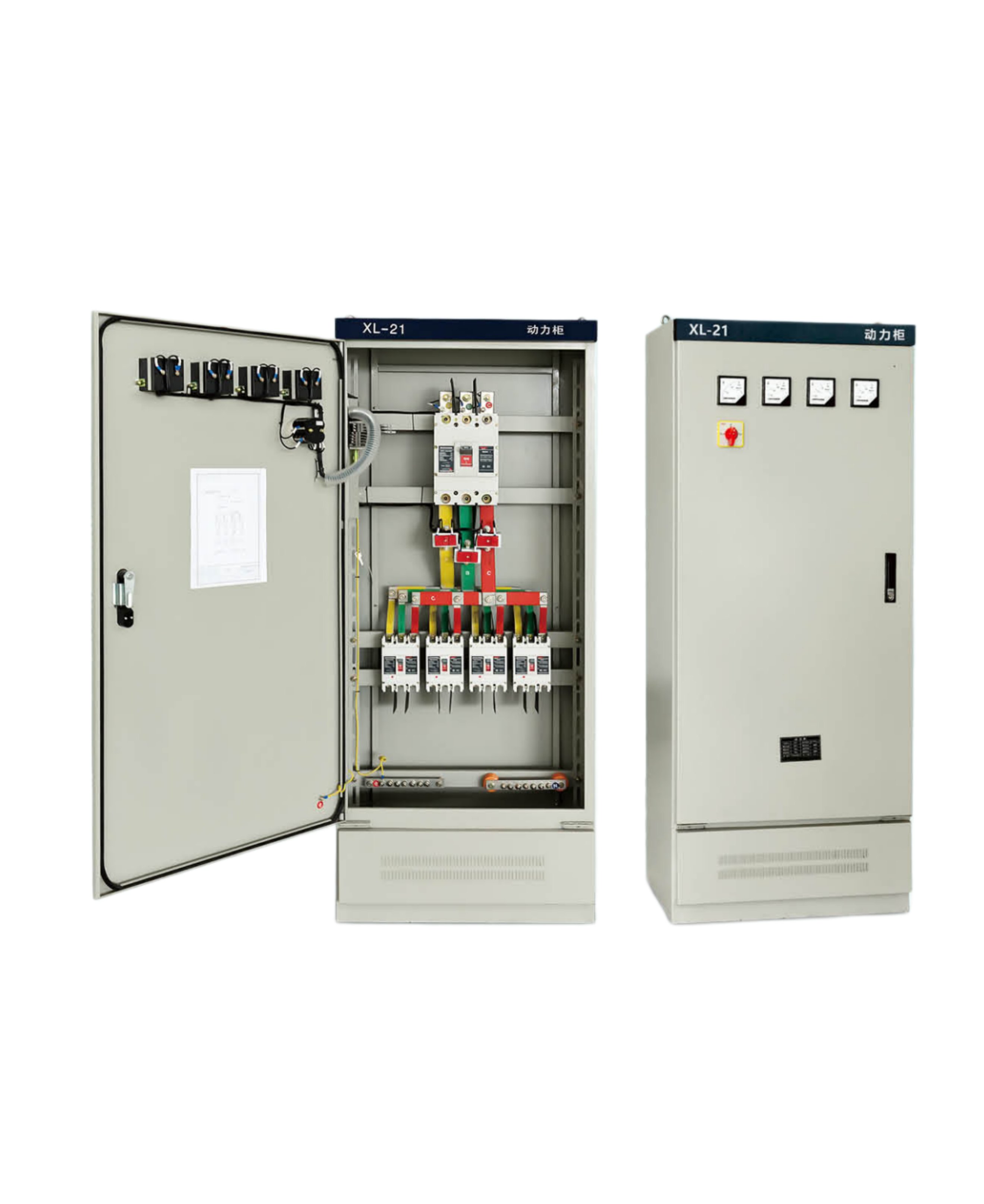
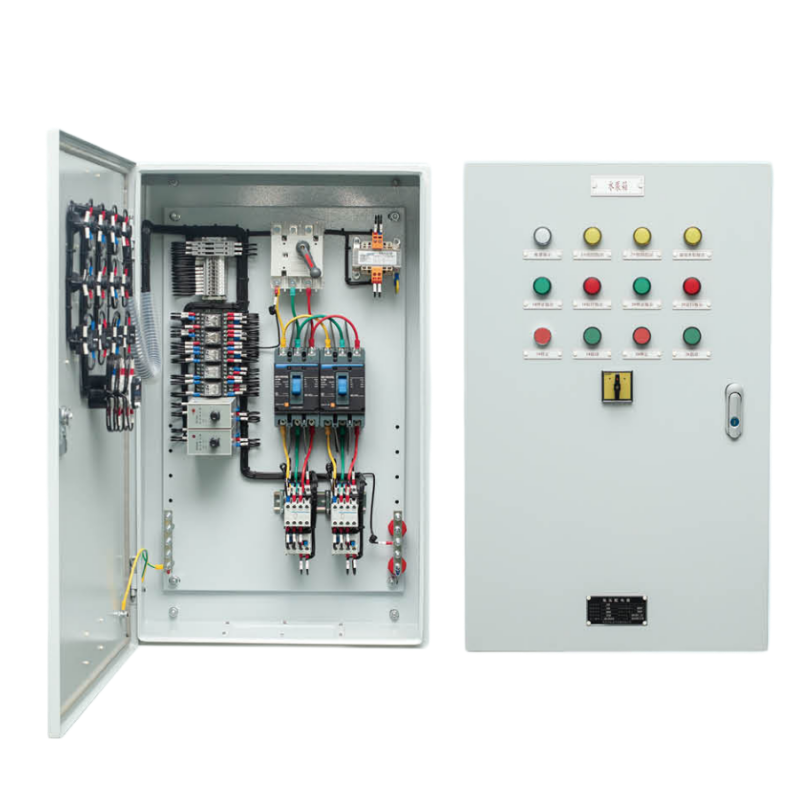
This category covers fixed-type and drawout LV switchgear cabinets, withdrawable motor control centres, floor-standing distribution cabinets, and wall-mounted distribution boxes — all sourced for panel builders, electrical contractors, and project buyers. Complete assembled cabinets, CKD flat-pack kits, and engineering drawings are available across the Low Votage Main Distribution Board range, giving local panel builders the flexibility to produce to the same design standard with their own assembly resources.
Key Product Characteristics
Products in this Low Votage Main Distribution Board category cover the following specification ranges:
- Current Range: Rated from up to 630A (wall-mounted and floor-standing distribution cabinets) to up to 6300A busbar (modular LV switchgear), covering small commercial to heavy industrial MDB requirements within a single product family.
- Short-Circuit Withstand: Rated short-circuit capacities from 50kA to 100kA/1s, with peak ratings reaching 73.5kA and 80kA, ensuring suitability for high-fault-current distribution points in industrial facilities and grid-connected substations.
- Enclosure Protection: IP ratings from IP20 (indoor climate-controlled switchrooms) to IP54 and IP65 (outdoor or industrial environments with dust and moisture exposure), addressing the installation environments encountered across Southeast Asia, the Middle East, and Africa.
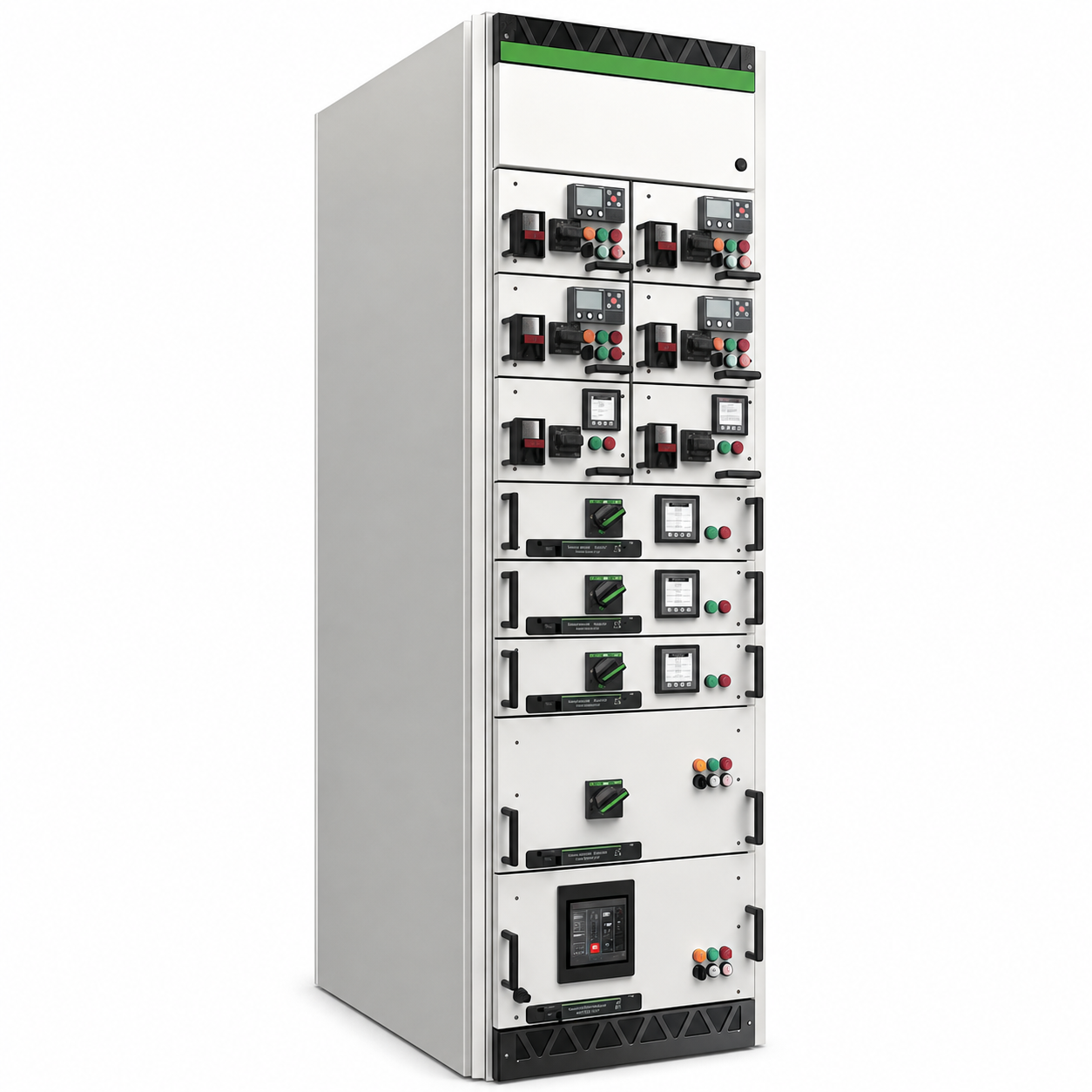
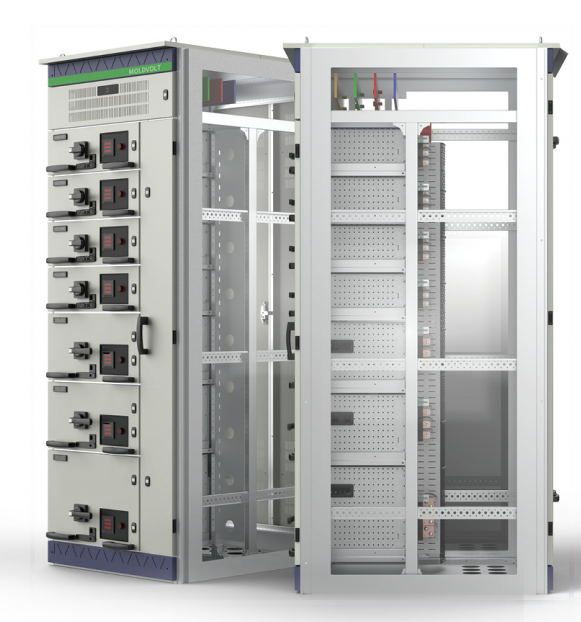
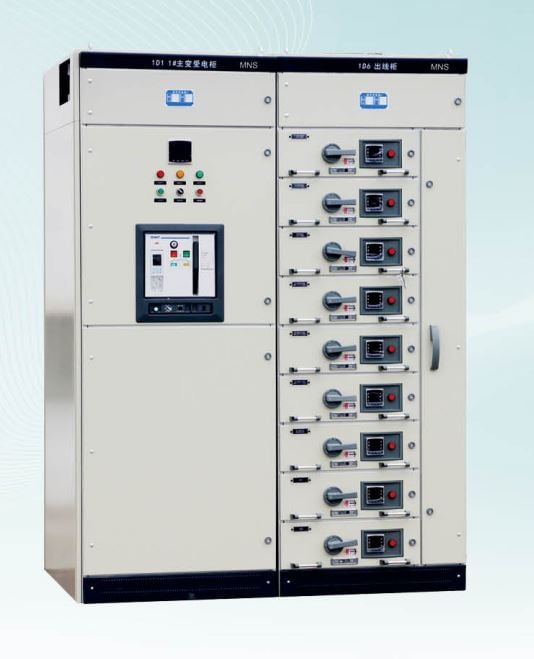
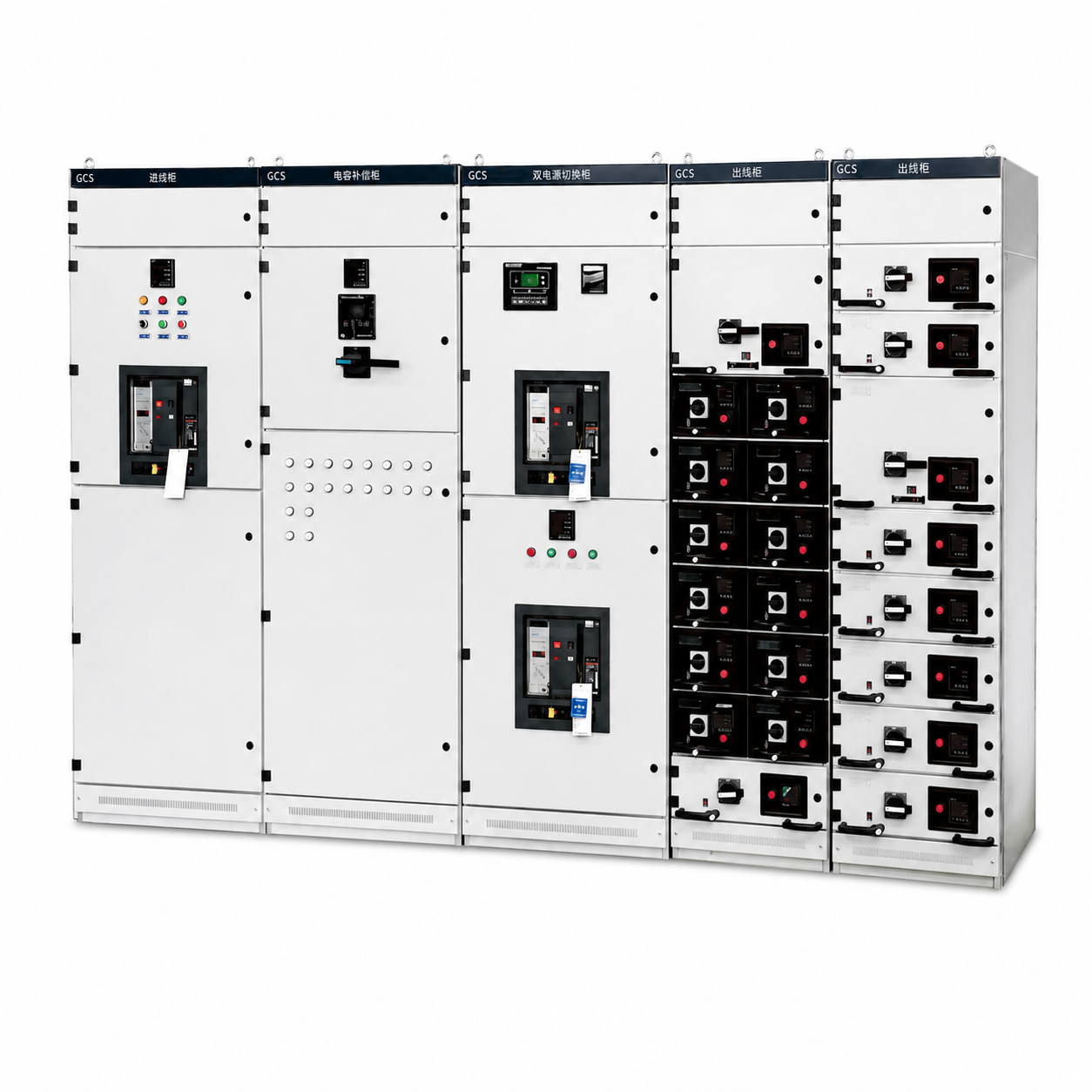
- Form Factor Options: Fixed-type (GGD series), drawout and withdrawable (GCS, GCK, MNS, MOLDVOLT, M-Blokset series), and modular configurations are available. Drawout designs enable individual circuit maintenance without de-energizing the entire board — a significant operational advantage in continuous-process facilities and critical infrastructure sites.
- IEC 61439 Compliance: All Low Votage Main Distribution Board cabinets in this category are designed and tested to IEC 61439. Type-Tested Assembly (TTA) classification requires verification by an accredited third-party test laboratory. The standard edition cited in test reports should match the current published version before project submittal.
- Form 4b Internal Separation: Selected drawout designs (GCS, GCK) include Form 4b separation between functional units and busbars, meeting separation requirements specified in utility and industrial project documents.
- Panel Builder Documentation: Engineering drawings and CKD kit documentation are provided as standard, covering bill of materials, dimensional drawings, and assembly references for local production.
Common Applications
A Low Votage Main Distribution Board from this category is used across a broad range of industries and project types:
- Industrial facilities: Manufacturing plants and process sites where centralized power distribution to motor feeders, process equipment, and utilities requires high current capacity and robust enclosures rated for demanding environments.
- Commercial buildings: High-rise offices, hotels, and retail centres where the MDB feeds sub-distribution boards for lighting, HVAC, elevators, and fire safety circuits — applications where rated current headroom and spare circuit capacity for future load changes are standard procurement requirements.
- Data centres and critical facilities: Environments requiring uninterrupted power distribution, where withdrawable drawer configurations allow individual circuit maintenance without system shutdown.
- EPC and infrastructure projects: Power utilities, grid extension programmes, and new industrial park developments — particularly across Southeast Asia (Indonesia, Vietnam, Thailand) and Africa (Egypt, Kenya) where infrastructure investment generates sustained demand for LV distribution equipment.
- Motor control centres: The GCK withdrawable MCC format addresses applications with multiple motor feeders requiring individual drawer isolation and repeatable BOM structures for panel builder production lines.
How to Choose the Right Low Votage Main Distribution Board
Selecting a Low Votage Main Distribution Board for a project involves a sequential set of decisions. Each step narrows the specification before committing to a form factor or product series.
- Determine load profile and demand factor. Calculate total connected load and apply an appropriate demand factor to establish the required busbar current rating. Build in a minimum 20–25% spare capacity for future additions — a Low Votage Main Distribution Board is typically installed for a 20–30 year service life, and load growth within that period is consistently underestimated during initial project planning.
- Verify system voltage and fault current. Confirm whether the installation is 380V, 400V, or 415V AC and obtain the maximum prospective short-circuit current at the MDB incomer. The rated short-circuit withstand must exceed this value. Under IEC 61439, this is a mandatory verification for Type-Tested Assemblies. Note that the rated current on a nameplate assumes a 40°C ambient temperature — in climates where temperatures regularly exceed 45–50°C, as in Egypt, Kenya, Indonesia, and parts of Brazil, apply the manufacturer's derating curve before finalizing the current rating.
- Choose fixed or drawout configuration. Fixed-type switchgear (GGD) suits installations where planned shutdowns for maintenance are acceptable. Withdrawable and drawout designs (GCS, GCK, MNS, MOLDVOLT, M-Blokset) allow individual circuit drawer isolation while the board stays energized. You might expect the drawout premium to be justified purely on cost grounds — but the real decision driver is operational: how often does the facility need live circuit maintenance, and what is the cost of a full board shutdown?
- Match IP rating to the installation environment. IP20 is adequate for clean, climate-controlled switchrooms. IP30–IP54 covers most industrial indoor and semi-outdoor applications. IP65 is required for washdown areas, coastal environments, and outdoor kiosks. Specifying a Low Votage Main Distribution Board at IP54 for a coastal or industrial outdoor location based on the standard catalog option is a common oversight — ingress through cable entry glands, not the enclosure body, is typically where the IP boundary fails under field conditions. Cable entry sealing should be verified as part of the IP specification.
- Confirm IEC 61439 compliance documentation. For projects with formal submittal review — EPC contractors, infrastructure projects under development bank financing, or utility grid connection approvals — verify that the supplier provides IEC 61439 type test reports from an accredited third-party laboratory. Self-declared compliance is not equivalent for projects where a licensed engineer must sign off on equipment specifications.
- Assess panel builder supply scope. If sourcing for local assembly rather than completed cabinets, evaluate whether the supplier provides CKD kits and engineering drawings for local production to the same design standard. A single-source supply of the LV switchgear enclosure, busbars, ACBs, MCCBs, and accessories reduces BOM coordination complexity and ensures dimensional compatibility — important for panel builders running standard distribution board designs at volume.
Why This Low Votage Main Distribution Board Category Matters
Panel builders and system integrators working with standard distribution board designs benefit from supply consistency. When the busbar system, enclosure structure, and protective devices originate from the same product family with verified dimensional compatibility, the panel assembly process is predictable — and protection coordination studies reflect the actual installed product configuration. Electrical panel builders represent a significant buyer segment for LV switchgear, purchasing in medium volumes with repeatable BOM structures; supply source consistency directly affects production line scheduling and cost predictability.
For project buyers and EPC contractors, the availability of complete assembled cabinets alongside CKD kits and engineering drawings provides flexibility in dividing the supply scope between factory-completed work and local assembly. In markets where import duties on complete equipment differ from component-level rates, this option can have a material impact on landed cost. The documentation package — operation manuals, test certificates, dimensional drawings, and spare parts lists — provided with each Low Votage Main Distribution Board supply covers the requirements of most internationally financed project submittals.
The IEC 61439 compliance framework addresses a practical procurement challenge: buyers in Russia (GOST-aligned), Brazil (ABNT), Indonesia (SNI), and Turkey (TSE) often need to demonstrate that imported switchgear meets the applicable national standard. IEC 61439 type-tested assemblies provide the documentation baseline — provided test reports are current, third-party verified, and cover the specific configuration supplied.
Thermal performance is a concern that procurement decisions can directly influence. Overheating at busbar joints and circuit breaker terminations in LV distribution boards is among the most common issues identified during scheduled thermal imaging inspections — and it almost always traces back to inadequate torque specifications at installation, not manufacturing defects. Selecting a Low Votage Main Distribution Board with clear busbar joint torque documentation and well-specified connection interfaces reduces this long-term maintenance risk from the point of procurement.
Whether sourcing a single Low Votage Main Distribution Board for an industrial facility expansion or a complete supply of LV switchgear panels for a new industrial park project, the products in this category cover the current range, form factor, and enclosure protection options required for most LV distribution applications across commercial, industrial, and infrastructure sectors.