EN

Static Contact
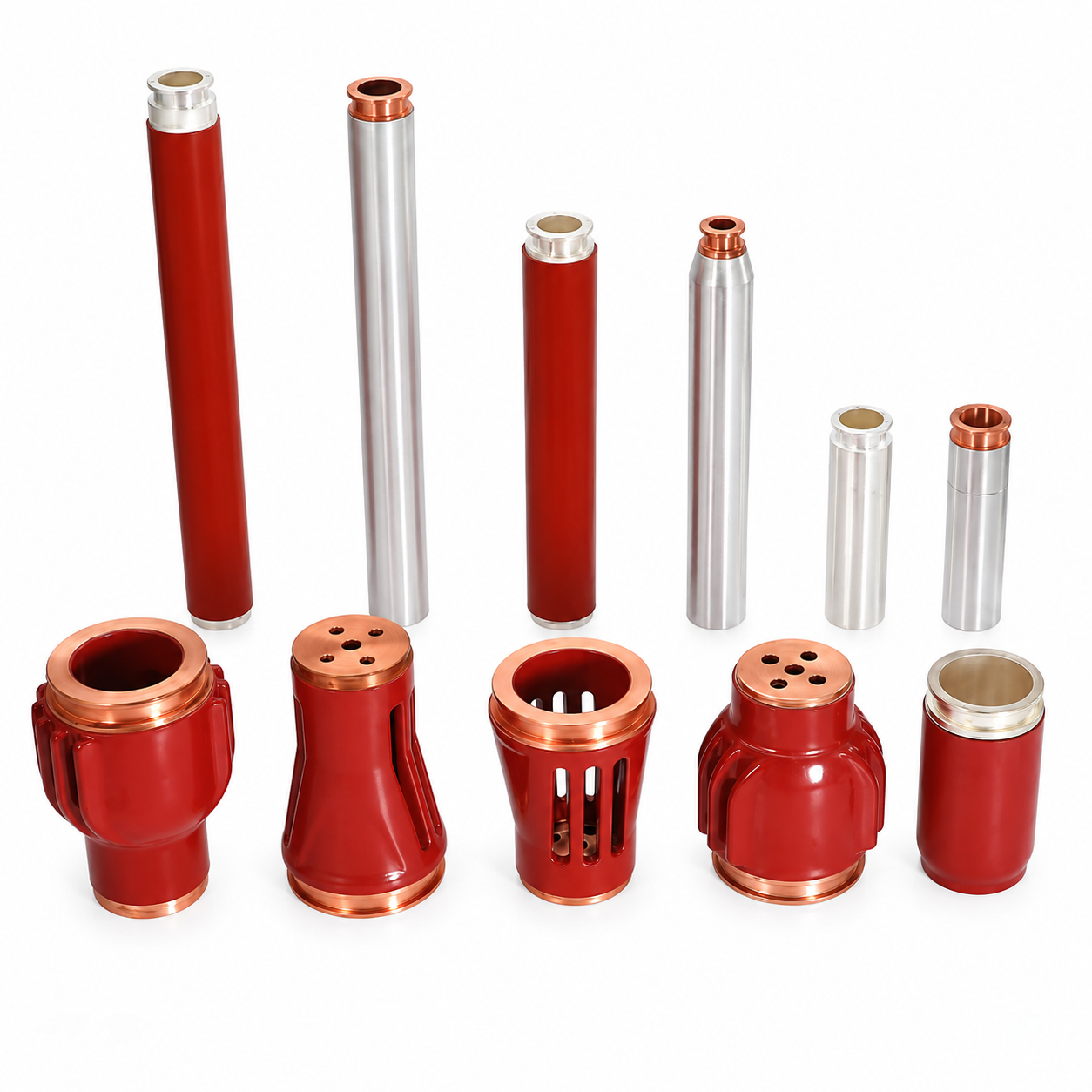
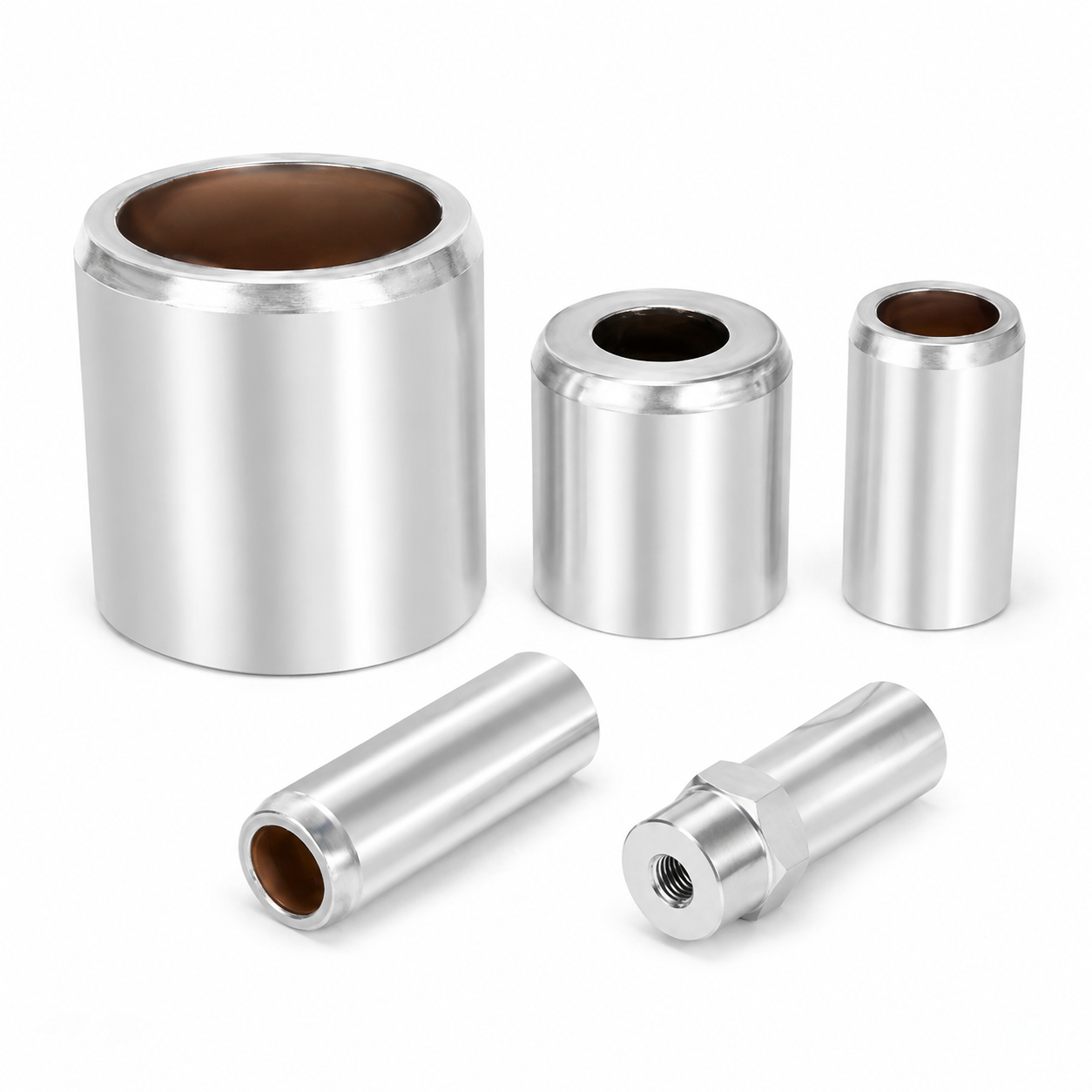
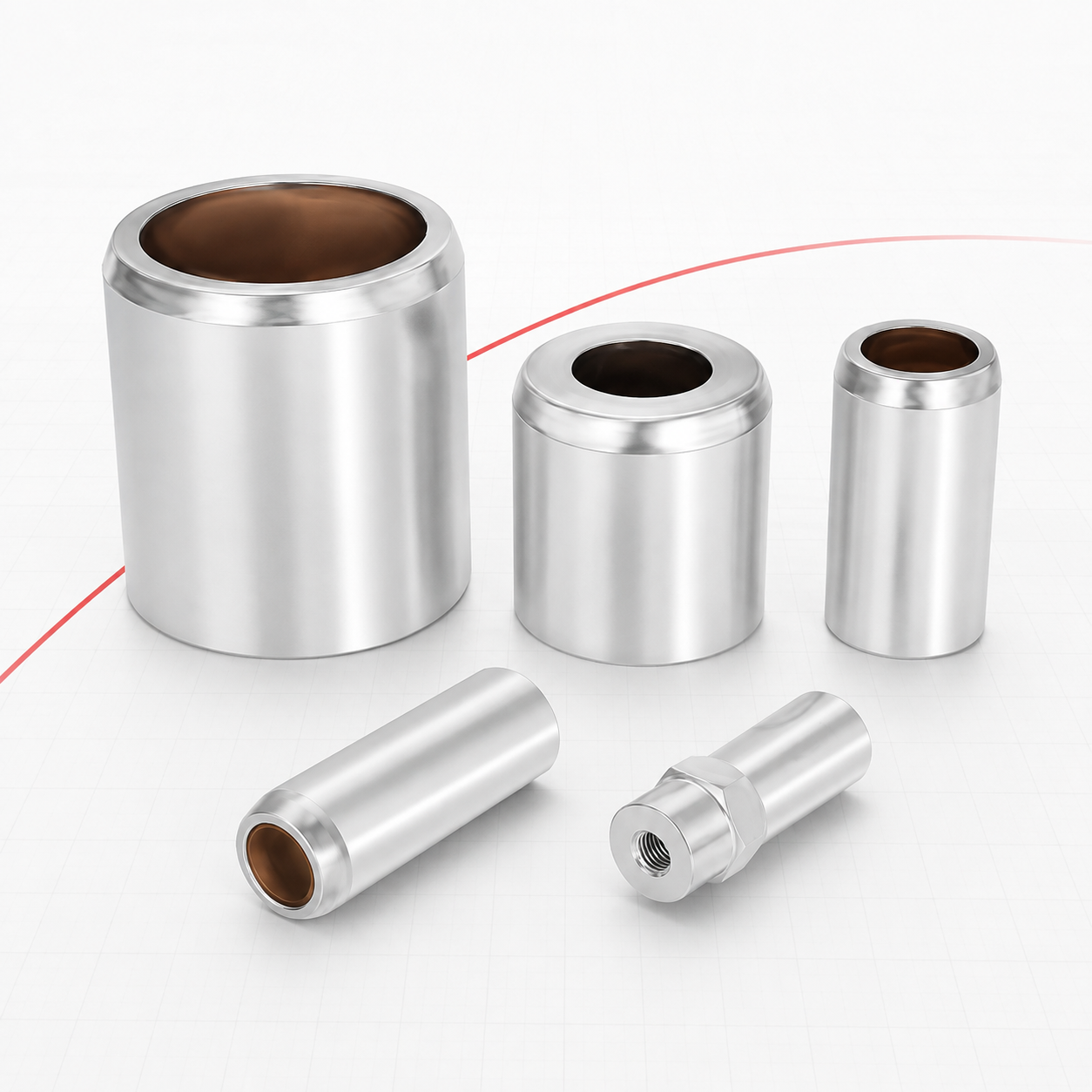
Our Static Contacts, also referred to as fixed contact bars, serve as the stationary conductive interface on the cable compartment side of withdrawable vacuum circuit breaker (VCB) switchgear. Manufactured from high-conductivity T2 electrolytic copper with optional silver or tin plating, these contacts ensure a stable, low-resistance connection point for the handcart's moving tulip contacts. Rated for 630A to 1250A, they are engineered for direct mounting within the panel, providing a reliable current path from the VCB to the outgoing cables. Their robust construction and precise dimensions make them a dependable component for maintaining the long-term integrity of medium-voltage power distribution systems.
- Overview
- Applications
- Technical Data
- Services
- Quality Control
- Recommended Products
Static Contacts and Fixed Contact Bars - 630A to 1250A
Static contact is the fixed conductor bar mounted inside the switchgear panel that a withdrawable breaker's tulip contact engages when the trolley is racked into service. It sits on the cable-compartment and busbar-compartment side of the isolating interface, forming the stationary half of the main current joint. MOLDVOLT manufactures flat-bar and L-bar static contacts rated 630A to 1250A for 12kV and 24kV panels.
THE OTHER HALF OF THE JOINT
Attention usually falls on the tulip contact because it is the moving, visibly wearing part. But contact resistance is a property of the joint, not of one side of it. A worn or oxidised static contact raises the resistance of the interface exactly as effectively as a worn tulip contact does, and produces the same outcome: localised heating, accelerated oxidation, relaxed spring force, and eventually a thermal failure.
This is why we supply static contacts and tulip contacts as a matched pair for replacement. Fitting a new tulip contact against a pitted, oxidised static contact recovers only part of the resistance and leaves the joint degrading from the fixed side.
MATERIAL AND PLATING
T2 grade electrolytic copper, verified by mill certificate, with 8-12 microns of silver plating measured by X-ray fluorescence per batch. Silver gives the lowest contact resistance for indoor clean-environment service. Tin plating is available and is the correct specification for coastal Gulf installations, West African industrial sites and any panel where salt fog or sulphide-bearing pollution reaches the interior - silver tarnishes in those atmospheres and the tarnish layer is resistive.
GEOMETRY MATTERS FOR CURRENT DENSITY
Static contact cross-section is sized to carry rated current continuously within the 70K temperature rise limit of IEC 62271-1, and to withstand the electromagnetic forces of a through-fault without deforming. The contact face geometry must also match the tulip contact's finger array precisely - an undersized or misaligned bar causes uneven finger loading, where a few fingers carry a disproportionate share of the current and overheat regardless of plating quality.
Available in flat-bar and L-bar configurations to suit cable compartment and busbar compartment layouts, with mounting hole patterns to customer drawing.
SUPPLY
Supplied as OEM production to drawing, as stocked spares for KYN28, HXGN and equivalent panels, and as reverse-engineered equivalents where the original part is obsolete. Send a sample, drawing or dimensioned photograph.
PRIMARY APPLICATIONS
- Fixed cable-side contacts in the cable compartment of KYN28-12 and KYN28-24 withdrawable switchgear.
- Fixed busbar-side contacts in the busbar compartment.
- Static contact interface for PT and metering trolleys.
- Fixed contact bars in withdrawable LV motor control centres, using the appropriate LV rating.
- Busbar tap-off and connection bars within switchgear panels.
- Replacement spares for aged withdrawable switchgear across the installed base.
- Breaker refurbishment and switchgear service workshop stock.
- Panel builder production stock.
- Retrofit projects where a new breaker trolley is fitted and the existing static contacts have degraded.
WHEN TO REPLACE
Static contacts should be inspected at every panel maintenance alongside the tulip contacts. Replace when any of the following is found: visible pitting, arcing damage or plating loss on the contact face; contact resistance measurably above the commissioning baseline; discolouration indicating past overheating; or deformation from a through-fault event.
Because the static contact is bolted into the compartment rather than carried on the trolley, replacing it requires a panel outage - which is exactly why it should be inspected and replaced during planned maintenance rather than left until it forces an unplanned one.
SELECTION GUIDANCE
Specify by rated current, bar cross-section and length, contact face geometry matched to the mating tulip contact finger array, mounting hole pattern and orientation - flat or L-bar - and plating type appropriate to the installation environment.
REGIONAL FIT
- Middle East: coastal salt fog and high switchroom ambient temperature. Tin plating and verified elevated-temperature performance are the relevant specifications.
- Africa: high replacement demand across an aged installed base, often with no remaining OEM support for the original panel.
- Russia and CIS: verified performance across wide thermal cycling ranges.
- Eastern Europe: standard IEC service with silver plating in clean, dry switchrooms.
NOT SUITABLE FOR
Fixed-type switchgear with bolted busbar joints, which has no isolating contact interface. Current ratings above the selected type. Applications where the mating tulip contact geometry has not been confirmed.
| Category | Parameter | Value / Specification |
|---|---|---|
| ELECTRICAL | Rated voltage | 12 kV / 24 kV switchgear service |
| Rated current | 630 A / 1000 A / 1250 A | |
| Short-time withstand current | 25 kA / 31.5 kA for 4 s, matched to panel rating | |
| Peak withstand current | 63 kA / 80 kA | |
| Rated temperature rise | Within 70 K per IEC 62271-1 at rated current | |
| Contact resistance | Measured and recorded per piece | |
| MATERIAL & PLATING |
Base material | T2 grade electrolytic copper |
| Material verification | Mill certificate retained per batch | |
| Conductivity | Minimum 97% IACS | |
| Surface treatment | Silver plated standard; tin plating available for coastal and industrial atmospheres | |
| Plating thickness | 8 – 12 microns | |
| Plating verification | X-ray fluorescence measurement, recorded per batch | |
| MECHANICAL & GEOMETRY |
Configuration | Flat bar or L-bar |
| Cross-section | Sized to rated current and through-fault force, to drawing | |
| Contact face geometry | Matched to mating tulip contact finger array | |
| Length | To drawing | |
| Mounting | Bolted, hole pattern to customer specification | |
| Bolt torque specification | Supplied with the part | |
| Edge treatment | Deburred and radiused to prevent field concentration | |
| SERVICE CONDITIONS |
Operating temperature | −40 °C to +105 °C |
| Humidity | Suitable for tropical and high-humidity service | |
| Pollution | Tin plating specified for coastal salt fog and industrial sulphide environments | |
| TESTING (Every Piece or Batch) |
Contact resistance measurement | — |
| Plating thickness verification | By X-ray fluorescence | |
| Dimensional inspection | Critical fit dimensions 100% checked | |
| Material conductivity verification | — | |
| Visual inspection | For plating defects, burrs and surface damage | |
| Temperature rise verification | On type samples at rated current | |
| Salt-spray corrosion testing | For coastal-service parts | |
| OPTIONS | Coastal / industrial plating | Tin plating for coastal and industrial atmospheres |
| Configuration | Flat-bar or L-bar configuration | |
| Custom geometry | Custom cross-section, length and mounting hole pattern to drawing | |
| Branding & packaging | Customer part numbering and packaging | |
| Matched supply | With tulip contacts as a replacement set | |
| Reverse engineering | From physical sample for obsolete parts |
SPECIFICATION AND SOURCING
- Send a drawing, a sample or a photograph with the existing part number and we will identify the equivalent and confirm fit before you commit to an order.
- Reverse engineering from a physical sample where the original part is obsolete or the OEM no longer supplies it - common for aged KYN28, HXGN and imported panels still in service across Africa, CIS and the Middle East.
- OEM and private-label production to your drawings, with your part numbering and packaging.
- Material and plating selected for the destination environment: silver plating for lowest contact resistance indoors, tin plating for coastal and industrial atmospheres where salt fog and sulphides attack silver.
WHY THIS MATTERS COMMERCIALLY
Limited local technical expertise and difficult spare parts supply are consistently identified as the main barriers in Middle East and African electrical markets. A panel is out of service for as long as it takes the part to arrive. We hold consumable items in stock and quote fleet spares lists against your installed base so the part is on the shelf before it is needed.
QUANTITY AND LEAD TIME
- Stock items dispatched from inventory; typical production lead time 15-25 days for standard specifications.
- Low minimum order quantities on standard parts - we supply single-piece emergency replacements as well as bulk production volumes.
- Air freight for breakdown situations, sea freight consolidation for planned restocking.
TESTING AND DOCUMENTATION
- Routine testing per applicable IEC standard with results supplied per batch.
- Material certificates, plating thickness reports and dimensional inspection records available on request.
- Certification support for SONCAP, KEBS PVoC, SABER and GOST R submissions where the component ships as a standalone consignment.
AFTER-SALES
- Technical response within 24 hours; application engineering support for fit, assembly torque and maintenance intervals.
- Warranty against manufacturing and material defects: 12 months from delivery.
- Framework and call-off agreements available for panel builders, utilities and switchgear service workshops.
MATERIAL CONTROL
- Copper verified as T2 grade electrolytic copper or specified copper-silver alloy, with mill certificates retained per batch.
- Epoxy resin verified as cycloaliphatic grade with documented gel time, viscosity and filler ratio; general-purpose bisphenol resin is not accepted for outdoor or high-humidity service because of its poorer tracking and UV resistance.
- Plating thickness measured by X-ray fluorescence and recorded per batch - typically 8-12 microns of silver on contact surfaces. Under-plating is invisible on delivery and only shows up years later as a thermal fault, so this is measured rather than assumed.
PROCESS CONTROL
- APG (Automatic Pressure Gelation) casting under controlled mould temperature, injection pressure and gel time, producing a void-free matrix. Voids initiate partial discharge, and partial discharge is what eventually punctures an insulator in service.
- Vacuum degassing of resin before injection to eliminate entrapped air.
- Controlled post-cure cycle to relieve internal stress and stabilise dimensions.
- Contact finger spring force calibrated and verified against specification, ensuring uniform current sharing across all fingers.
ROUTINE TESTING - EVERY PIECE OR EVERY BATCH
- Partial discharge test on insulation components, typically below 10 pC at 1.1 times rated voltage.
- Power-frequency withstand voltage test.
- Contact resistance measurement on current-carrying parts.
- Dimensional inspection against drawing, with critical fit dimensions 100% checked.
- Visual inspection for cracks, voids, plating defects and surface finish.
- Mechanical load testing on insulators against rated cantilever strength.
TYPE TESTING
- Insulators verified to IEC 60168 and IEC 62217; contacts and conductive parts verified for temperature rise within the 70K limit of IEC 62271-1 at rated current.
- Thermal cycling and, for parts destined for coastal service, salt-spray corrosion testing.
TRACEABILITY AND SYSTEM
- ISO 9001 quality management system.
- Batch numbering linking finished parts back to raw material certificate and process records.
- Certificates of conformity, material certificates and test reports issued with each shipment.
- Retained samples held per production batch for future reference in the event of a field query.