EN

SF6 Load Break Switch: Category Overview
Most procurement teams working through a medium-voltage switching specification for a ring-main unit project encounter the same core decision: whether to specify a sealed SF6 load break switch or an air-insulated alternative, and whether the 12kV or 24kV voltage class applies to their distribution network. The answer depends less on headline nameplate ratings and more on the interaction between the installation environment, the available maintenance capability, and the grid code requirements in the target market.
An SF6 load break switch is a multi-functional medium-voltage switching device that uses sulfur hexafluoride gas as both the arc-extinguishing and insulating medium. It integrates three switching positions — Closed, Open, and Earthed — into a single mechanism, eliminating the need for a separate earthing device and removing an entire class of switching error from routine ring-network operations. This three-position design is the core safety feature that makes the SF6 load break switch the standard component choice for urban cable ring networks, compact secondary substations, and pad-mounted distribution installations worldwide.
Key Product Characteristics
This SF6 load break switch range covers three switching devices spanning the primary voltage classes and insulation approaches used in medium-voltage distribution:
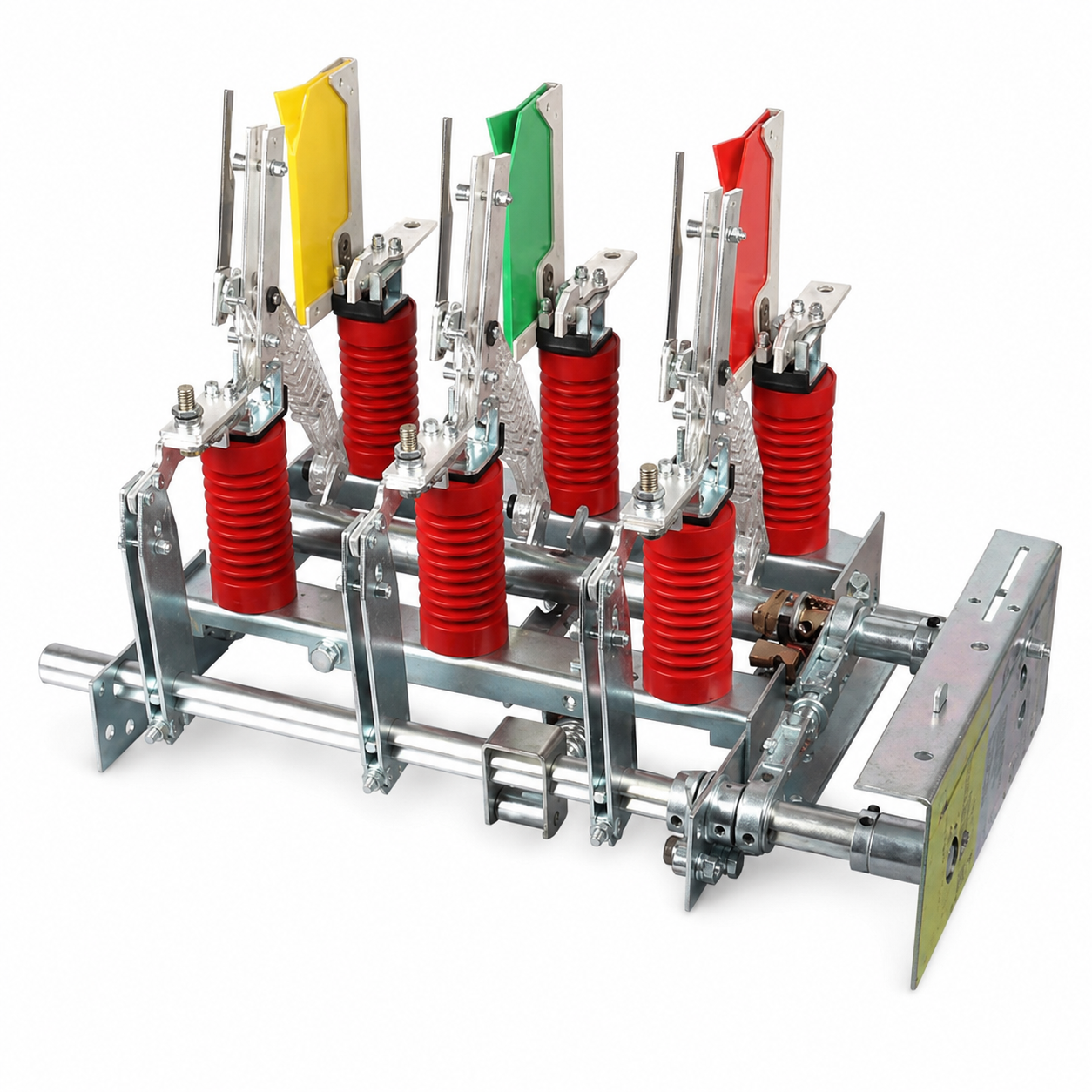
- FN7-12 (LBS+Fuse) Indoor Load Break Switch — A 12kV three-phase switching device combining a load break switch and HV fuse in a single air-insulated assembly. Epoxy resin insulator construction, color-coded phase barriers, and a synchronized three-phase drive shaft make this model well-suited to transformer feeder protection in compact substations where SF6 gas handling is a practical or regulatory constraint.
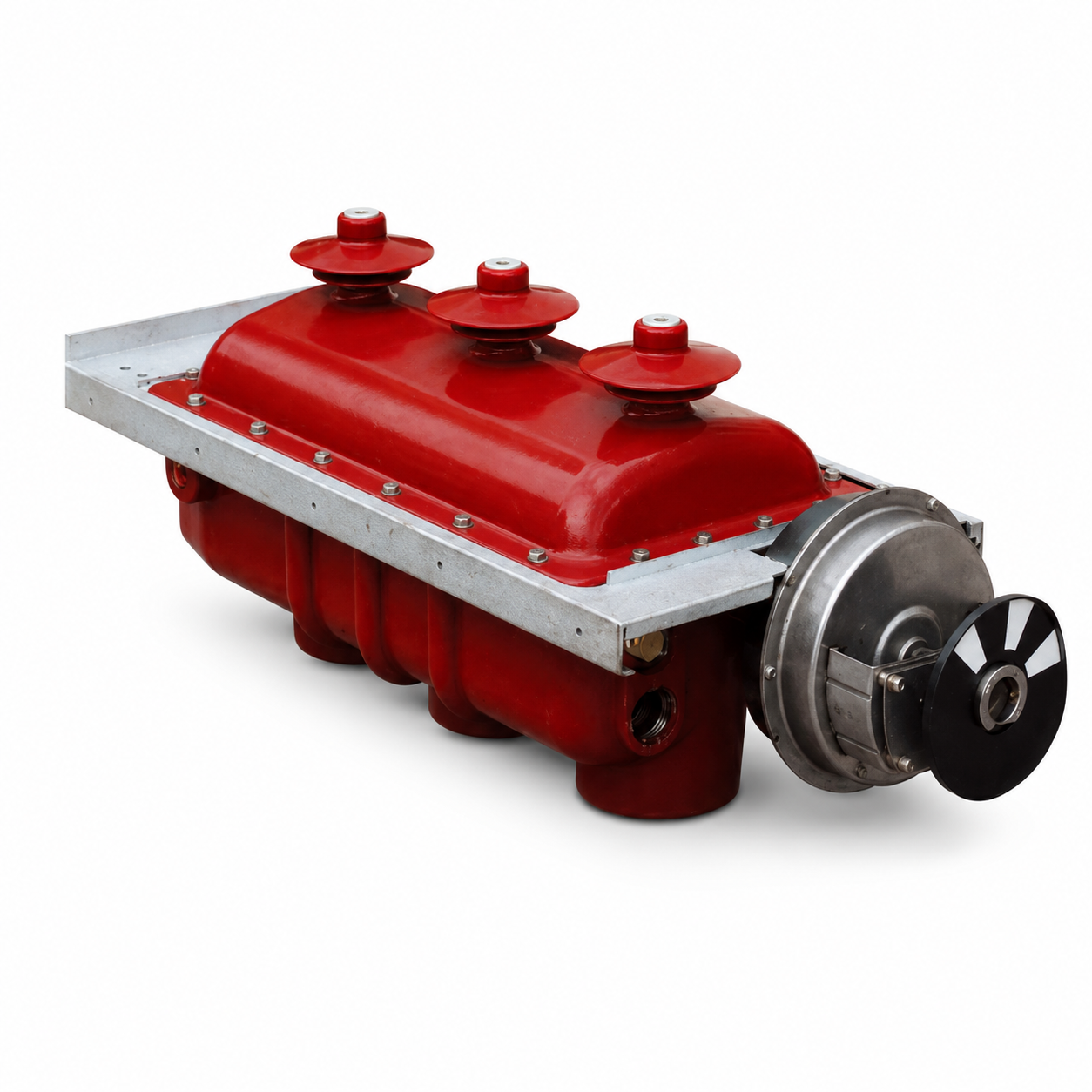
- FLN48-12 SF6 Indoor Load Break Switch — A 12kV three-phase SF6 load break switch with sealed gas insulation, molded terminal bushings, and a galvanized mounting frame. Designed specifically for ring main unit applications in urban cable networks, residential substations, and industrial distribution systems requiring reliable load switching and safe isolation.
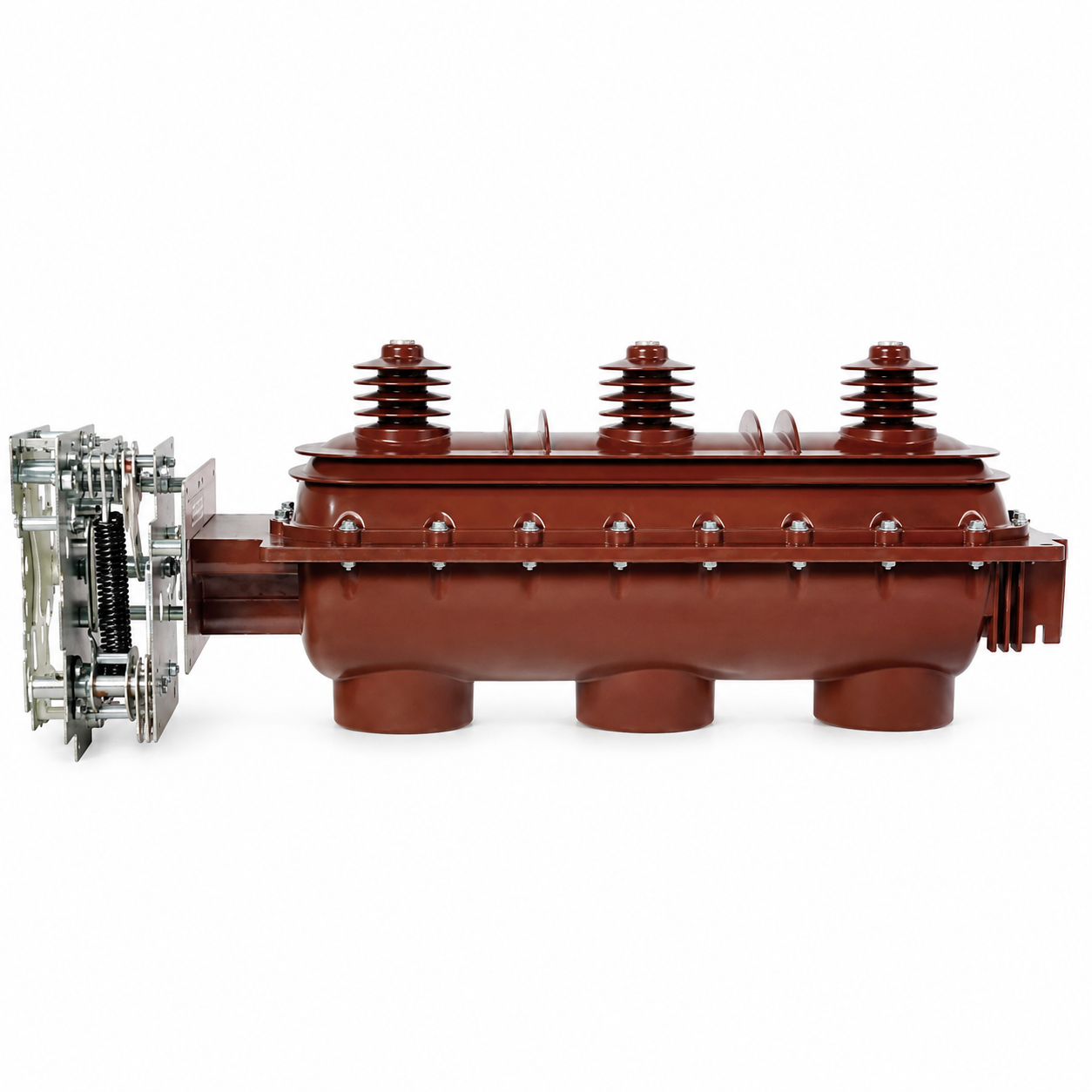
- FLN36-24 SF6 Indoor Load Break Switch — A 24kV three-position SF6 load break switch for ring-main unit configurations operating on 20kV and 22kV networks. Available in manual or motorized operation, with modular support for 2- to 4-switch assemblies and optional vacuum circuit breaker integration. Rated for 630A continuous loading.
The sealed units house the switch mechanism, earthing switch, and busbar connections inside a hermetically sealed stainless-steel tank pressurized at 0.04–0.05 MPa. This architecture delivers an IP65-rated enclosure that resists dust ingress, salt fog, and condensation — characteristics that are decisive for installations in Gulf coastal substations, desert environments, and equatorial African locations where maintaining enclosure integrity over a 20-plus-year service life cannot be guaranteed with air-insulated alternatives. Cable connections are by 200A, 400A, or 630A plug-in elbow connectors or bolted lugs with bottom cable entry as standard.
Common Applications
The SF6 load break switch serves as the primary switching element in ring-main units, where the ability to create a visible, mechanically interlocked earth connection without additional earthing devices is operationally essential. Beyond the core RMU context, common deployment environments include:
- Urban underground cable ring networks operating at 10kV, 11kV, 20kV, or 22kV
- Compact secondary substations and pad-mounted transformer protection assemblies
- Industrial distribution boards requiring reliable load switching and safe feeder isolation
- Residential and commercial development substations where installation footprint is constrained
- Renewable energy collection substations using ring-feeder configuration for redundancy
The 12kV variants (FLN48-12, FN7-12) cover 10kV and 11kV distribution networks common in Asia, Africa, and parts of Eastern Europe. The 24kV variant (FLN36-24) covers 20kV and 22kV networks prevalent in Western Europe, Turkey, and parts of South America. Confirming the target network voltage class before specifying an SF6 load break switch is a straightforward step that avoids costly re-specification after delivery.
How to Select the Right SF6 Load Break Switch
You might expect the sealed SF6 specification to be the straightforward answer for any RMU project. The practical complication is that the choice between a sealed SF6 load break switch and an air-insulated alternative depends on factors that do not always align: the installation environment, the local maintenance organization's gas-handling capability, and the regulatory framework in the target market.
Selecting an SF6 load break switch for a remote installation without reviewing the site's gas-handling capability creates a long-term maintenance obligation that may not become visible until the first scheduled inspection — when qualified service personnel and SF6 gas recovery equipment are not available locally. Gas pressure monitoring on installed RMU units regularly identifies below-threshold SF6 density in equipment that was specified as sealed-for-life without adequate attention to service interval requirements. Reviewing this before order placement is not bureaucratic caution; it is the step that separates a 20-year sealed installation from an unplanned maintenance cost within the first service cycle.
The practical selection framework for procurement teams choosing between an SF6 load break switch and alternatives:
- Specify sealed SF6 (FLN48-12, FLN36-24) when the installation environment involves dust, humidity, salt fog, or condensation risk; when the maintenance organization holds SF6 handling certification; and when a 20-plus-year sealed service life is a project requirement. The sealed architecture eliminates annual gas pressure verification and is immune to the condensation and contamination failures that affect air-insulated designs in tropical and coastal conditions.
- Specify air-insulated (FN7-12) when SF6 handling regulations, F-Gas reporting obligations, or end-of-life gas recovery requirements apply — a growing specification constraint in EU and Eastern European tenders — or when the maintenance organization does not have SF6 service capability.
On load rating: the rated continuous current on the nameplate assumes a standard 40°C ambient temperature as the IEC reference condition. In markets where ambient temperatures regularly exceed 45–50°C — including Egypt, Kenya, Indonesia, and Gulf coastal states — the effective safe loading is lower. Confirming the applicable derating factor with the supplier before finalizing the load schedule protects the project from a thermal risk that is not visible at the nameplate level.
Compliance and Procurement Considerations for International Buyers
For buyers procuring an SF6 load break switch for installation in Russia, Brazil, Indonesia, or other markets with localized certification requirements, IEC compliance alone is not sufficient for import documentation and grid connection approval. The industry practice for these markets — aligned with the general guidance provided by the relevant national standards bodies — requires GOST (Russia), INMETRO/ABNT (Brazil), or SNI (Indonesia) certification documentation in addition to the IEC type test report. Confirming the required certification format and the available documentation package before purchase order placement avoids delays at customs clearance and grid operator technical review stages.
Mechanical interlock integrity is a procurement dimension that is frequently underweighted in written specifications. Switchgear manufacturers with an established track record in SF6 load break switch supply for ring-main units — where the three-position interlock is the primary operational safety feature — offer a meaningful signal of manufacturing competence in this specific product category. Type test reports covering interlock verification under IEC 62271-103 conditions give the procurement team documentary evidence of interlock performance, not only of rated voltage and interrupting current capability.
For installations in tropical climates and coastal environments — including Southeast Asia, equatorial Africa, and coastal Gulf states — confirming the availability of enclosure treatment options for accelerated corrosion and condensation resistance should be part of the technical specification review. Standard IP65 enclosure ratings address external ingress protection; they do not automatically cover the accelerated corrosion from salt-laden air or the internal condensation from rapid temperature cycling that occurs in high-humidity coastal environments over a multi-decade service life.
Why This Category Matters for RMU Panel Builders and Distribution Buyers
For ring-main unit panel builders, the SF6 load break switch is the primary active switching component in the RMU assembly. A coordinated component supply covering the SF6 load break switch alongside current transformers, voltage transformers, cable terminations, and earthing switches reduces panel-level integration work and the risk of dimensional or interface mismatches between separately sourced components. Reviewing the supplier's available accessory range in parallel with the SF6 load break switch specification is a procurement step that often reduces total delivered cost and commissioning risk more than equivalent effort spent on unit price negotiation.
For distribution buyers evaluating modular configurations, the field-extensible ring-main unit architecture — supporting two to five switch cells in any combination of SF6 load break switch, fuse-switch, and vacuum circuit breaker cells — provides configuration flexibility that retains value when network planning evolves after initial installation. Confirming the plug-in connector ratings (200A, 400A, or 630A elbow connectors) and the cable entry geometry against the cable schedule for the target installation avoids on-site modifications that are disproportionately expensive relative to the switchgear cost.