EN

Conductive Parts — Contacts & Arms for Withdrawable VCB Switchgear
Conductive Parts — Contacts & Arms are the primary current-carrying interface in withdrawable medium-voltage switchgear. Every time a handcart breaker racks from test position to service position, it is the conductive parts — contacts and arms — that establish the current path from the fixed busbar to the vacuum circuit breaker terminals. They are also the first components to show wear, the first to accumulate oxidation, and the first to cause problems when they are not maintained or replaced on schedule.
This category covers tulip contacts (jaw/finger type), static contacts (fixed contact bars), insulated contact arms, and ball-type spherical contacts, all rated for continuous duty from 630A to 3150A. Understanding how to select and maintain these components is one of the highest-value maintenance decisions in a withdrawable switchgear fleet.
Why Conductive Parts — Contacts & Arms Are the Leading Cause of Switchgear Overheating
Switchgear thermal failures rarely trace back to the vacuum interrupter or the insulating enclosure. In most cases, the root cause is the conductive parts — contacts and arms — where contact resistance has risen undetected until a thermal event occurs. The failure progression is consistent: plating wears with each make-and-break cycle, oxidation builds in the gaps between fingers and the mating contact surface, and resistance climbs invisibly across one or two phases while the third remains acceptable. By the time an infrared inspection catches the anomaly, the contact surfaces are already beyond serviceable condition.
The reason this goes undetected is straightforward: most maintenance programmes do not include a contact resistance measurement step. Without a defined acceptance criterion and a measurement instrument on site, progressive degradation in conductive parts — contacts and arms — is invisible until the equipment fails under load.
Product Range: Conductive Parts — Contacts & Arms 630A to 3150A
The full range of conductive parts — contacts and arms — covers all standard withdrawable VCB panel current ratings:
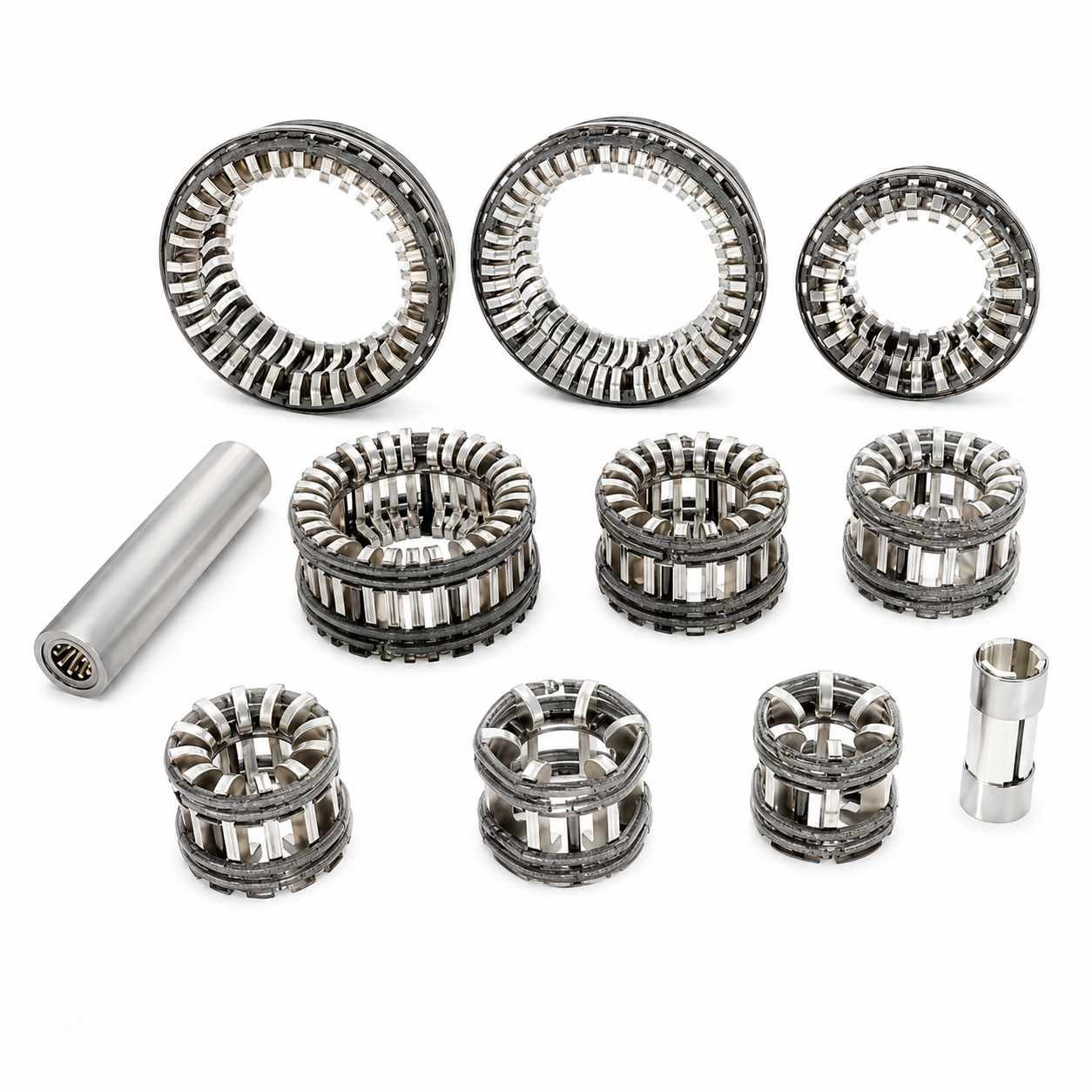
- Tulip contacts (jaw/finger type): Available at 630A, 1000A, 1250A, 1600A, 2500A, and 3150A. Finger count scales with rating from 16 fingers at 630A to 60 fingers at 3150A, maintaining temperature rise within the 70K limit required under IEC 62271-1. Dimensioned as drop-in replacements for VS1, VD4, VPR and other standard handcart breaker chassis.
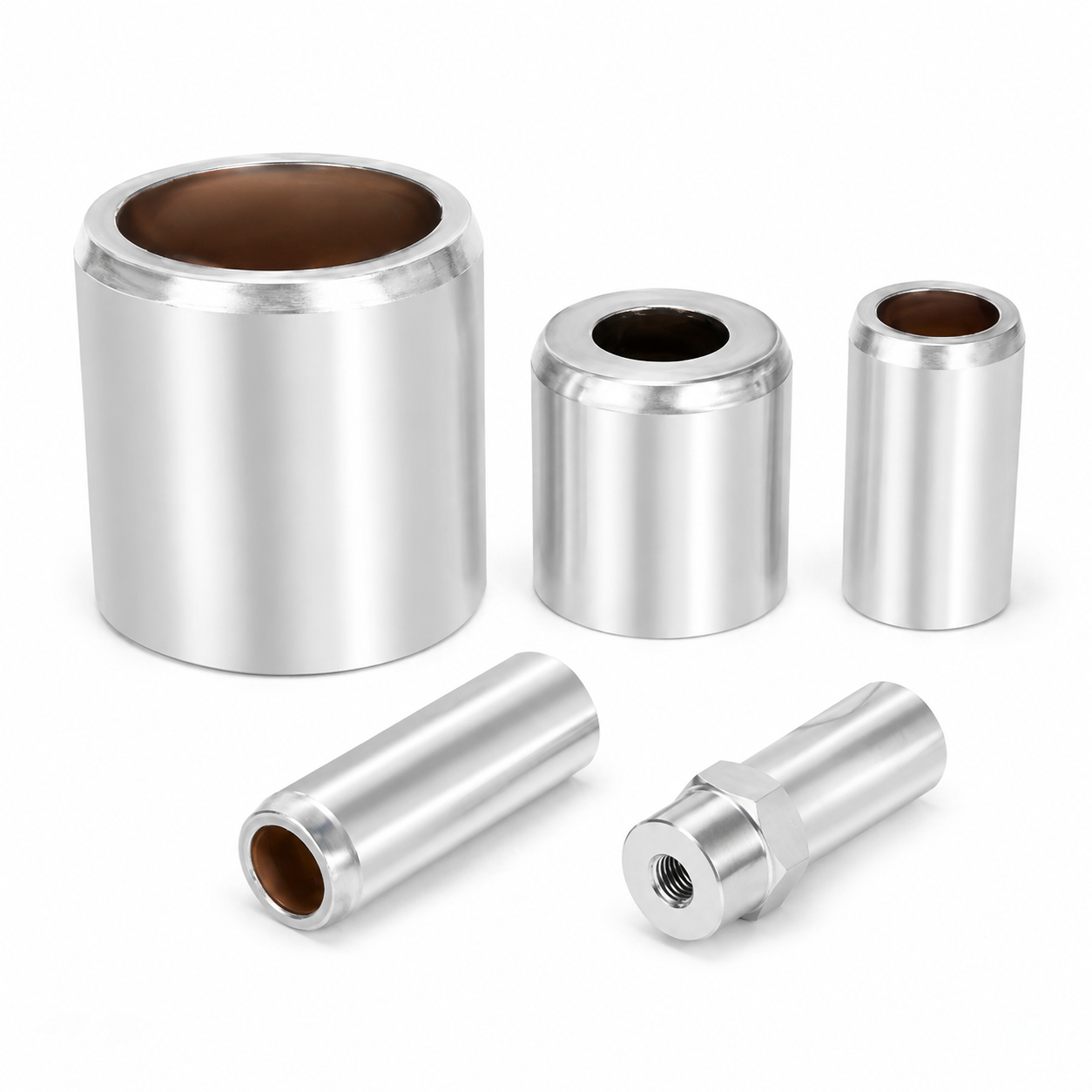
- Static contacts: Flat-bar and L-bar fixed contact bars for the cable compartment and busbar compartment side, rated 630A to 1250A in the standard range. These conductive parts provide the stationary interface against which tulip fingers engage.
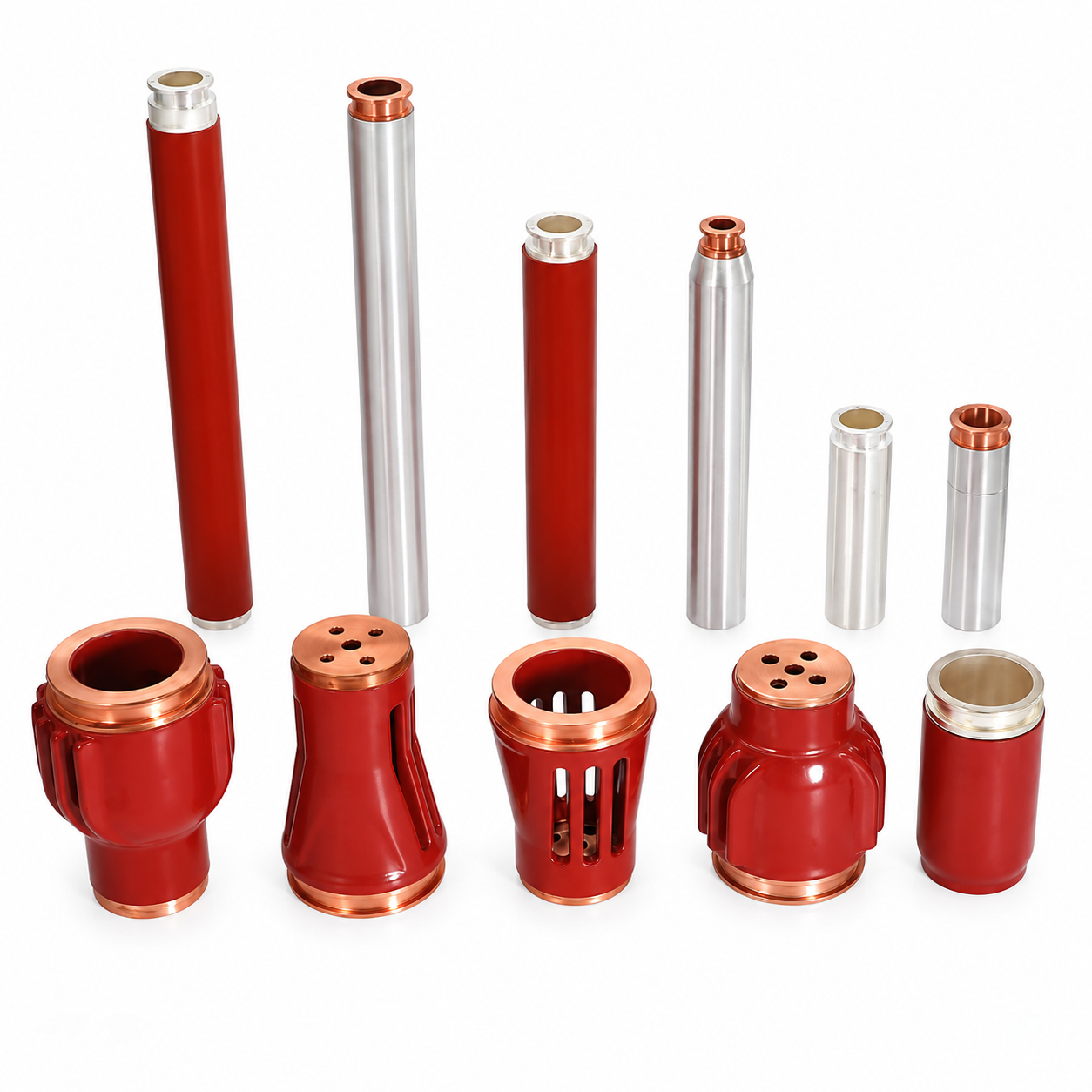
- Insulated contact arms: Rated 1250A to 3150A with vulcanized silicone or heat-shrink insulation jackets to prevent phase-to-phase flashover in compact switchgear in high-humidity environments.
- Ball-type spherical contacts: For GIS and rotating connection applications where fixed-contact geometry cannot accommodate mechanical movement at the interface.
Base material is T2 electrolytic copper or copper-silver alloy. Silver or tin plating is applied at 8–12 microns to control contact resistance while maintaining dimensional precision.
Plating Selection for Conductive Parts — Contacts & Arms
You might expect silver to be the universal answer for conductive parts — contacts and arms — regardless of installation environment. The complication is that silver's lower contact resistance comes at a cost in sulphide-resistance. In coastal Gulf installations, West African industrial sites, and tropical environments where salt fog and humidity combine, silver plating oxidizes over time in ways that a standard IEC type test does not capture. A silver-plated contact that performs well at commissioning may show measurably higher resistance two years later under continuous corrosive exposure.
Tin plating, while showing slightly higher initial resistance than silver, resists sulphide attack more reliably. For buyers procuring conductive parts — contacts and arms — for installations in Indonesia, Vietnam, Thailand, Egypt, Kenya, or Gulf coastal facilities, tin plating deserves explicit consideration rather than being treated as a downgrade. The right choice depends on the installation environment, not on which option looks better at time-zero.
How to Select the Right Conductive Parts — Contacts & Arms
Selecting the correct conductive parts — contacts and arms — requires verifying four parameters against the installed equipment:
- Current rating: Match to the breaker rated continuous current: 630A, 1000A, 1250A, 1600A, 2500A, or 3150A. The nameplate rating assumes 40°C ambient under IEC reference conditions. In markets where ambient regularly exceeds 45°C — common in Southeast Asia and the Middle East — derate the effective continuous load before confirming the contact rating, because the thermal headroom at the nameplate level may not be available in practice.
- Chassis compatibility: Tulip contacts in this range are dimensioned as drop-in replacements for VS1, VD4, VPR and equivalent standard chassis. For static conductive parts, confirm panel model and contact box dimensions before ordering — these are panel-specific components.
- Plating specification: Silver for standard indoor applications. Tin for coastal, Gulf, tropical, and high-humidity industrial environments where sulphide attack is a realistic long-term service condition.
- Insulation grade for contact arms: Vulcanized silicone for continuously high-humidity environments; heat-shrink sleeves for standard indoor service. Both prevent phase-to-phase flashover in compact panel designs.
For maintenance replacement orders, provide the existing part number or key dimensions — finger count, outer diameter, mounting flange — to confirm the new conductive parts match the installed panel generation exactly.
Conductive Parts — Contacts & Arms as a Maintenance and Fleet Management Category
Conductive parts — contacts and arms — are explicitly consumable: unlike the breaker frame or enclosure, contacts wear with every make-and-break cycle and degrade through oxidation over time. This makes them a repeat-purchase maintenance category rather than a one-time capital procurement decision. Electrical maintenance contractors managing withdrawable switchgear fleets purchase replacement conductive parts — contacts and arms — both on scheduled replacement programs (typically at five-year or operation-count intervals) and in response to thermal anomalies detected during infrared inspections.
A recurring problem in corrective maintenance situations is that the original supplier no longer stocks or supports the product generation installed years earlier. Sourcing replacement conductive parts from a different production batch — even from the same nominal specification — introduces the risk of dimensional variation at the finger geometry or spring preload, which directly affects contact resistance at the interface. For buyers building a maintenance spares programme, the ability to source conductive parts — contacts and arms — from the same manufacturer and production source as the original supply is a meaningful reliability assurance.
For wholesale distributors stocking conductive parts — contacts and arms — across a fleet of current ratings, the high-turnover and repeat-purchase nature of this category supports holding minimum float stock at each current rating rather than ordering reactively. The consequence of a stock-out on conductive parts is a corrective maintenance delay on critical switching equipment — a cost that is disproportionate to the relatively modest unit value of the contacts themselves.