EN

What Are Insulation & Epoxy Resin Parts?
Insulation & epoxy resin parts are the dielectric components that hold medium-voltage switchgear together — electrically and mechanically. Post insulators support busbars and carry the mechanical cantilever load. Contact boxes, also called spout boxes, form the isolating interface between a withdrawable VCB trolley and the fixed conductors. Wall bushings seal and insulate busbars that pass through earthed compartment barriers. GIS sleeves provide the cable elbow connection point in ring main units, maintaining SF6 gas integrity while delivering rated dielectric isolation. Each of these insulation & epoxy resin parts has a defined electrical and mechanical duty in the panel, and selecting the wrong part — even one rated to the correct voltage class — can create dielectric weaknesses that are not visible at commissioning but degrade over years of service.
Key Product Characteristics
From a dielectric standpoint, the specification that separates adequate from reliable in epoxy resin insulation is manufacturing process, not just rated voltage. The insulation & epoxy resin parts in this category are produced using APG (Automatic Pressure Gelation) casting, where resin is injected into a heated mould under controlled pressure and gelled progressively. The result is a void-free, high-density matrix. Voids are the initiation sites for partial discharge, and partial discharge is the mechanism that ultimately punctures an insulator over years of service. Each component is partial-discharge tested, typically to below 10 pC at 1.1 times rated voltage — a threshold that demonstrates actual dielectric integrity, not just nominal compliance.
You might expect that IEC-compliant epoxy formulation would be sufficient for all installation environments. The complication is that general-purpose bisphenol epoxy resins are susceptible to surface tracking and UV degradation in high-humidity or UV-exposed environments, while cycloaliphatic epoxy maintains surface resistance across a wider environmental range. This range of insulation & epoxy resin parts specifies cycloaliphatic formulation to support installations from high-temperature coastal substations to extreme cold environments, with a validated service range of −40°C to +105°C.
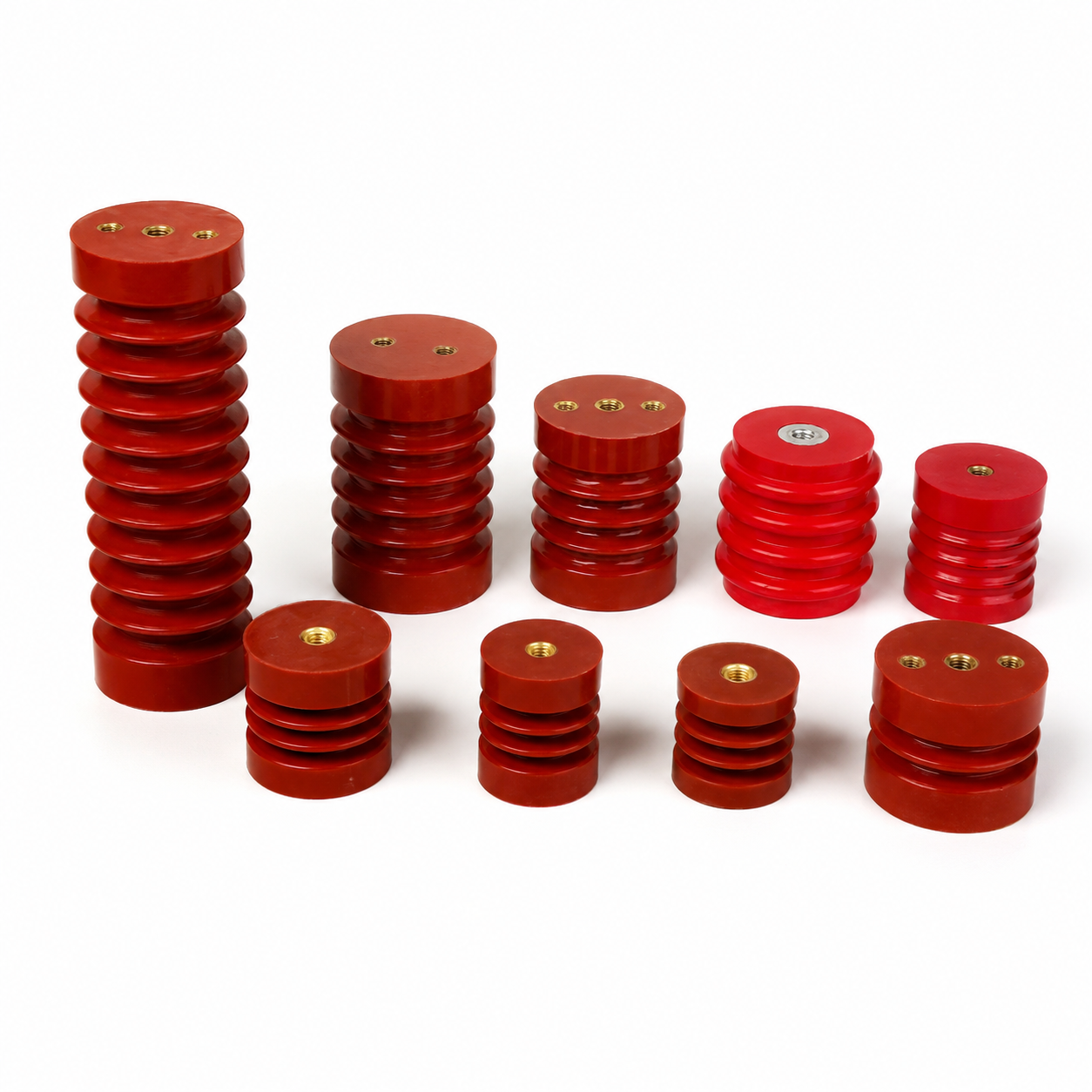
- Post insulators and busbar support insulators: rated 12 kV, 24 kV, and 40.5 kV; cantilever ratings from 1000 N to 2500 N; M10 and M12 brass threaded inserts on both ends; deep alternating creepage skirts for flashover resistance in high-humidity environments.
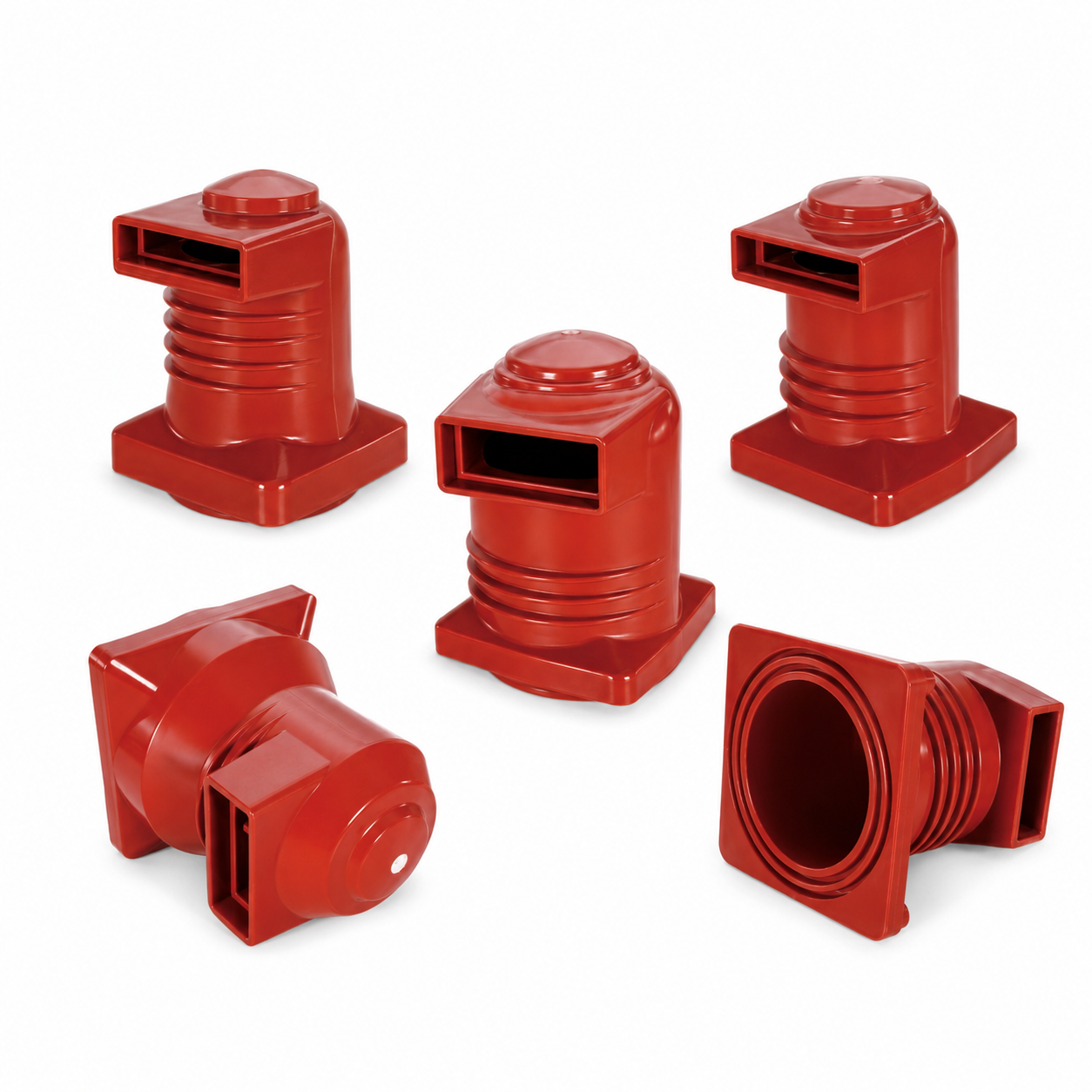
- Contact boxes (spout boxes): rated 12 kV, 630 A to 1250 A; smooth insulated inner cavity; silver-plated copper-alloy contact inserts; anti-tracking creepage skirts; flanged square mounting base for KYN28 and compatible switchgear panels.
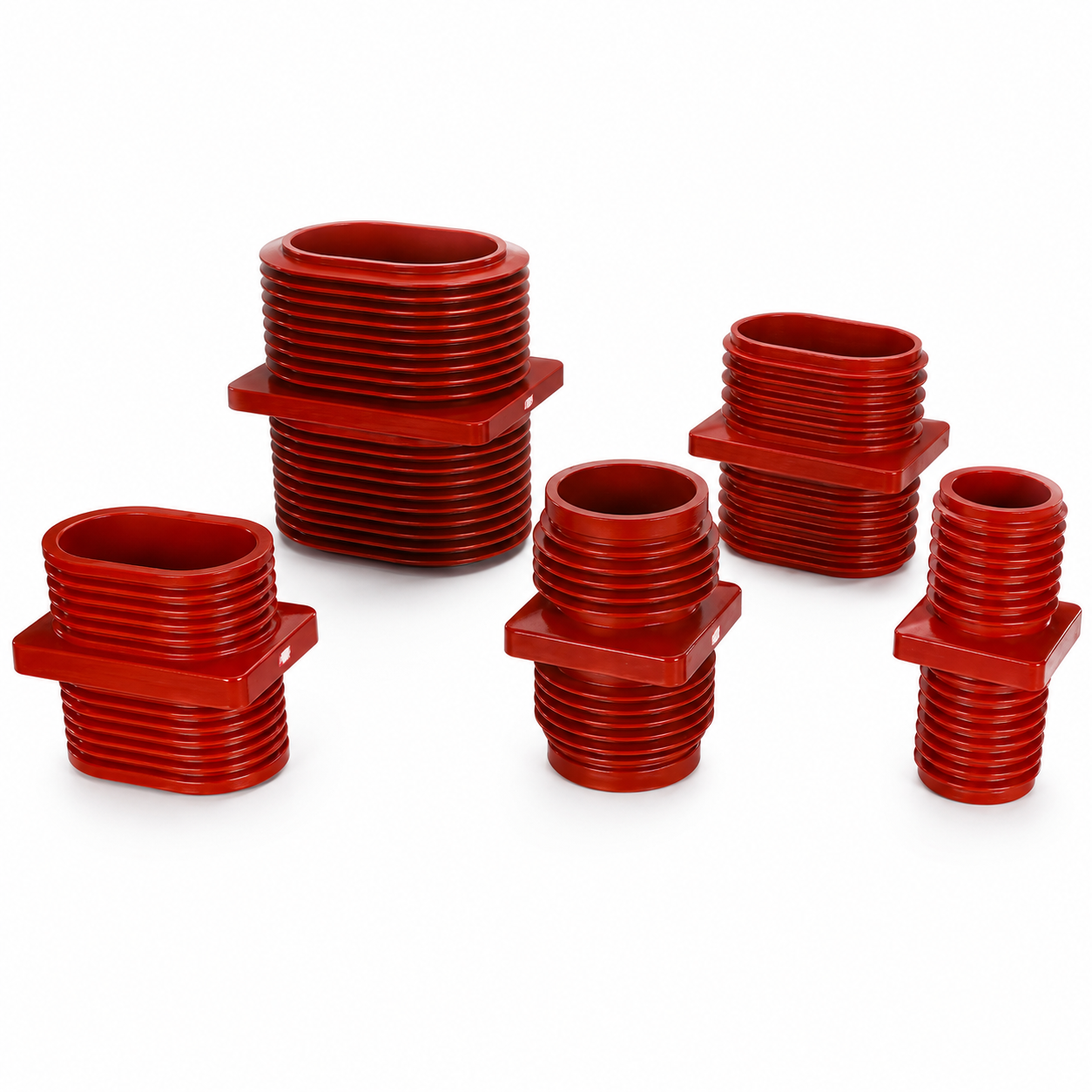
- Wall bushings: rated 12 kV; hollow channel for solid busbar feed-through; alternating creepage skirts for high flashover resistance; integrated central flange for compartment wall mounting; available in round and oval profiles with comprehensive size options.
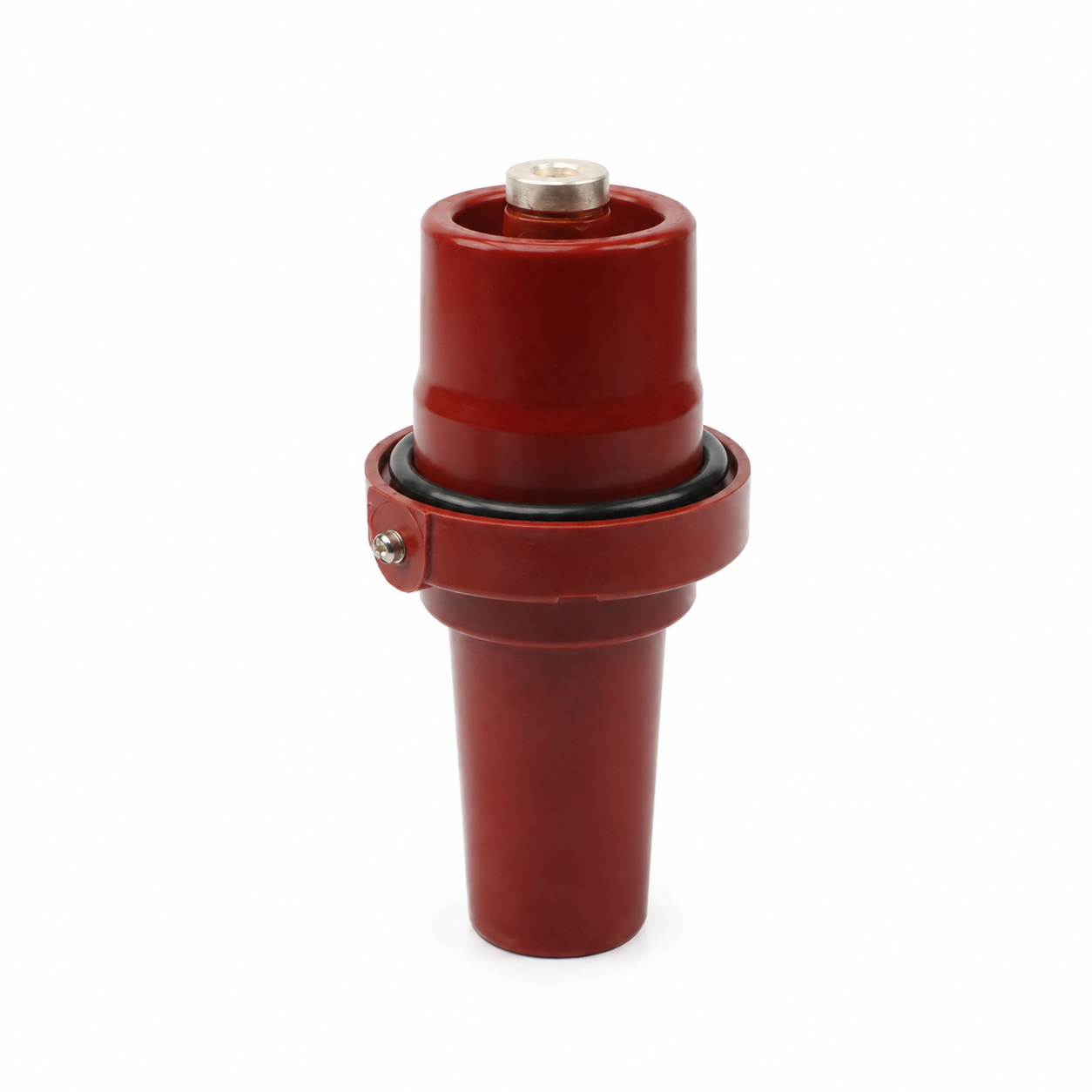
- GIS sleeve 202: rated 24 kV, 200 A to 630 A; conductive terminal for solid busbar connection; O-ring gasket for SF6 gas-tight containment; tapered lower section for electric field optimization; designed for RMU cable elbow connection applications.
Common Applications
These insulation & epoxy resin parts are dimensioned and tested for direct use in 12 kV and 24 kV air-insulated metal-clad switchgear, ring main units, and gas-insulated switchgear. Primary panel types include KYN28, HXGN, RMU, and GIS assemblies — the most widely used MV switchgear formats in power distribution substations across Eastern Europe, Africa, the Middle East, and Southeast Asia.
The range covers both new panel production and direct-replacement maintenance requirements. For panel builders, the insulation & epoxy resin parts supply the post insulator, bushing, and contact interface elements of a KYN28 or HXGN build on a confirmed dimensional basis. For maintenance buyers sourcing spare parts for switchgear installed five to fifteen years ago, the direct-replacement compatibility with KYN28, HXGN, and RMU panels addresses the common problem of component unavailability when the original supplier no longer stocks that product generation.
Applied in power substations for MV distribution networks, industrial power systems including mining and manufacturing facilities, renewable energy grid connection installations, and utility secondary distribution networks. For buyers in Middle Eastern and African markets — where peak ambient temperatures regularly exceed 50°C and high-UV exposure is a relevant service factor — the cycloaliphatic formulation and −40°C to +105°C service range of these insulation & epoxy resin parts provide documented environmental suitability across the full installed life.
How to Choose the Right Insulation & Epoxy Resin Parts
Selecting insulation & epoxy resin parts requires a sequential set of decisions. Starting with the wrong input — for example, specifying by voltage class alone without confirming impulse withstand level — can result in a component that passes acceptance testing but fails in service under actual system transient conditions. The following selection path applies whether you are working from a switchgear panel BOM or a maintenance replacement requirement.
Step 1 — Confirm voltage class and rated withstand levels. Identify the system voltage (12 kV, 24 kV, or 40.5 kV), the rated power frequency withstand voltage, and the rated lightning impulse withstand voltage. If the installation point has a long cable run or is downstream of a transformer with steep switching transients, actual transient exposure may exceed nominal voltage-class assumptions. Selecting rated impulse withstand matched only to the nominal voltage class ignores the transient overvoltage exposure from system topology factors — and that gap may not surface until an insulation breakdown event occurs.
Step 2 — Identify which insulation & epoxy resin parts type your application requires. Post insulators support busbar position and carry cantilever mechanical load — verify the M10 or M12 mounting interface and the required cantilever rating (1000 N to 2500 N depending on busbar weight and span). Contact boxes are the isolating interface for VCB trolley withdrawal — confirm rated current (630 A or 1250 A) and panel type (KYN28 or HXGN). Wall bushings seal busbar penetrations through compartment barriers — confirm busbar cross-section and mounting profile (round or oval). GIS sleeves are for RMU cable elbow connection — confirm rated current (200 A to 630 A) and SF6 containment requirement.
Step 3 — Assess environmental suitability for the installation site. The rated current on a switchgear component nameplate is based on a 40°C ambient temperature assumption under IEC standards. In climates where ambient temperatures regularly exceed 45–50°C, the effective safe loading is lower — and ignoring the derating factor creates a thermal risk that is invisible at the nameplate level. If the installation is in a coastal, high-UV, or chemically aggressive environment, confirm that cycloaliphatic formulation and the validated −40°C to +105°C service range cover the actual site conditions.
Step 4 — Verify panel compatibility for maintenance replacements. If sourcing insulation & epoxy resin parts for a KYN28, HXGN, RMU, or GIS installation, confirm the dimensional interface against the installed panel drawings. Direct-replacement spares are available for common panel generations; where drawings are unavailable, product dimensions and installation profiles can be confirmed before purchase order placement.
If the installation environment is standard indoor with ambient temperatures within the 40°C IEC baseline and without significant UV or chemical exposure, the APG-cast cycloaliphatic range in this category is appropriate across all voltage classes listed. If either of those conditions changes — say, the installation is outdoor in a UV-exposed coastal substation in East Africa or a cold-climate industrial facility — then the validated temperature range and material specification become the primary selection checkpoints.
Why Insulation & Epoxy Resin Parts Matter for Long-Term Switchgear Reliability
Switchgear accessories including insulators, bushings, and contact boxes form a repeat-purchase category alongside capital switchgear procurement, but with different purchase timing and decision urgency. Insulation & epoxy resin parts are sourced for new panel builds, scheduled maintenance cycles, panel extensions, and corrective replacements — each scenario with a different lead time tolerance and specification confidence requirement.
The general guidance from recognized electrical industry standards organizations aligns with the principle that insulation components for MV switchgear must be characterized by type test data covering dielectric withstand, partial discharge, and thermal performance — not by visual inspection or nominal rating alone. Passing the rated voltage type test is a necessary starting point, not a guarantee of long-term performance in field conditions. The gap shows up when ambient humidity, UV exposure, or operating temperature in the actual installation differs from the test protocol assumptions. APG casting process documentation and partial discharge test records below 10 pC are meaningful procurement checkpoints that reflect actual manufacturing quality, not only rated specification.
For buyers sourcing insulation & epoxy resin parts for KYN28 or HXGN panel builds, or for RMU and GIS assemblies requiring replacement or extension components, the range extends across contact boxes, wall bushings, post insulators, and GIS sleeves for the standard MV voltage classes. OEM production to customer drawings and direct-replacement supply for common panel types are both available. Inquiries may include panel type, voltage class, current rating, and dimensional requirements for specification confirmation before order placement.