EN

What Is a Mold Case Circuit Breaker?
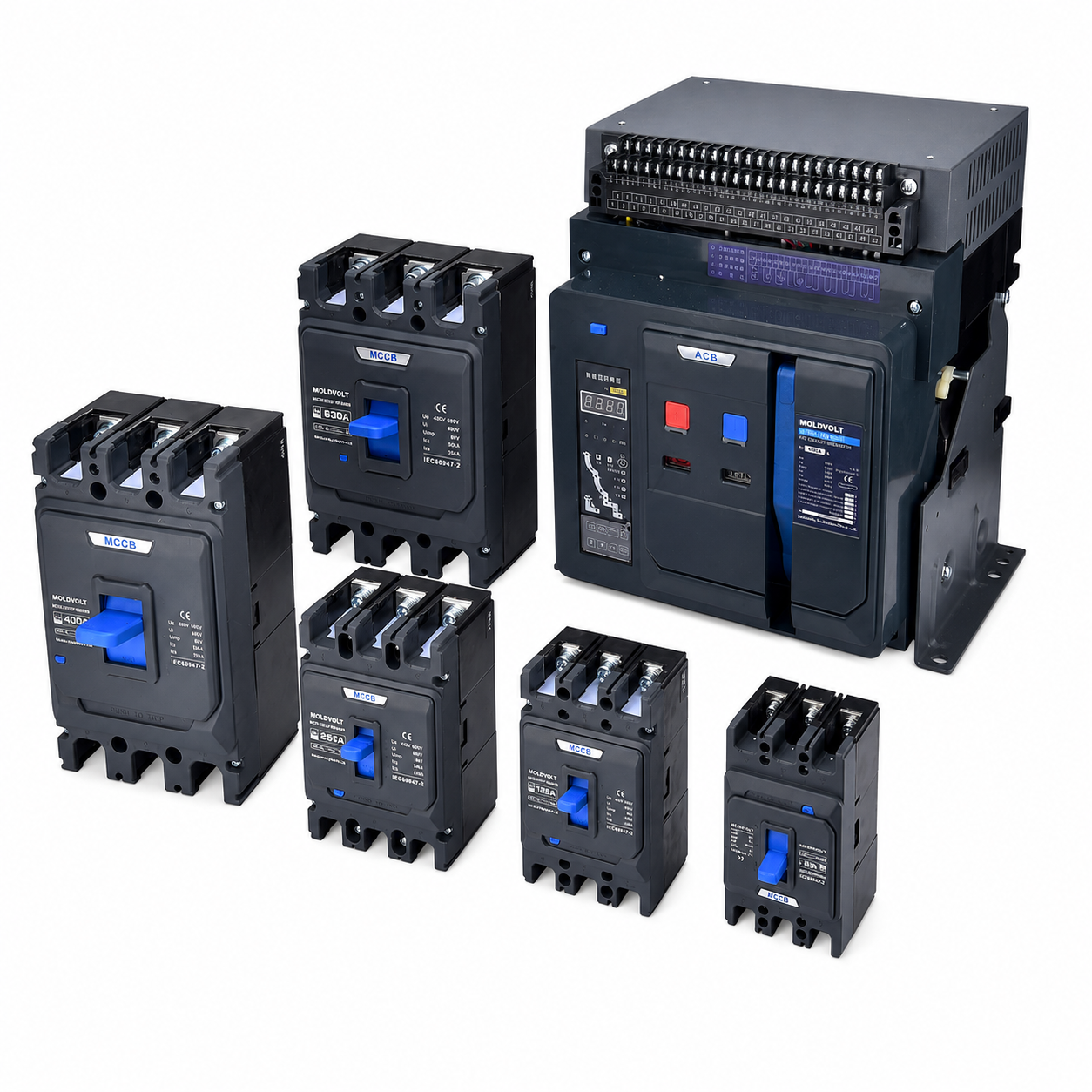
Most panel builders and procurement teams sourcing low-voltage protection devices for industrial distribution boards face the same decision point: selecting the right protective device for a given load profile, fault level, and installation environment. A mold case circuit breaker — commonly abbreviated MCCB — is positioned between the miniature circuit breaker and the air circuit breaker in the protective device hierarchy. Its defining feature is the moulded insulating housing that encloses the current-carrying and interrupting components, providing compact short-circuit and overload protection for rated currents from 16 A to 1600 A and breaking capacities reaching 100 kA Icu.
A mold case circuit breaker of this type is defined and tested under IEC 60947-2, the international standard governing low-voltage circuit breakers for industrial and commercial distribution systems. Products in this category — including the MOM-1 series — are type-tested against this standard, providing a documented compliance baseline for buyers in markets where IEC-aligned requirements apply, including Russia, Brazil, Indonesia, Turkey, and Poland.
Key Product Characteristics
The MOM-1 is the primary mold case circuit breaker series in this category, covering rated currents from 16 A to 1600 A with a rated ultimate short-circuit breaking capacity (Icu) up to 100 kA. It supports both thermal-magnetic and electronic trip unit configurations. For straightforward resistive or lightly inductive loads, thermal-magnetic trip units provide self-powered protection without external auxiliary power requirements. For industrial systems with complex load profiles, electronic trip units offer adjustable protection settings that enable precise time-current discrimination between upstream and downstream protective devices.
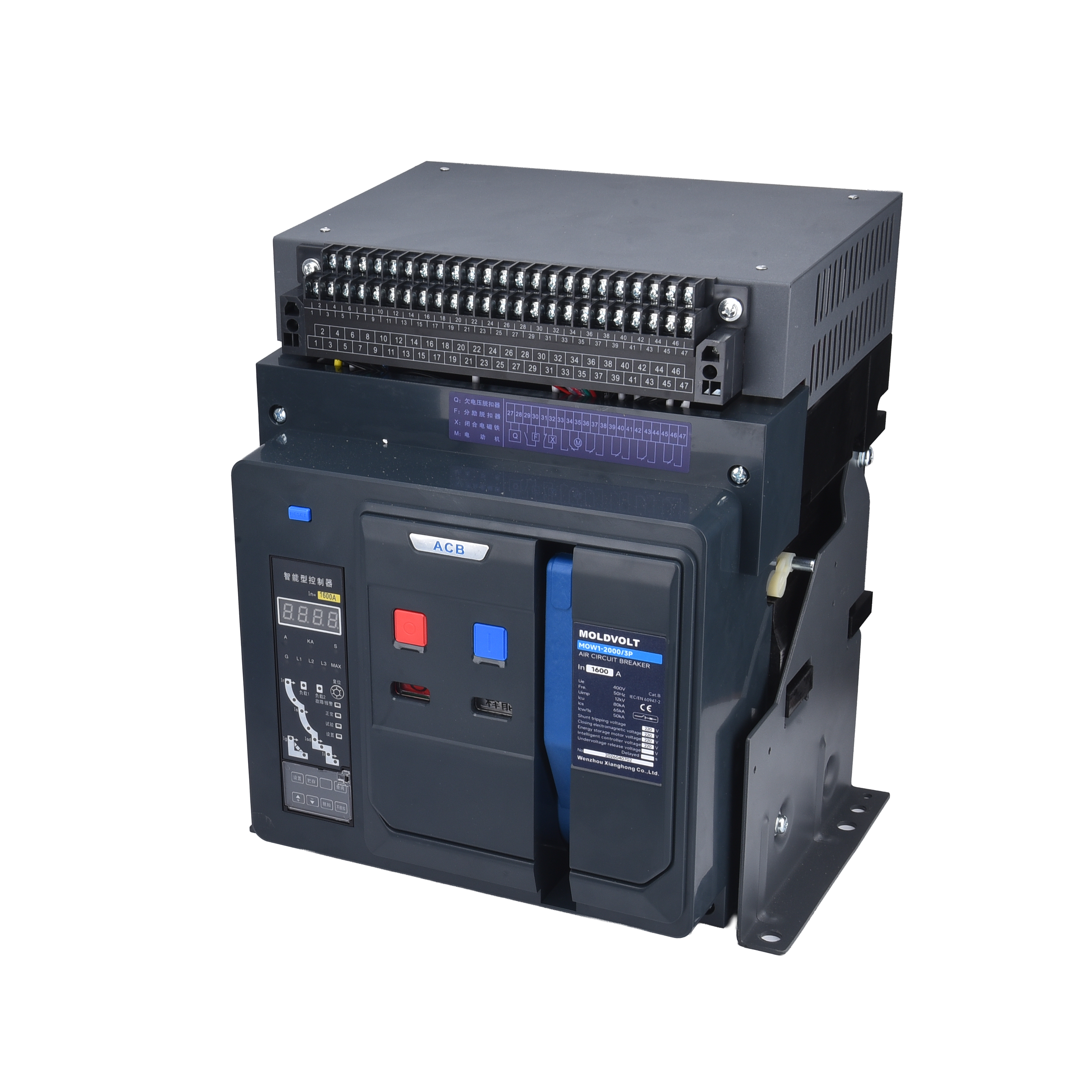
For high-capacity main incomer applications — typically generator outputs or large industrial main feeders — the MOW-1 air circuit breaker extends the protective device range from 630 A to 6300 A, with a short-circuit withstand current (Icw) up to 100 kA for one second. The MOW-1 is available in both drawout and fixed-mounted configurations, with an electronic trip unit that includes energy metering and Modbus communication for SCADA integration.
A widely held assumption is that a higher Icu rating always produces faster fault clearance. In practice, tripping time under short-circuit conditions is governed by the trip unit protection settings and the mechanical operating mechanism speed — not by the rated breaking current value alone. Specifying a higher Icu provides the necessary safety margin above the available fault current at the installation point, but selective coordination of tripping times across the protection system requires deliberate configuration of trip unit settings.
Common Applications
Mold case circuit breaker products are used across a wide range of commercial and industrial distribution applications. Typical use cases include:
- Main incomer protection for commercial buildings, industrial facilities, and sub-distribution boards where fault levels and load complexity require adjustable or high-capacity protection.
- Motor feeder protection for HVAC systems, pumps, compressors, and process machinery where motor starting inrush currents require a trip curve that tolerates transient overcurrent without nuisance tripping.
- Generator output protection where breaking capacity and selectivity with downstream circuit breakers must be coordinated during both normal operation and fault conditions.
- Sub-distribution board incoming circuits in facilities where multiple outgoing feeders require individual protection rated to the calculated fault level at that distribution point.
- Switchboard main incoming protection in panel builder assemblies where dimensional and terminal interface compatibility with the panel design is a critical procurement requirement.
Trip curve classification determines application suitability. Type B (3–5× rated current) suits residential and light commercial resistive loads. Type C (5–10×) is standard for commercial and industrial loads with moderate inrush, such as lighting circuits and small motors. Type D (10–20×) is appropriate for high-inrush loads, including large motors, transformers, and welding equipment. Type K is optimized for motor starting characteristics, while Type Z is the most sensitive option, designed for semiconductor and medical equipment circuits requiring fast response to minor overcurrents.
How to Select the Right Mold Case Circuit Breaker
Before specifying a mold case circuit breaker, it is worth asking: which of the three primary parameters — rated current, breaking capacity, or trip unit type — is the binding constraint in this application? The decision path differs significantly depending on whether the device will protect a motor feeder, a main incomer, or a sub-distribution board incoming circuit.
A structured selection sequence covers the following steps:
- Determine rated current (In) from the maximum continuous load current at the installation point. Confirm the frame size (Inm) needed and verify that the mold case circuit breaker range includes that frame size as a standard configuration.
- Establish the available fault current at the installation point — the prospective short-circuit current. The selected device's Icu must exceed this value. It is common practice to specify Icu with a margin above the calculated fault level to accommodate future load growth without equipment replacement.
- Select the trip unit type based on load complexity: thermal-magnetic for defined, stable loads; electronic for systems requiring selective coordination across multiple protection levels or adjustable time-current characteristics.
- Apply ambient temperature derating. The rated current on a mold case circuit breaker nameplate is based on a 40°C ambient temperature assumption per IEC standards. In installations where ambient temperatures regularly exceed 45–50°C — switchrooms in tropical climates, outdoor enclosures in East Africa, or the Middle East — the effective safe loading is lower than the nameplate rating. Overlooking this derating introduces a thermal risk that is not visible from the nameplate value alone.
- Verify dimensional and terminal compatibility. Panel builders substituting a mold case circuit breaker from a new supplier should confirm that the terminal positions, connection busbar interface, and mounting footprint align with the existing panel layout. Dimensional differences between supplier product ranges can require panel redesign, adding time and cost to the assembly process.
If your priority is precise protection coordination across multiple distribution levels, the critical factor is trip unit adjustability and documented time-current characteristics — but that trade-off shifts for a straightforward motor feeder in a light industrial facility, where a thermal-magnetic Type C mold case circuit breaker provides adequate protection with significantly less complexity.
Procurement and Sourcing Considerations
When comparing mold case circuit breaker quotations from multiple suppliers, buyers commonly encounter wide price variation for specifications that appear superficially equivalent. A persistent challenge in competitive procurement is determining whether quotations for nominally identical specifications represent genuinely equivalent products: the same Icu rating may be achieved by different product designs with differing thermal characteristics, accessory compatibility ranges, and type test evidence depth.
IEC 60947-2 compliance in a mold case circuit breaker specification is a necessary starting point, but not a guarantee of consistent in-service performance across all installation environments. The gap becomes evident when ambient conditions — elevated temperature, high humidity, or airborne contaminants — differ substantially from the test protocol assumptions. Requesting type test reports issued by accredited third-party laboratories, and confirming which clauses were covered, provides a more reliable comparison basis than a self-declared compliance statement from a manufacturer.
For procurement teams sourcing for projects in markets where national standards are aligned with IEC frameworks — including Russia, Brazil, Indonesia, Vietnam, and Poland — suppliers with documented IEC 60947-2 type test evidence reduce friction in project submittal, technical approval, and customs clearance processes.
Why Source from This Category
This product category provides access to a mold case circuit breaker range covering rated currents from 16 A to 1600 A, with IEC 60947-2 compliance and both thermal-magnetic and electronic trip unit configurations. The current rating range, breaking capacity options, and trip unit flexibility address the majority of standard industrial and commercial LV distribution protection requirements within a single product family, reducing the need to source from multiple suppliers for a standard panel assembly bill of materials.
For panel builders and procurement teams managing multi-specification projects, sourcing the mold case circuit breaker and high-capacity air circuit breaker requirements within the same product range supports consistent technical documentation and simplifies supplier evaluation. Products are available with the range depth — multiple frame sizes, current ratings, and trip unit options — needed to address varied project specifications within a single procurement relationship, reducing coordination effort across a project bill of materials.