EN

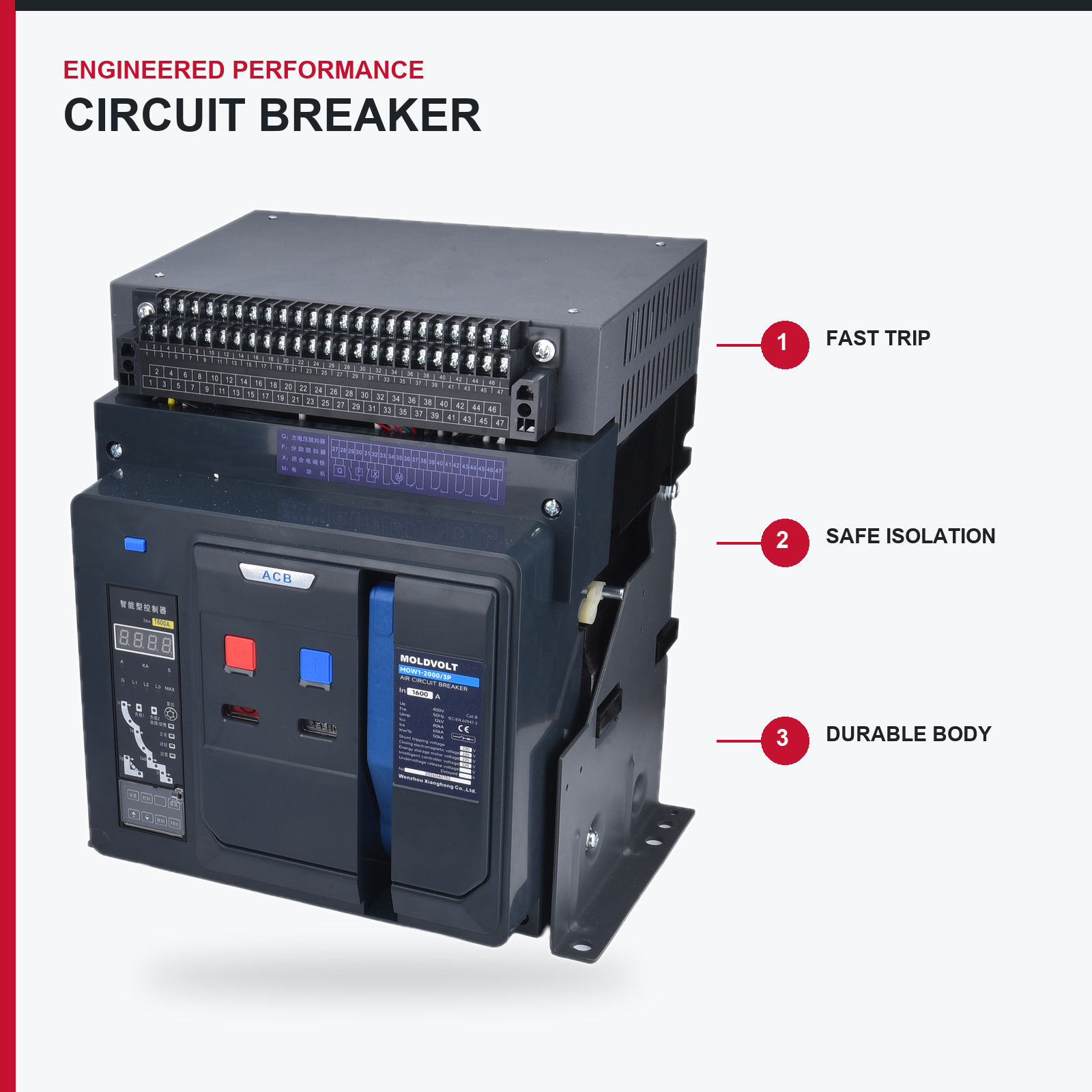
MOW-1 Air Circuit Breaker - 630A to 6300A, Icw up to 100 kA for 1 s
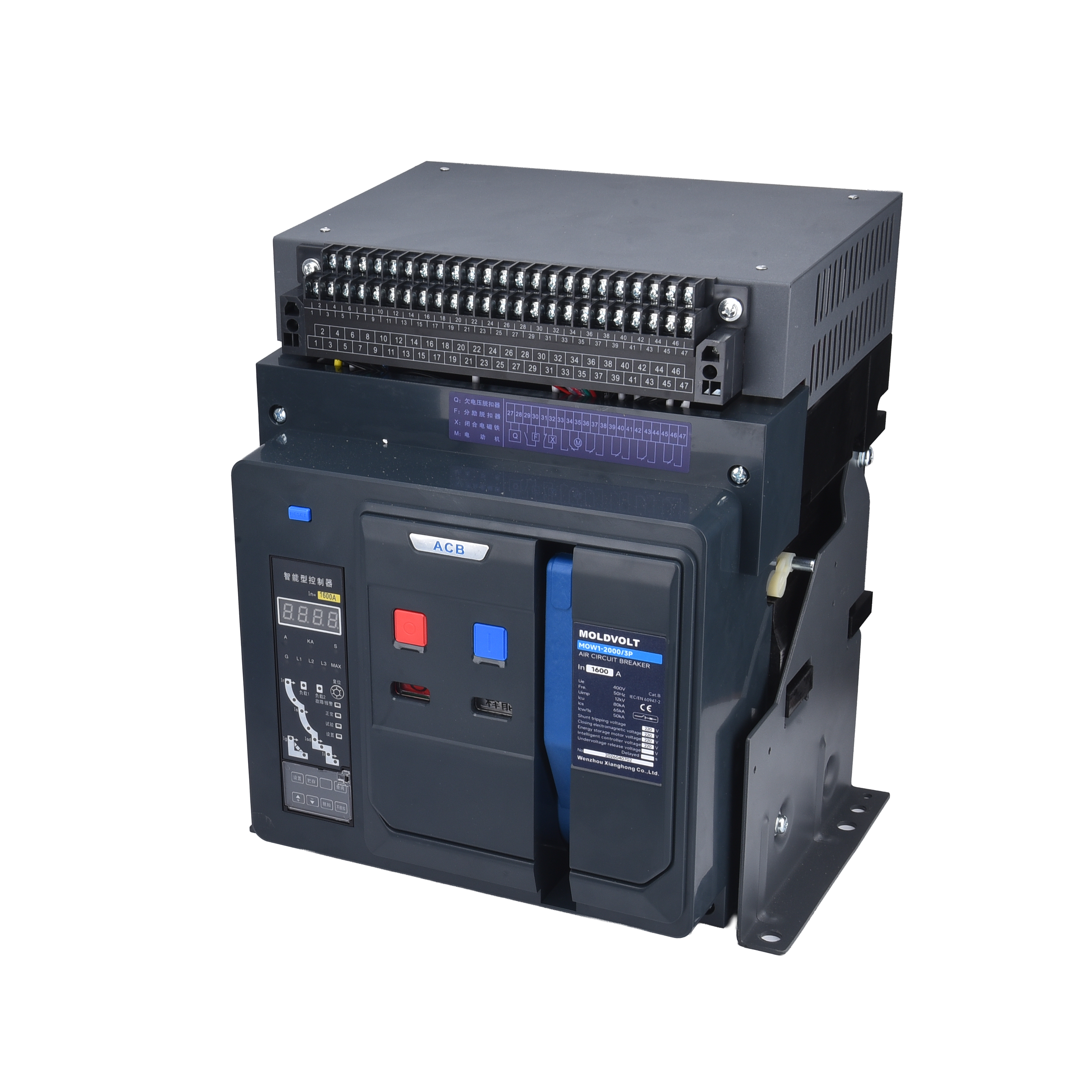
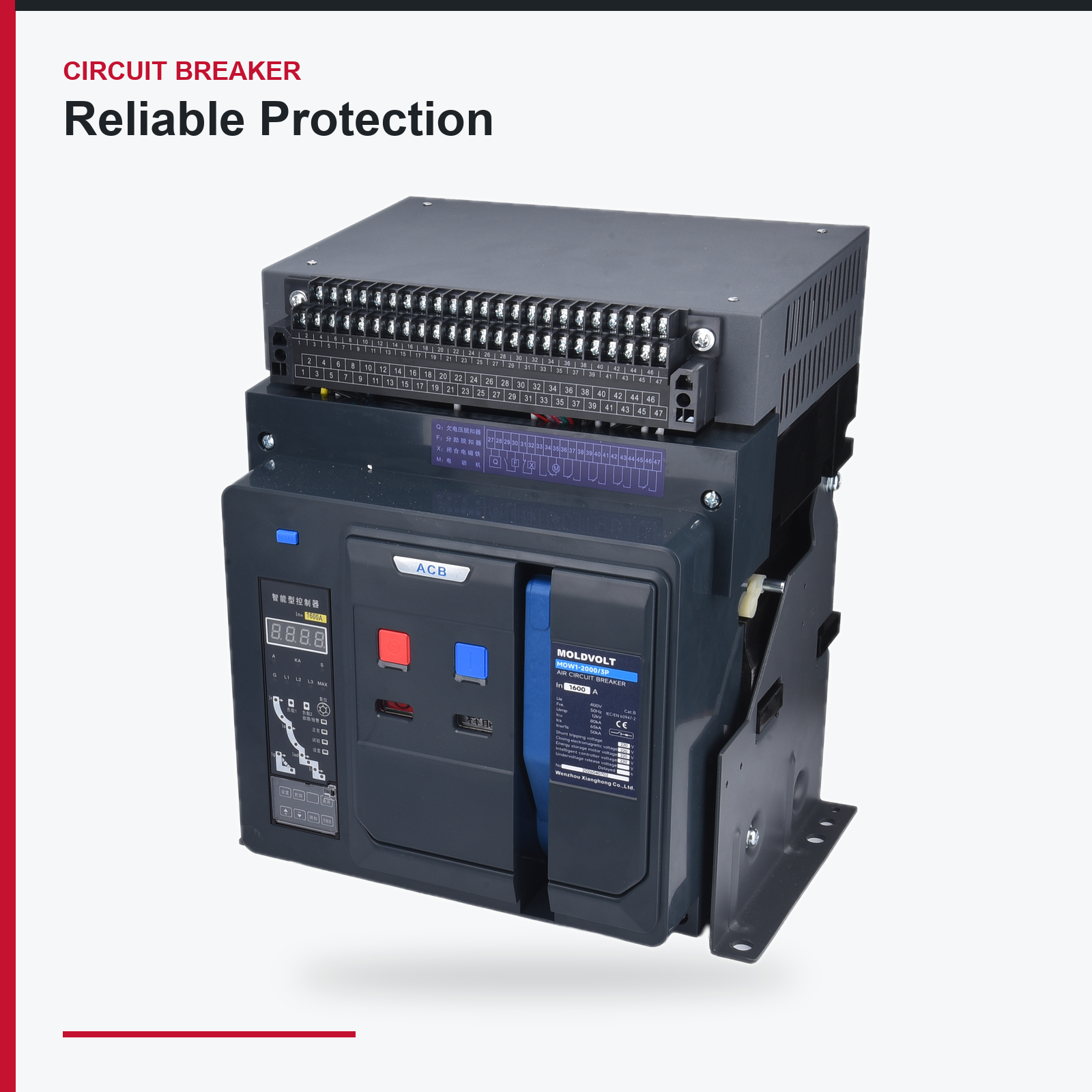
MOW-1 air circuit breaker, 630A to 6300A, Icu to 120kA, Icw to 100kA/1s. Drawout and fixed. Electronic trip with selectivity, metering and Modbus. IEC 60947-2.
- Overview
- Applications
- Technical Data
- Services
- Quality Control
- Recommended Products
MOW-1 Air Circuit Breaker - 630A to 6300A, Icw up to 100 kA for 1 s
MOW-1 is the main incomer. It sits at the top of the low voltage installation, immediately downstream of the transformer, where the fault level is highest and where the consequences of a wrong specification are largest. It covers 630A to 6300A in fixed and drawout versions, with an electronic trip unit designed around selectivity rather than just protection.
WHAT AN ACB DOES THAT AN MCCB CANNOT
Short-time withstand. An MCCB is designed to clear a fault as fast as possible. An ACB is designed to hold a fault current for a defined time - up to 100 kA for one second - without tripping, so that the downstream device closest to the fault can clear it first. That is the whole basis of selectivity in a large installation, and it is why a main incomer is an ACB and not a large MCCB.
WHY SELECTIVITY IS A COMMERCIAL ISSUE, NOT A TECHNICAL ONE
Without selectivity, a fault on one small feeder trips the main incomer and takes the entire installation down. In a hospital, a data centre, a hotel, a cement plant or a desalination works, that is the difference between an incident affecting one circuit and an incident affecting the whole site. Clients who have experienced it once specify selectivity forever. Panel builders who can demonstrate a proper discrimination study win those clients.
DRAWOUT OR FIXED
Drawout allows the incomer to be racked out for inspection, testing and replacement without dismantling busbar connections - which on a main incomer means a maintenance outage measured in hours rather than days. Fixed is cheaper and appropriate where the installation can be shut down and where the client has no maintenance regime that needs it. In our experience most projects that specify fixed to save cost regret it at the first major maintenance shutdown.
THE HIGH-AMBIENT POINT AGAIN, AND IT MATTERS MORE HERE
An ACB carries the full site load continuously. In a Gulf switchroom at 50-55 C against an IEC reference of +40 C, the derating on a 4000A incomer is a large absolute number. Sizing the incomer on its nameplate rating in a hot switchroom is one of the more expensive design errors available, because the fix is a new breaker and new busbar work.
SUPPLIED WITH THE ENGINEERING
Send the single-line diagram, transformer rating and impedance, prospective fault level, downstream device schedule and switchroom ambient. We return the frame, the trip unit, the settings, the discrimination check against downstream devices, and the derated continuous rating for the actual temperature.
PRIMARY APPLICATIONS
- Main incomer at the LV side of a distribution transformer - the core application.
- Bus coupler in dual-transformer and dual-incomer arrangements.
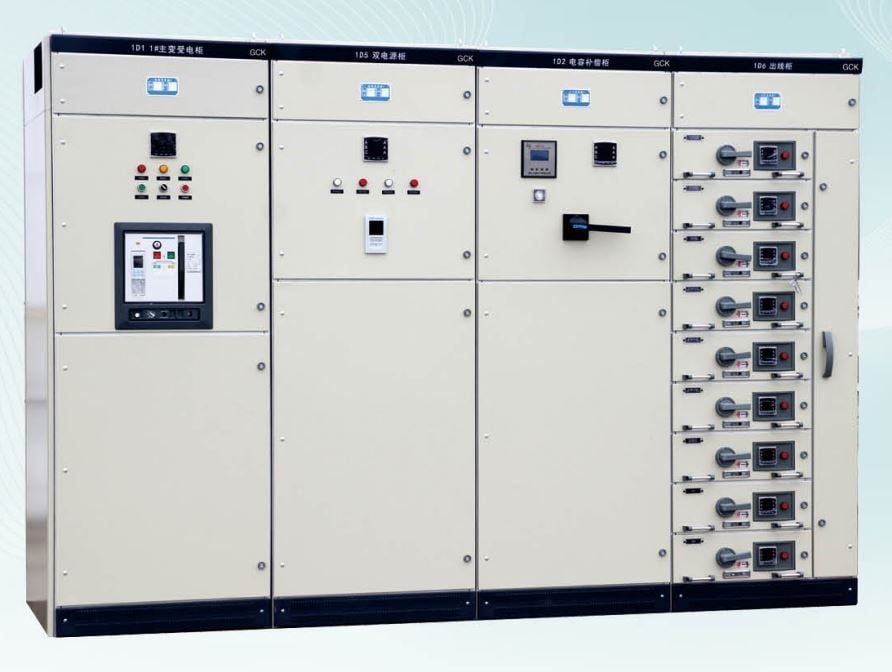
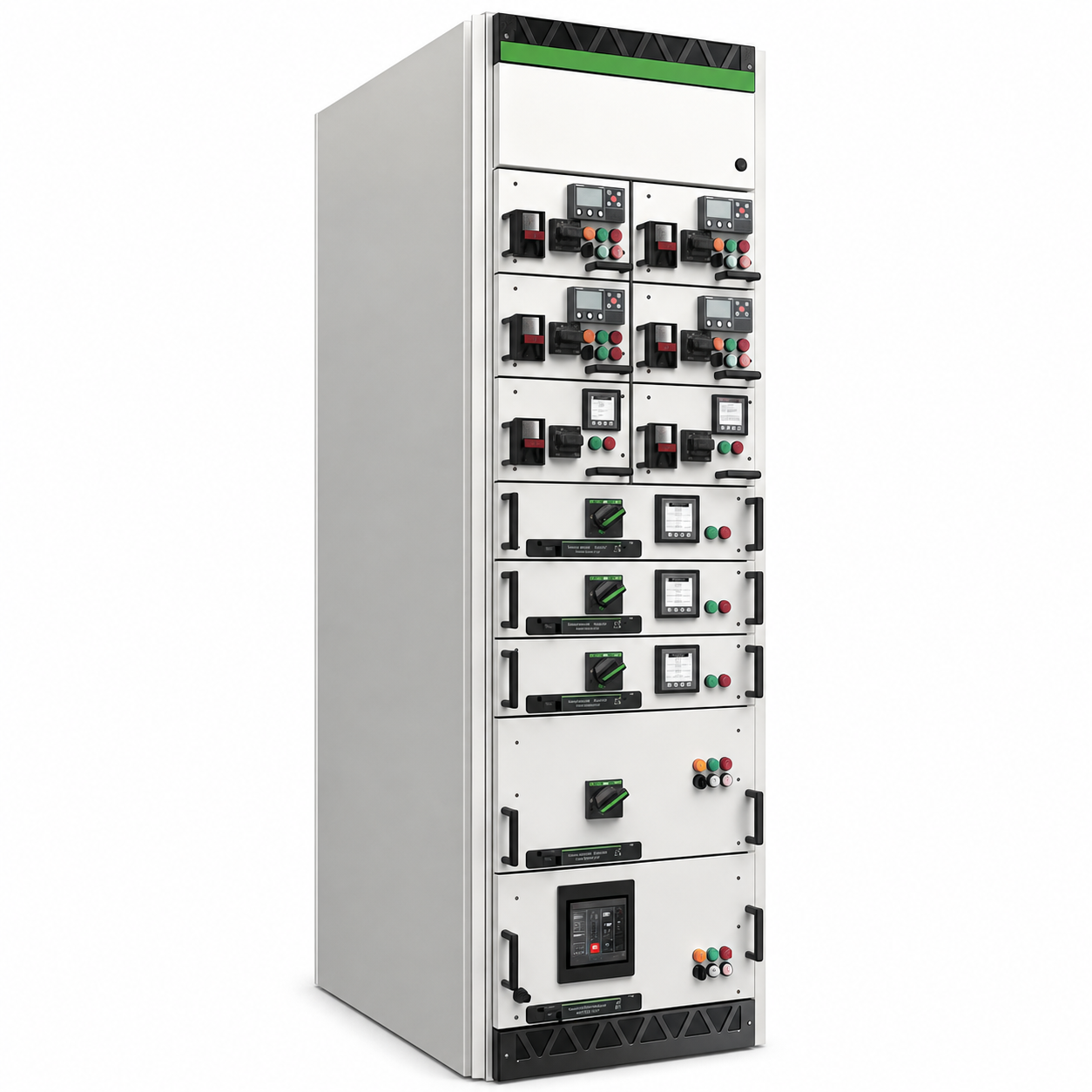
- Main incomer on GGD, GCS, GCK and MNS switchgear lineups.
- Sub-main feeders to large downstream motor control centres and distribution boards.
- Generator incomer and changeover schemes on standby and prime power installations.
- Large capacitor bank main protection.
- Industrial main switchboards: cement, steel, mining, paper, sugar, petrochemical.
- Building main switchboards in towers, hospitals, airports, malls and data centres.
- Desalination and water treatment plant main distribution.
- Solar PV plant LV collection main breakers.
TYPICAL SCHEMES
Single incomer with outgoing feeders; two incomers with a bus coupler and mechanical or electrical interlock so only two of three breakers can be closed; main-tie-main automatic transfer with generator changeover and load shedding on undervoltage.
WHY BUYERS SPECIFY IT
Because it is the device whose failure or mis-operation takes down the whole installation. On any project where continuity of supply has a stated value - hospital, data centre, continuous process plant - the incomer specification and the discrimination study are examined closely, and a bid that presents both properly stands out.
REGIONAL FIT
- Middle East: derating for 50-55 C switchroom ambient is critical on a device carrying full site load continuously. Saudi Arabia operates at 60 Hz, which must be verified explicitly. Witnessed factory acceptance testing is standard on SEC and comparable utility projects; SASO SABER, DEWA, KAHRAMAA, MEW and Oman DCRP submittals supported.
- Africa: grid instability makes under-voltage protection, phase-failure protection and generator changeover schemes a routine requirement rather than an option. SONCAP under HS 8536 for Nigeria, KEBS PVoC for Kenya.
- Russia and CIS: 380V/220V, EAC under TR CU 004/2011 and TR CU 020/2011, cold-start considerations in partly heated switchrooms.
- Eastern Europe: 400V, CE under LVD 2014/35/EU and EMC 2014/30/EU, with a formal discrimination study commonly required as part of the design submission.
NOT SUITABLE FOR
Small feeder protection, where an MCCB is the correct and far cheaper device. Medium voltage circuits, which require MV switchgear. Frequent switching duty of motors, which requires a contactor.
TECHNICAL DATA - MOW-1 Air Circuit Breaker
Compliance: IEC 60947-1, IEC 60947-2, GB 14048.2
| Category | Item | Parameter Details |
| GENERAL RATINGS | Rated operational voltage (Ue) | 400 V / 415 V / 690 V AC |
| Rated insulation voltage (Ui) | 1000 V | |
| Rated impulse withstand voltage (Uimp) | 12 kV | |
| Rated frequency | 50 Hz / 60 Hz | |
| Number of poles | 3P / 4P | |
| Utilisation category | B | |
| Suitability for isolation | yes, per IEC 60947-2 | |
| Construction | fixed or drawout | |
| FRAME SIZES AND CURRENT RATINGS | Frame 2000 A | 630 / 800 / 1000 / 1250 / 1600 / 2000 A |
| Frame 3200 A | 2000 / 2500 / 2900 / 3200 A | |
| Frame 4000 A | 3200 / 3600 / 4000 A | |
| Frame 6300 A | 4000 / 5000 / 6300 A | |
| SHORT-CIRCUIT PERFORMANCE | Icu at 415 V - Frame 2000 A | 65 / 80 kA |
| Icu - Frame 3200 A | 80 / 100 kA | |
| Icu - Frame 4000 A | 100 kA | |
| Icu - Frame 6300 A | 100 / 120 kA | |
| Rated service short-circuit breaking capacity (Ics) | 100% of Icu | |
| Rated short-time withstand current (Icw) | 65 / 80 / 100 kA for 1 s | |
| Note | Icw is the parameter that makes time-graded selectivity possible; it is the reason a main incomer is an ACB rather than a large MCCB | |
| ELECTRONIC TRIP UNIT | Protection functions | long-time (L), short-time (S), instantaneous (I), earth fault (G), with adjustable settings and time delays |
| Selectivity | time-graded short-time delay for discrimination with downstream devices; zone selective interlocking (ZSI) available | |
| Additional protection | under-voltage, over-voltage, phase unbalance, phase sequence, reverse power (option dependent) | |
| Metering | current, voltage, power, power factor, energy, harmonics | |
| Display | LCD with setting readout and trip cause indication | |
| Communication | Modbus RS-485 standard; Profibus and Profinet optional | |
| Memory | trip cause memory and event log | |
| DERATING | Reference ambient | +40 C per IEC |
| High ambient derating | derating tables supplied per frame for elevated ambient; at 55 C cubicle temperature the usable continuous current is materially reduced | |
| Altitude derating | applied above 2000 m | |
| Recommendation | size the incomer on the derated rating for the actual switchroom temperature, and state that figure in the submittal | |
| OPERATING MECHANISM | Type | stored-energy spring mechanism |
| Charging | manual handle and motor charging | |
| Closing and opening | local push button, remote electrical, and remote communication where fitted | |
| Closing time | less than 80 ms typical | |
| Breaking time | less than 40 ms typical | |
| Rated control voltage | 230 V AC, 110 V AC, 24 V DC, 110 V DC, 220 V DC | |
| ENDURANCE | Mechanical | 10,000 to 20,000 operations depending on frame |
| Electrical | 5,000 to 10,000 operations depending on frame | |
| Drawout mechanism | three positions - Connected, Test, Isolated - with position indication and padlocking in Isolated | |
| INTERLOCKS AND SAFETY | System interlock | mechanical and electrical interlock between incomers and bus coupler |
| Racking interlock | cannot be racked with the breaker closed | |
| Door interlock | door interlock and padlocking provision | |
| Safety shutters | over the primary contacts in drawout versions | |
| Earthing | dedicated earth contact engaging before power contacts | |
| ACCESSORIES | Release and coil | shunt trip release, closing coil, under-voltage release, motor charging unit |
| Contacts | auxiliary contacts, ready-to-close contact, spring-charged contact | |
| Mechanical accessories | mechanical operation counter, key lock, mis-insertion prevention | |
| Mounting accessories | racking handle, cell shutters, terminal shrouds and connection bars | |
| ENVIRONMENT | Ambient temperature | -25 C to +70 C storage; -5 C to +55 C operation with derating |
| Relative humidity | up to 95% | |
| Pollution degree | 3 | |
| Altitude | up to 2000 m without derating | |
| Installation | indoor, in a verified assembly |
TESTING - EVERY UNIT
Dielectric withstand and insulation resistance; main circuit resistance;
mechanical operation of the stored-energy mechanism; trip unit verification at
defined characteristic points; auxiliary and alarm contact function; drawout
three-position operation and interlock verification; rating plate verification
CERTIFICATION SUPPORT
Type-test reports to IEC 60947-2, tripping characteristic and let-through curves,
selectivity tables against downstream MCCBs, and declarations for EAC
(TR CU 004/2011 and TR CU 020/2011), CE (LVD and EMC), SASO SABER, SONCAP
(HS 8536) and KEBS PVoC
PROTECTION DEVICES SPECIFIED FOR THE BOARD, NOT SOLD OFF A SHELF
A breaker is only correct in the context of the board it sits in - the fault level at that point, the cable it protects, the device upstream of it and the ambient inside the cubicle. We supply the device together with the selection work, because a mis-specified breaker is discovered during commissioning, in front of the client.
1. SELECTION AND COORDINATION SUPPORT
Send us the single-line diagram, the prospective fault level and the feeder schedule. We return frame sizes, breaking capacities, trip unit types and setting recommendations, with discrimination checked between upstream and downstream devices. Cascading and back-up protection assessed where it saves cost legitimately.
2. AMBIENT AND ALTITUDE DERATING
Gulf switchrooms run at 50-55 C, well above the IEC +40 C reference. We supply the derating tables and state the corrected current rating for your actual cubicle temperature, so the board does not nuisance-trip in its first summer. Altitude correction provided where required.
3. SUPPLY MATCHED TO THE ASSEMBLY
Devices supplied with the correct mounting kit, terminal shrouds, phase barriers, connection bars and auxiliary contacts for the cabinet type - including the drawer-mounted variants for GCK, GCS and MNS. One part number, everything fits.
4. STOCK AND PROJECT SCHEDULING
Frame sizes and accessories held in stock for distributor call-off. Project quantities scheduled against your assembly programme so devices arrive with the cabinet build, not three weeks after it.
5. OEM AND PRIVATE LABEL
Brand marking and private-label packaging for distributors developing their own range, with territory protection and NDA.
6. CERTIFICATION AND TEST DOCUMENTATION
Type-test reports to IEC 60947-2 for breakers and IEC 61869-2 for current transformers, routine test certificates, characteristic and let-through curves, and the declarations required for EAC, CE, SASO SABER, SONCAP and KEBS PVoC submissions.
7. AFTER-SALES
24-hour technical response. Replacement trip units, auxiliary contacts and coils kept available. Warranty 12 months from commissioning or 18 months from shipment.
8. COMMERCIAL TERMS
FOB, CFR, CIF, DDP, Ex-Works. Consolidated loading with cabinets and components. Trade Assurance, T/T, L/C. Samples for type approval before volume.
QUALITY CONTROL - EVERY DEVICE TESTED, EVERY BATCH DOCUMENTED
Protection devices are the last line between a fault and a fire, and they are also the most counterfeited items in our markets. Every unit is routine tested and every batch is traceable to its type-test evidence, so the certificate in your submittal actually corresponds to the device in the board.
TYPE TESTING
Devices are type tested to the applicable standard - IEC 60947-2 for circuit breakers, IEC 61869-2 for current transformers - covering rated current and temperature rise, rated breaking and making capacity, short-time withstand, dielectric properties, mechanical and electrical endurance, and, for instrument transformers, accuracy class and burden performance. Type-test reports are supplied with the certification package.
ROUTINE TESTING - 100% OF PRODUCTION
1. Dielectric withstand test at the rated test voltage, and insulation resistance measured and recorded.
2. Main circuit resistance measured against the specified limit - the earliest indicator of a poor internal joint.
3. Mechanical operation - opening, closing, and reset verified over repeated operations.
4. Trip unit verification - thermal and magnetic, or electronic, checked against the tripping characteristic at defined test points.
5. Auxiliary and alarm contact function verified.
6. For current transformers: ratio and polarity check, winding resistance, accuracy at defined burden points, and excitation characteristic where applicable.
7. Rating plate data verified against the ordered specification - the check that catches a mis-picked frame size before it reaches the customer.
TRACEABILITY
8. Every unit carries a serial number linked to its production batch, routine test record and type-test reference.
9. Incoming component inspection with supplier certificate traceability.
10. In-process inspection at sub-assembly and final assembly stages.
WHAT YOU RECEIVE
Routine test certificate, type-test report, tripping characteristic and let-through curves, dimensional and mounting drawings, and the declarations required for EAC under TR CU 004/2011 and TR CU 020/2011, CE under LVD and EMC, SASO SABER, SONCAP and KEBS PVoC submissions.
INDEPENDENT VERIFICATION
Third-party inspection by SGS, BV, TUV or Intertek accepted and coordinated on request. Pre-shipment inspection with photographs issued for every order. Samples supplied for your own type-approval testing before volume. ISO 9001 quality management applies throughout.