EN

What Is an L.V Switchgear Accessory?
Most panel builders working through a standard distribution board build encounter the same procurement challenge: the switchgear itself is specified and ordered, but the L.V Switchgear Accessory components required to complete the panel — busbar supports, cable retention hardware, operating mechanisms, and door hardware — come from multiple sources with varying lead times and dimensional consistency. An L.V Switchgear Accessory is a structural or functional component that completes an LV panel assembly, covering everything from busbar holder systems and cable clamps to racking mechanisms, plug-in isolating contacts, and cabinet hardware. This L.V Switchgear Accessory category covers the full hardware range for LV panel assembly, maintenance, and upgrade applications, supporting panel builders, electrical contractors, and maintenance teams sourcing from a single supplier.
L.V Switchgear Accessory Product Range
This L.V Switchgear Accessory range includes nine product families, each addressing a specific functional requirement in LV switchgear construction and maintenance:
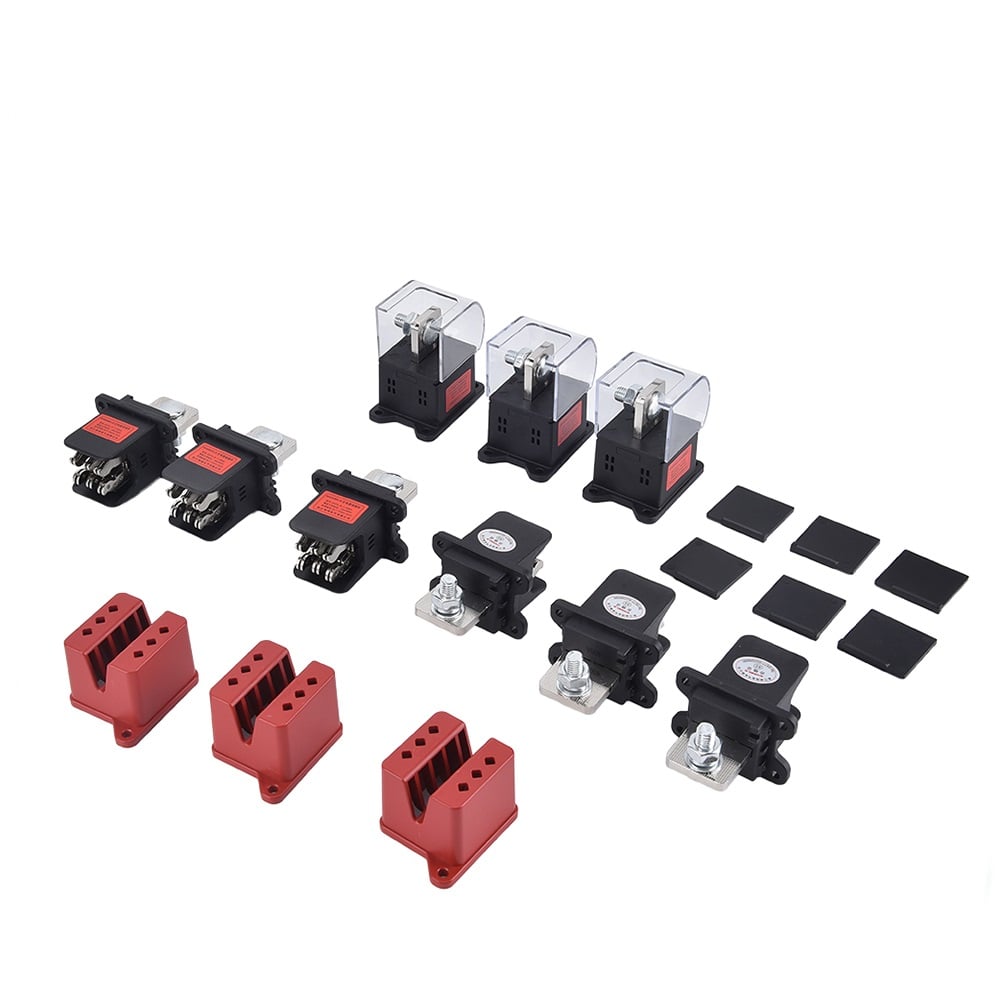
- Busbar Holders and Clamps: Flame-retardant moulded holders for one to four bars per phase, rated to 73.5 kA peak with ZM clamps. Spacing tables are available for IEC-compliant installations.
- Busbar Standoff Insulators: SMC and DMC moulded standoffs with M6 to M12 threaded inserts, high tracking index, and flame-retardant properties. Rated as a system for fault withstand.
- Cable Clamps and Cleats: Single, trefoil, and multi-cable configurations in steel and polymer. Short-circuit rated and sized to actual cable outer diameter, suitable for LV switchgear and cabinet cable retention.
- Plug-in Isolating Contacts: Silver-plated, spring-loaded, self-aligning primary and secondary contacts for withdrawable LV drawers. Rated for 100,000 operating cycles with tested contact sets.
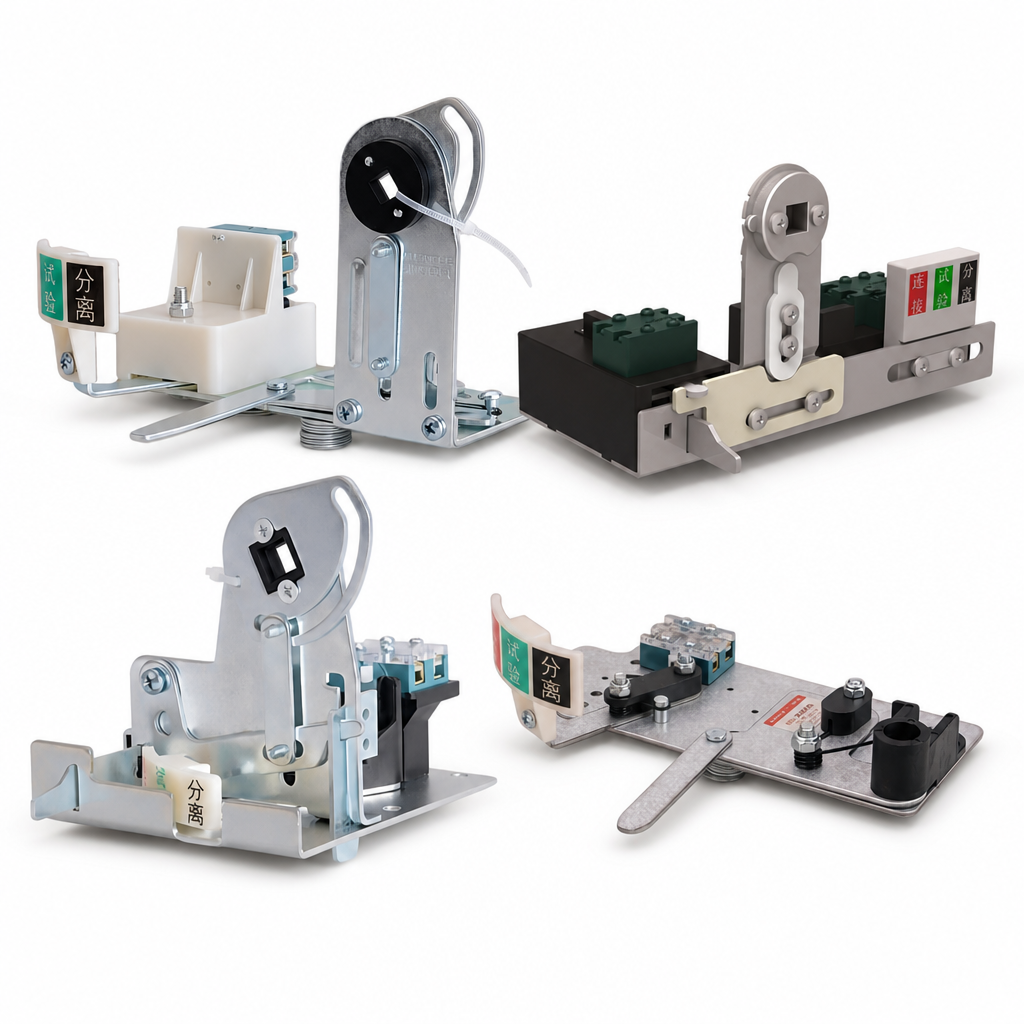
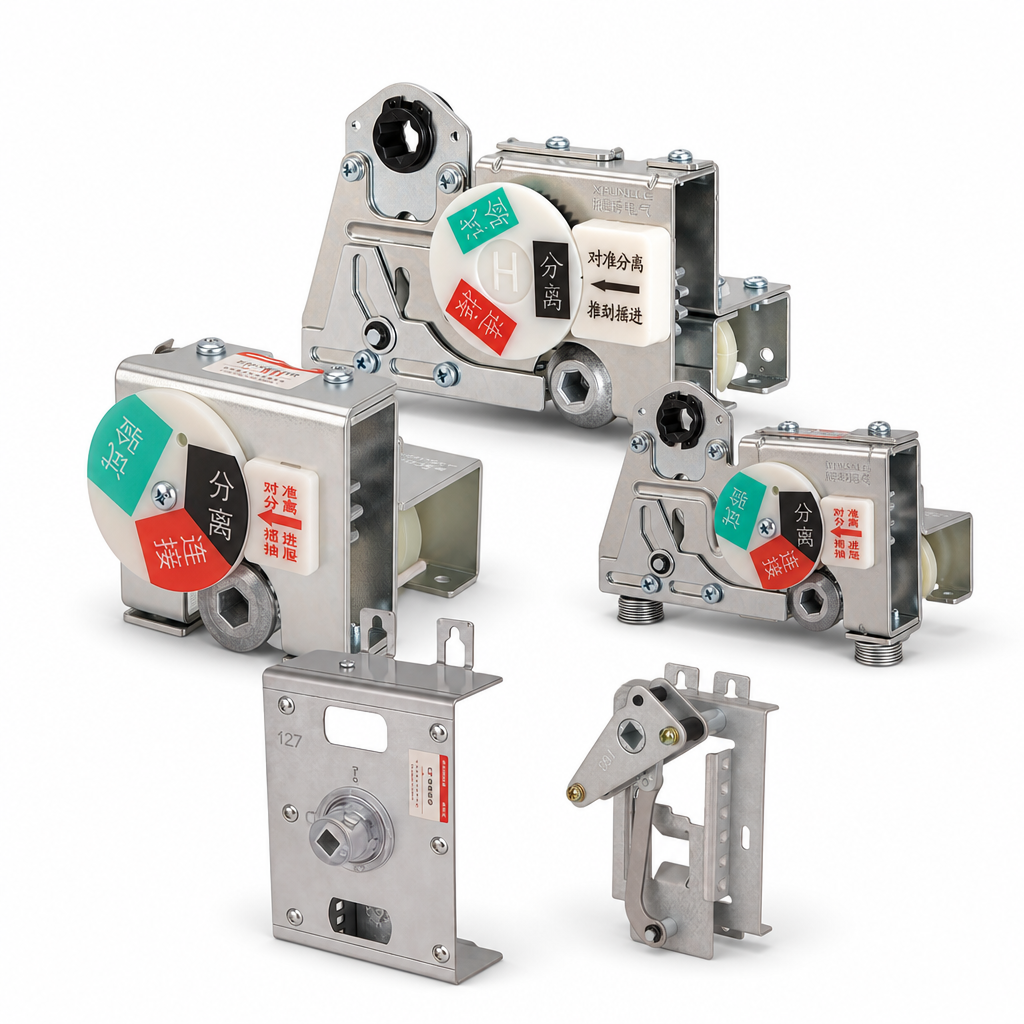
- Hand-Pull Racking Mechanisms: Three-position Connect, Test, and Disconnect operation with positive latching, mechanical interlock, and padlocking provision. Rated for 100,000 operating cycles.
- Manual Operating Mechanisms: Door-mounted rotary handles with door interlock, padlocking facility, and defeat provision. Compatible with MCCB and switch-disconnector frames.
- Switchgear Handles: Swing, L, and T handle configurations in zinc alloy and stainless steel. Padlockable and lockable versions available, rated IP65. OEM customisation is supported.
- Switchgear Lock Systems: Cam locks, 3-point latch rod assemblies, keyed-alike, and master-key arrangements in zinc alloy and stainless steel. IP65 rated for industrial enclosure applications.
- Electrical Cabinet Accessories: Complete hardware range including hinges, gaskets, gland plates, mounting plates, DIN rail, cable trunking, earth studs, plinths, and door hardware. OEM supply is available.
L.V Switchgear Accessory Applications
An L.V Switchgear Accessory serves both new switchgear installations and ongoing maintenance and refurbishment programs. The main application contexts include:
- New panel assembly: Panel builders assembling LV distribution boards, motor control centres, and power control panels require each L.V Switchgear Accessory type — busbar support hardware, cable retention components, and enclosure hardware — as part of the standard build bill of materials.
- Withdrawable drawer servicing: Plug-in isolating contacts and racking mechanisms are the primary wear components in withdrawable LV drawer systems. Scheduled replacement of this L.V Switchgear Accessory category maintains the rated cycle performance of the drawer assembly over its service life.
- Operational safety hardware: Lock systems, padlockable handles, and door interlocks are safety-critical elements in LV panels where isolation and lockout procedures are in effect.
- Busbar system assembly and upgrade: Busbar holders, standoff insulators, and cable clamps support both new switchboard busbar installations and the retrofitting of higher-rated busbar systems into existing enclosures.
In practice, the L.V Switchgear Accessory components that cause the most difficulty during panel assembly are not always the most technically complex. One of the most common late-stage issues is finding that the cable entry hardware does not accommodate the actual cable size and bend radius required — something that is rarely visible in the catalogue drawing until the cables arrive on site. Specifying cable clamps and gland plates against the actual cable outer diameter early in the design stage avoids this problem. Similarly, mechanical interlocks on racking mechanisms and operating handles function correctly at commissioning; what is harder to assess is how latch geometry behaves after extended repeated operation and whether accumulated wear changes the reliability of the safety sequence.
How to Select the Right L.V Switchgear Accessory
When designing a distribution board around a specific busbar system or drawer platform, the critical constraint is not just the rated current — it is how each L.V Switchgear Accessory integrates with the enclosure dimensions, the busbar layout, and the operating sequence the panel will follow in service. A systematic selection approach reduces the risk of assembly rework and post-installation failures.
- Establish busbar system parameters first: Short-circuit withstand rating in kA peak and the number of bars per phase determine which busbar holder and standoff insulator models are valid. The rating of each L.V Switchgear Accessory in the busbar support path must meet or exceed the prospective fault current at the installation point.
- Confirm enclosure and panel form factor: Withdrawable drawer platforms require racking mechanisms and plug-in contacts that are dimensionally matched to the drawer frame. Fixed and withdrawable panels use different operating mechanism mountings and interlock provisions.
- Match cable entry hardware to actual cable schedule: Cable clamps and gland plates should be specified against the actual cable outer diameter, not the nominal cross-section. Short-circuit-rated cleats are required where the cable route is within the fault zone.
- Define security and interlock requirements: Facilities with formal electrical safety procedures specify the padlocking provision, keyway compatibility, and master-key arrangement required. Keyed-alike lock sets require the key specification to be agreed before the order is placed.
- Confirm material and environment rating: Cabinet handles and lock hardware for outdoor, coastal, or industrial enclosures should be specified in stainless steel with IP65 sealing. Zinc alloy hardware is appropriate for indoor, controlled-environment panels.
The L.V Switchgear Accessory market is highly price-competitive. Buyers frequently make sourcing decisions based on price, availability, and dimensional compatibility with established panel designs. In the panel-building segment, dimensional consistency between delivery batches matters as much as the initial specification: accessories with tolerance variation between batches create assembly rework that absorbs the cost advantage of a lower unit price.
Sourcing L.V Switchgear Accessory Components
Electrical panel builders and system integrators are the primary buyer segment for each L.V Switchgear Accessory type, purchasing in medium volumes with repeatable bill-of-materials structures for standard panel designs. For this group, supplier selection is a supply chain decision that affects every production run that follows, not a one-off purchase.
Two supply chain risks are worth addressing directly. First, dimensional variation between batches from the same supplier — busbar holders, standoff insulators, and cable cleats that do not maintain consistent tolerance disrupt standardised panel production and require manual fitting adjustments that reduce throughput. Second, incomplete kit fulfilment: when a bill-of-materials order for an L.V Switchgear Accessory selection is fulfilled in split shipments because not all items are available in the same production batch, panel assembly stalls until the missing items arrive.
For maintenance teams, the parallel concern is spares stocking. After the first scheduled maintenance cycle of a withdrawable LV panel, most operations teams find that isolating contact sets or racking mechanism latch assemblies were not included in the initial spares order — because their role in continued reliable operation was not apparent at commissioning. Identifying the wear components at initial procurement and stocking a minimum quantity avoids unplanned downtime at the next maintenance interval.
Sourcing L.V Switchgear Accessory components from a supplier with sufficient product range depth — covering multiple enclosure platforms, busbar ratings, and hardware configurations — reduces the number of procurement relationships required to maintain a standard panel design. Pre-sales technical consultation that confirms model compatibility before order placement reduces specification errors and post-delivery correction costs. Industry practice, consistent with general IEC guidance on switchgear assembly, supports confirming L.V Switchgear Accessory compatibility against the specific switchgear platform specification before finalising the purchase order.