EN

KYN28-24 Withdrawable Metal-Clad Switchgear
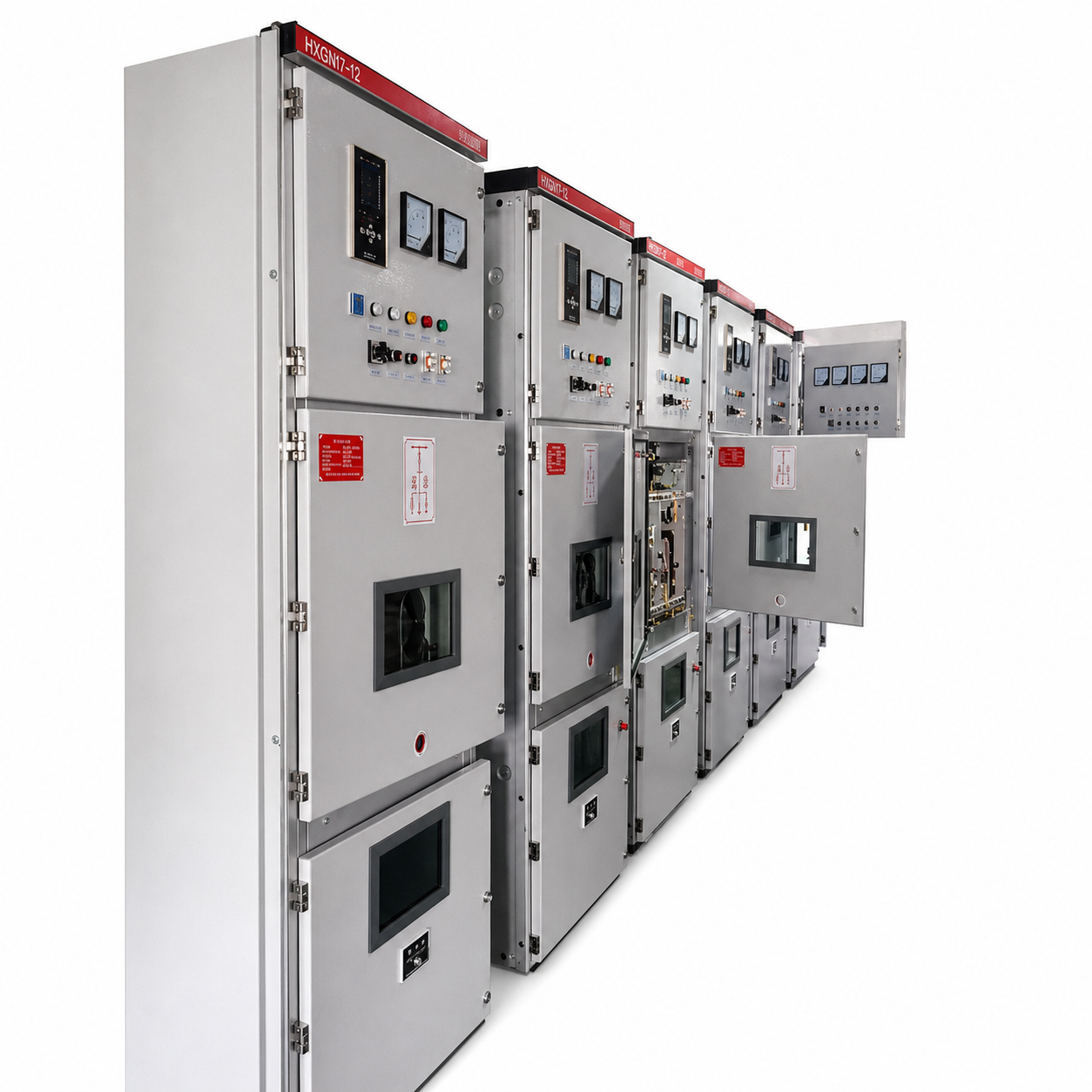
KYN28-24 withdrawable metal-clad switchgear is an indoor AC metal-enclosed distribution solution designed for 24kV three-phase systems. Built to IEC 62271-200, this medium voltage switchgear features a four-compartment architecture for enhanced operational safety. The handcart-mounted VCB design supports withdrawable circuit breaker configurations with three operating positions. Rated at 1250A to 2000A busbar current with 25kA breaking capacity and 125kV BIL, this MV switchgear serves utility secondary substations, industrial power distribution, and renewable energy collection networks across markets requiring 24kV voltage levels.
- Overview
- Applications
- Technical Data
- Services
- Quality Control
- Recommended Products
KYN28-24 Withdrawable Metal-Clad Switchgear - 24kV
KYN28-24 is the 24kV member of the KYN28 armoured withdrawable switchgear family, serving distribution networks that operate above the 12kV class. It retains the four-compartment metal-clad architecture and three-position withdrawable trolley of the KYN28-12, scaled up with increased phase clearances, a taller enclosure and a higher insulation level.
WHERE 24kV IS THE CORRECT CHOICE
Selecting rated voltage by nominal system voltage is where specification errors occur. The 24kV class covers:
- 22kV networks in the UAE, Qatar and parts of the wider Gulf region.
- 20kV networks across Eastern Europe - Poland, Romania, Bulgaria, Hungary and Serbia - and parts of the CIS.
- 22kV and 20kV African distribution, including South African municipal reticulation.
Networks at 33kV require the 40.5kV class, not this panel. Networks at 10kV and 11kV are correctly and more economically served by the KYN28-12.
INSULATION LEVEL IS THE REAL DIFFERENCE
The 24kV panel is not simply a taller 12kV cabinet. Power-frequency withstand rises to 50kV and lightning impulse withstand to 125kV peak, which drives larger phase-to-phase and phase-to-earth clearances, physically larger epoxy insulation components, and a 2600mm enclosure height. Attempting to uprate a 12kV panel for 24kV service by substituting components is unsafe and will not pass a dielectric type test.
CONSTRUCTION AND OPERATION
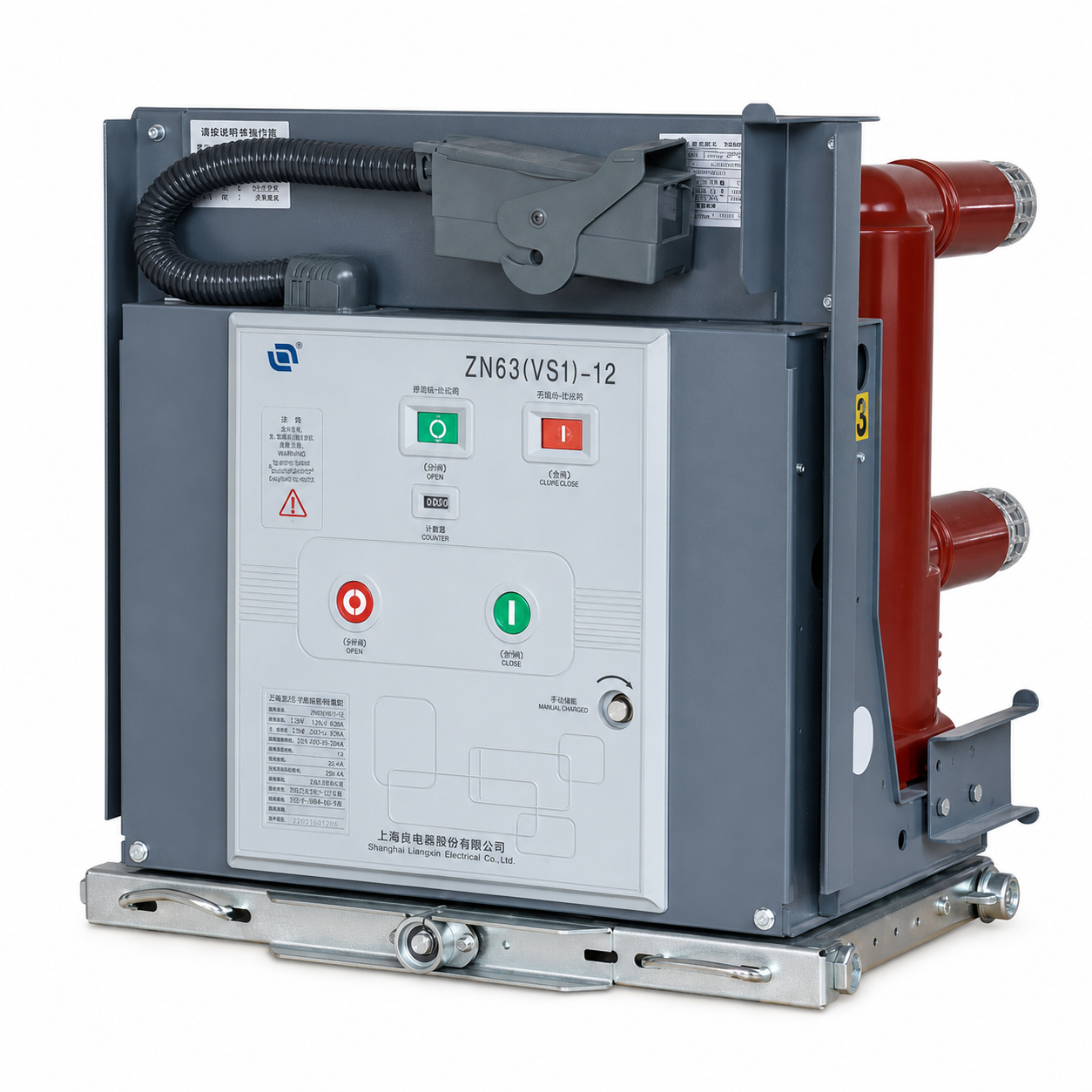
Busbar, breaker, cable and instrument compartments are separated by earthed steel barriers with a designed pressure relief path, verified by internal arc testing to IEC 62271-200. The breaker trolley moves between Service, Test and Isolated positions with full mechanical interlocking, so live maintenance on the cable compartment is possible while the busbar remains energised.
ENVIRONMENTAL ADAPTATION
IP4X is standard, upgradeable to IP54 for dusty and coastal installations. For Gulf projects we recalculate continuous current at 50-55 C rather than the IEC +40 C reference. For CIS supply the panel is available in GOST 15150 climatic versions with anti-condensation heating and low-temperature mechanism lubricant.
PRIMARY APPLICATIONS
- Utility distribution substations on 20kV and 22kV networks.
- Industrial plant main distribution where the incoming supply is at 22kV rather than 11kV.
- Renewable energy collection: solar PV and wind farms increasingly collect at 22kV to reduce cable losses over long collection runs.
- Municipal and district distribution in Eastern European 20kV networks.
- Large commercial and mixed-use developments taking a 22kV supply.
- Water, desalination and pumping infrastructure fed at 22kV.
- Industrial estate and free-zone distribution networks in the UAE and Qatar.
REGIONAL FIT
- UAE and Qatar: 22kV distribution alongside 11kV, subject to DEWA and KAHRAMAA material approval respectively.
- Eastern Europe: 20kV is a mainstream distribution voltage in Poland, Romania, Bulgaria and Hungary. Panels supplied to the EN 62271-200 harmonised standard.
- Russia and CIS: 20kV networks in newer urban developments, with GOST R certification and climatic version marking.
- Africa: 22kV municipal reticulation, notably in South Africa alongside 6.6kV, 11kV and 33kV.
TYPICAL PANEL FUNCTIONS
Incomer with protection and metering; bus-section and bus-riser; transformer and cable feeders; VT and surge arrester panel; revenue metering cubicle.
NOT SUITABLE FOR
33kV and 35kV networks - specify the 40.5kV class. Outdoor installation without shelter. Applications where the 12kV class is adequate, since the 24kV panel carries a higher cost and larger footprint with no benefit at 11kV.
TECHNICAL DATA - KYN28-24
| Category | Item | Specification |
| Compliance | Standards | IEC 62271-200, IEC 62271-100 |
| Electrical Ratings | Rated voltage | 24 kV |
| Rated frequency | 50 Hz / 60 Hz | |
| Power-frequency withstand (1 min) | 50 kV | |
| Lightning impulse withstand (BIL) | 125 kV peak | |
| Rated normal current — busbar | 1250 / 1600 / 2000 A | |
| Rated normal current — feeder | 630 / 1250 / 1600 A | |
| Short-circuit breaking current | 25 kA | |
| Short-circuit making current | 63 kA peak | |
| Short-time withstand current | 25 kA for 4 s | |
| Operating sequence | O – 0.3s – CO – 180s – CO | |
| Construction | Protection degree | IP4X standard; IP54 optional |
| Internal arc classification | IAC A FL (per IEC 62271-200) | |
| Enclosure | Cold-rolled steel, powder coated RAL 7035 | |
| Busbar material | Copper; tin-plated optional | |
| Compartments | Busbar / CB / Cable / LV instrument | |
| Circuit breaker | VS1-24 / VSG-24 withdrawable handcart, 230 mm pole centres | |
| Cable entry | Bottom entry standard | |
| Dimensions | Panel width | 1000 mm |
| Panel height | 2600 mm | |
| Panel depth | 1660 mm | |
| Weight (approx.) | 1100–1500 kg per panel | |
| Service Conditions | Ambient temperature | −10 °C to +40 °C; up to +55 °C with derating |
| Altitude | ≤1000 m standard; ≤2000 m on request | |
| Relative humidity | Daily average ≤95% |
OPTIONS
IP54 upgrade | anti-condensation heater and thermostat | forced ventilation for high ambient | arc fault detection | motorised racking | GOST 15150 climatic version for CIS | tin-plated busbar | extended cable compartment
PRE-SALES ENGINEERING
- Single-line diagram review and panel schedule development from your load list.
- Equipment selection verified against destination grid: 11kV/13.8kV/22kV/33kV (Middle East, Africa), 6kV/10kV/35kV (Russia & CIS), 10kV/20kV/35kV (Eastern Europe). Saudi Arabian projects are designed and verified at 60Hz.
- Ambient derating study. IEC 62271-1 rates equipment at +40 C; we recalculate continuous current for 50-55 C Gulf conditions or supply GOST 15150 climatic versions (UHL1 to -60 C) for CIS sites.
- Short-circuit and protection coordination check against your upstream fault level.
- 2D/3D general arrangement drawings, foundation and cable-entry layouts before production release.
MARKET ACCESS AND DOCUMENTATION
We prepare the technical dossier behind the approval, which is normally the longest item on the project critical path:
- Saudi Arabia: SASO / SABER product certificate (PCoC) and per-shipment certificate (SCoC); SEC material approval support and witnessed factory acceptance testing.
- UAE / Qatar / Kuwait / Oman: documentation packs for DEWA supplier registration, KAHRAMAA material approval, MEW submission and Oman DCRP product approval (mandatory since 2018).
- Iraq: ICIGI certificate of conformity via COSQC-appointed inspection bodies.
- Africa: SONCAP PC and SC for Nigeria, KEBS PVoC (Route A/B/C) for Kenya, TBS / UNBS / GSA certificates elsewhere. Pre-shipment inspection and container sealing coordinated with the appointed agency.
- Russia & CIS: GOST R certification for medium voltage equipment, with EAEU authorised-representative support.
Note that first-time utility approval typically takes 2-12 months depending on the authority. Start this in parallel with order placement, not after.
FACTORY ACCEPTANCE AND DELIVERY
- Routine testing on every panel per IEC 62271-200: power-frequency withstand, main-circuit resistance, mechanical operation, interlock verification, auxiliary circuit function.
- Customer or third-party witnessed FAT (SGS, BV, TUV, Intertek) available on request. Saudi SEC projects require SEC-engineer witnessed FAT.
- Seaworthy export packing: plywood case, desiccant, moisture barrier, shock and tilt indicators for MV assemblies.
- Documentation set: test reports, type-test certificates, GA and schematic drawings, O&M manual, spare parts list, packing list. Manuals available in English, Russian, French and Arabic.
AFTER-SALES
- Commissioning supervision and on-site installation guidance, remote or by engineer dispatch.
- Operator and maintenance training, on-site or online.
- Recommended two-year spare parts list quoted with the order - the single most effective way to avoid extended outages in markets where local spares are unavailable.
- Technical response within 24 hours; consumable spares (contacts, insulators, coils, mechanisms) held in stock for fast dispatch.
- Warranty: 18 months from delivery or 12 months from commissioning, whichever expires first. Extended terms negotiable for framework agreements.
DESIGN VERIFICATION AND TYPE TESTING
- Type tested to IEC 62271-200 for AC metal-enclosed switchgear: power-frequency and lightning impulse withstand, short-time and peak withstand current, temperature rise, making and breaking capacity, mechanical endurance, and degree of protection.
- Internal arc classification (IAC) verified by test, with pressure relief flaps and exhaust ducting proven to contain the arc and protect the operator. This is a distinct qualification from dielectric withstand and should be requested explicitly in tender documents.
- Third-party type-test reports from KEMA, ASTA, CESI or TUV available. Note that an ASTA certificate is signed by an ASTA observer who takes responsibility for the report, which is why utility and EPC procurement treats it differently from a manufacturer's own test record.
INCOMING MATERIAL CONTROL
- Vacuum interrupters, operating mechanisms, protection relays and instrument transformers accepted only from qualified suppliers against certificate of conformity.
- Copper busbar verified for conductivity, cross-section and plating thickness.
- Epoxy insulation components partial-discharge tested on receipt.
- Steel sheet thickness and powder-coat film thickness verified per batch; standard finish RAL 7035.
IN-PROCESS INSPECTION
- Enclosure dimensional and squareness check after fabrication.
- Busbar torque verification with calibrated wrenches, recorded against each joint.
- Wiring verified point-to-point against the approved schematic before energisation.
- Mechanical interlock sequence proven on every panel: breaker cannot be racked in with the earthing switch closed, earthing switch cannot be closed with the breaker closed, cable compartment door cannot be opened unless earthed.
ROUTINE TESTING - EVERY PANEL, NO SAMPLING
- Power-frequency withstand voltage on the main and auxiliary circuits.
- Main circuit resistance measurement, compared against the design baseline.
- Mechanical operation test through the full Service / Test / Isolated sequence.
- Protection and control function test, including trip and close from the relay.
- Degree of protection and paint film verification.
- Each panel is issued a serialised routine test report.
TRACEABILITY AND SYSTEM
- ISO 9001 quality management system.
- Serial number traceability from finished panel back to vacuum interrupter, mechanism and insulation component batch.
- Test records retained and retrievable for the warranty period and beyond, which matters when a utility raises a query years into service.
ENVIRONMENTAL QUALIFICATION
Standard IEC ratings assume a +40 C ambient. Where the destination demands more, we verify accordingly: temperature-rise testing at elevated ambient for Gulf projects, salt-spray testing for coastal installations, and GOST 15150 climatic versions with low-temperature functional verification for CIS deployment.