Auxiliary Contactor Guide: NO/NC Configurations & Integration Tips

All Categories
Customer Reviews of Auxiliary Contactor Solutions

Customer Reviews of Auxiliary Contactor Solutions

Volt Cabinet supports electrical cabinet projects that require dependable switching and control components. Auxiliary contactors are designed primarily for control, signaling, and interlocking circuits rather than switching high-power loads. Depending on the model, normally open (NO) and normally closed (NC) contacts can provide status feedback, coordinate operating sequences, and help prevent conflicting commands. In industrial automation, these functions support communication between control devices and contactors operating motors, pumps, or production machinery. For example, an electrical panel can use an auxiliary contactor to coordinate indicator signals and control logic. Buyers should verify coil voltage, contact configuration, electrical ratings, mounting requirements, and compatibility with the intended application.
Get A Quote

Case Study

Motor Control and Electrical Interlocking

A manufacturing facility needed coordinated control for motor-driven equipment operating through an electrical cabinet. The engineering team incorporated auxiliary contactors into the control circuit to support signaling and interlocking between switching devices. Normally open and normally closed contact arrangements were selected according to the required operating sequence. During commissioning, technicians checked coil voltage, terminal identification, and control logic before verifying the equipment response. This configuration helped organize control signals and made troubleshooting more straightforward for maintenance personnel. The application illustrates how correctly specified auxiliary contactors can support coordinated motor control when integrated with suitable protective devices and properly designed electrical circuits.

Status Signaling for Commercial Building Equipment

A commercial building required clearer operating-status signals for equipment controlled through electrical panels. The project team evaluated auxiliary contactor configurations that could interface with indicator lamps and compatible control circuits. Engineers checked contact ratings, coil requirements, and wiring arrangements before completing the installation. During functional testing, technicians confirmed that the signaling circuit responded correctly to the intended switching sequence. The resulting configuration supported more convenient equipment monitoring and maintenance. Auxiliary contactors can serve similar roles in HVAC control panels, pump systems, and building automation installations, provided that the selected components meet the electrical requirements and operating conditions of each application.

Automation Control for OEM Machinery

An equipment manufacturer needed flexible control arrangements for machinery supplied to different industrial customers. Engineers reviewed the required interlocking functions, contact configurations, coil voltage, and cabinet mounting space before selecting auxiliary contactors. Integrating the components into standardized control panels helped organize wiring and document operating sequences across machine variants. Technicians then verified terminal connections and tested the relevant control functions before delivery. This approach supported consistent assembly practices and simplified future component identification. For original equipment manufacturers, auxiliary contactor selection should account for the complete control circuit, the operating sequence, and compatibility with other switching devices rather than relying on physical dimensions alone.

Related products

Volt Cabinet serves electrical equipment buyers seeking practical solutions for power distribution and industrial control cabinet projects. Auxiliary contactors are electromechanical switching devices primarily used in control, signaling, and interlocking circuits. Unlike power contactors designed to switch substantial electrical loads, auxiliary contactors typically manage lower-power control functions and provide multiple contact arrangements for coordinated operation. Normally open contacts close when the device operates, while normally closed contacts open, subject to the device's specified operating mechanism. These functions can support status indication, control sequencing, and electrical interlocking in manufacturing equipment, HVAC systems, and automated production lines. Selecting a suitable auxiliary contactor requires checking coil voltage, contact configuration, rated operational current, control-circuit voltage, mounting dimensions, and operating frequency. For example, an industrial motor control cabinet may use auxiliary contacts to provide feedback or coordinate the operating sequence of two contactors. Where electrical interlocking is required, the circuit design must be verified to meet the application's safety requirements. Volt Cabinet can discuss cabinet integration requirements and component compatibility with project customers. Before purchasing, confirm technical documentation, applicable standards, and product specifications to ensure the selected device suits the intended control system.
Frequently Asked Questions

What Is an Auxiliary Contactor Used For?

An auxiliary contactor primarily controls auxiliary circuits rather than directly switching high-power loads. Common functions include signaling, electrical interlocking, control sequencing, and status indication. It can coordinate compatible control devices in industrial machinery, motor control cabinets, HVAC installations, and automation systems when correctly specified and wired.
A power contactor is designed to switch electrical loads such as motors and other equipment, while an auxiliary contactor primarily manages control and signaling circuits. Their contact ratings and intended duties differ. Always consult the manufacturer's specifications to confirm suitability for the actual load and application.
A normally open contact is open in its defined normal state and closes when actuated. A normally closed contact behaves oppositely. These configurations support different signaling and interlocking functions. Confirm the device's operating sequence and terminal diagram before designing or modifying a control circuit.
Identify the required coil voltage, contact arrangement, control-circuit ratings, mounting dimensions, and operating frequency. Check compatibility with the existing contactor or control system, along with environmental and certification requirements. Verify manufacturer documentation before ordering to avoid electrical or mechanical mismatches during installation.
Yes. Auxiliary contactors can support control sequencing, signaling, and interlocking in compatible automation systems. They may interface with relays, indicator lamps, and other control devices when their electrical ratings and operating characteristics are suitable. Complex or safety-related applications require appropriate circuit design and validation.

Related article

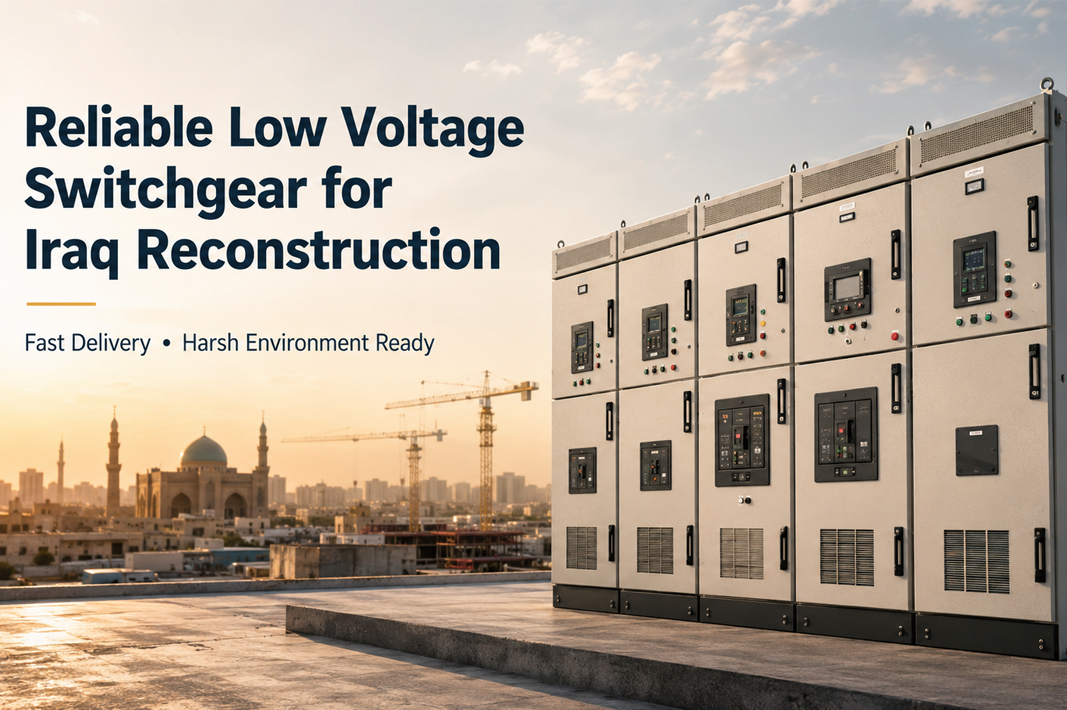
Cost-Effective Low Voltage Switchgear for Iraq: Compatible with Blokset, Okken & 8PT | Local Assembly Options

16

Sep

Cost-Effective Low Voltage Switchgear for Iraq: Compatible with Blokset, Okken & 8PT | Local Assembly Options

View More
Why cabinet condensation leads to insulation failure in electrical equipment?

21

Sep

Why cabinet condensation leads to insulation failure in electrical equipment?

The Science of Cabinet Condensation: How Temperature, Humidity, and Design InteractDew Point Formation Inside Enclosures Due to Thermal GradientsCondensation inside an electrical cabinet is not simply a matter of seal failure—it is governed by the de...
View More
Insulator dimension design follows international high voltage standards strictly.

16

Oct

Insulator dimension design follows international high voltage standards strictly.

Core IEC Standards Governing Insulator Dimension Design IEC 60383: Mechanical and Electrical Requirements for Ceramic and Glass Insulators The IEC 60383 series defines the mechanical and electrical test regimes that ceramic and glass insulators mus...
View More
Cable clamp vs cable tie: which one delivers long term stability in panels?

27

Oct

Cable clamp vs cable tie: which one delivers long term stability in panels?

Mechanical Performance Under Thermal Stress Polymer creep and thermal expansion mismatch in nylon cable ties at 60–85°C Nylon 6/6 cable ties undergo measurable mechanical degradation when exposed continuously to 60–85 °C. At the...
View More

Customer Testimonials

Michael Turner

Our industrial control panels use auxiliary contactors for signaling and interlocking. Correct coil voltage and contact configuration helped simplify commissioning and maintain consistent control logic during routine equipment operation.

David Wilson

We integrated auxiliary contactors into a machinery control cabinet to coordinate operating signals. The selected configuration supported clearer status indication and simplified troubleshooting during maintenance, helping our technicians manage equipment more efficiently.

Get a Free Quote

Our representative will contact you soon.
Email
Mobile/WhatsApp
Name
Company Name
Message
0/1000
Flexible Contact Configurations for Control Circuits

Flexible Contact Configurations for Control Circuits

Auxiliary contactors provide flexible switching options for industrial control circuits that require signaling, sequencing, or electrical interlocking. Depending on the model, contact arrangements may include normally open contacts, normally closed contacts, or a combination of both. This flexibility helps engineers configure control logic around specific equipment requirements. For example, a motor control cabinet may use an auxiliary contact to indicate a contactor's operating state or coordinate a compatible interlocking circuit. Volt Cabinet supports project discussions involving electrical cabinet integration and component selection. Buyers should verify coil voltage, contact ratings, terminal identification, and mounting compatibility before ordering. Appropriate specification and functional testing help establish reliable control operation.
Practical Integration Into Electrical Control Cabinets

Practical Integration Into Electrical Control Cabinets

Successful auxiliary contactor integration depends on electrical compatibility, mechanical fit, and a clearly defined control sequence. Engineers should consider available mounting space, wiring access, coil requirements, contact configuration, and compatibility with associated switching devices. In an industrial automation cabinet, auxiliary contactors may support signaling between control components and help coordinate equipment operating sequences. Volt Cabinet helps buyers evaluate electrical cabinet requirements and component integration considerations for project applications. Before commissioning, technicians should verify terminal connections, confirm the expected switching sequence, and test the control circuit under appropriate conditions. Careful planning can simplify troubleshooting, improve documentation quality, and support more consistent maintenance across industrial and commercial installations.

Get a Free Quote

Our representative will contact you soon.
Email
Mobile/WhatsApp
Name
Company Name
Message
0/1000