Industrial Sensors for Automation: 5 Key Selection Criteria

All Categories
Customer Experiences with Industrial Sensor Solutions

Customer Experiences with Industrial Sensor Solutions

Industrial sensors help manufacturers monitor temperature, pressure, proximity, position, current, and other operating parameters across production environments. When integrated with programmable logic controllers, industrial networks, and monitoring platforms, suitable sensors provide useful information for process control and equipment supervision. Depending on the application, technologies include inductive proximity sensors, photoelectric sensors, temperature sensors, and electrical measurement devices. Selecting the correct sensing range, accuracy, response time, output type, and environmental protection helps ensure reliable performance. For automation integrators and equipment manufacturers, well-matched sensors can support faster fault investigation, more consistent process monitoring, and informed maintenance decisions. Actual performance depends on model specifications, installation quality, and operating conditions.
Get A Quote

Case Study

Production Line Position Detection

An automated packaging facility needed reliable detection of component positions along its production line. The engineering team assessed detection distance, target material, operating speed, ambient conditions, and controller compatibility before choosing suitable industrial sensors. After installation and functional testing, the sensors supplied signals to the control system to coordinate equipment movements and identify missing components. This approach helped improve process visibility and supported consistent operation during routine production. For similar applications, choosing between inductive, capacitive, and photoelectric technologies depends on the target material and detection environment. Correct positioning, wiring, and commissioning remain essential to achieving dependable results.

Equipment Temperature Monitoring

A manufacturing plant required better temperature monitoring around equipment operating under variable production loads. Suitable temperature sensors were connected to compatible monitoring equipment, allowing operators to observe changes and investigate readings outside established operating limits. During selection, engineers considered measurement range, response characteristics, sensor placement, ambient temperature, and signal compatibility. The resulting arrangement provided additional information for routine equipment supervision and maintenance planning. Temperature readings alone cannot establish the cause of overheating, so the team interpreted them alongside operating loads and other diagnostic indicators. This application illustrates how correctly specified industrial sensors can contribute to safer, more informed maintenance decisions.

Electrical Cabinet Monitoring

An electrical panel integrator wanted to improve monitoring across control cabinets serving several industrial machines. The project involved evaluating suitable electrical measurement and environmental sensors according to current levels, temperature ranges, available mounting space, and output requirements. Engineers confirmed compatibility with the receiving control equipment before completing installation and commissioning tests. The sensors provided additional operating data that maintenance personnel could use when investigating abnormal conditions or reviewing equipment performance. For industrial cabinets, sensor selection must account for electrical safety, enclosure conditions, wiring arrangements, and the intended monitoring function. A coordinated design helps improve visibility without adding unnecessary complexity to the control system.

Related products

Industrial sensors convert physical or electrical conditions into signals that monitoring and control systems can use. They play important roles in manufacturing automation, electrical distribution, packaging machinery, energy management, and process industries. Common sensor categories include proximity, photoelectric, temperature, pressure, position, and current sensors, each designed for particular measurement or detection requirements. Choosing the right industrial sensor begins with defining the parameter to be measured, the required detection range, accuracy, response time, output interface, and operating environment. Engineers should also consider vibration, humidity, electromagnetic interference, mounting constraints, and compatibility with PLCs or other control equipment. These factors influence both measurement reliability and integration effort. For equipment manufacturers, electrical contractors, and system integrators, specification-led selection helps reduce commissioning issues and supports dependable monitoring. VoltCabinet serves the electrical equipment market, where appropriate component selection is important for distribution and control applications. Buyers should confirm product availability, technical documentation, certifications, and configuration options before ordering. When correctly selected and installed, industrial sensors provide useful data for process supervision, fault investigation, and maintenance planning across diverse operating environments.
Frequently Asked Questions

What are industrial sensors used for?

Industrial sensors detect or measure parameters such as temperature, pressure, position, proximity, and electrical current. Their signals help automation systems monitor equipment, control production processes, and identify unusual operating conditions. The appropriate sensor depends on the measurement objective, environmental conditions, required accuracy, and compatibility with the connected control equipment.
Start by identifying the parameter to measure, detection range, accuracy, response time, and required output. Then evaluate mounting options, environmental protection, operating temperature, and compatibility with the PLC or monitoring system. Reviewing the manufacturer's datasheet helps confirm whether the selected sensor meets the application's technical and safety requirements.
Common options include inductive proximity sensors for metal detection, photoelectric sensors for object detection, temperature sensors for thermal monitoring, and pressure sensors for process measurement. Current sensors are also used in electrical monitoring. The best choice depends on the target, measurement range, operating environment, and control system requirements.
Yes, many industrial sensors support interfaces compatible with PLC inputs, including discrete switching signals and analog outputs. Some models also support digital communication protocols. Before integration, verify signal type, supply voltage, wiring configuration, input compatibility, and required scaling to ensure the controller interprets measurements or detection states correctly.
Industrial sensors may operate in areas exposed to dust, moisture, vibration, temperature changes, or electrical interference. Selecting suitable enclosure protection and environmental ratings helps maintain performance under specified conditions. Buyers should verify the actual IP rating, temperature limits, and installation instructions rather than assuming every industrial sensor suits harsh environments.

Related article

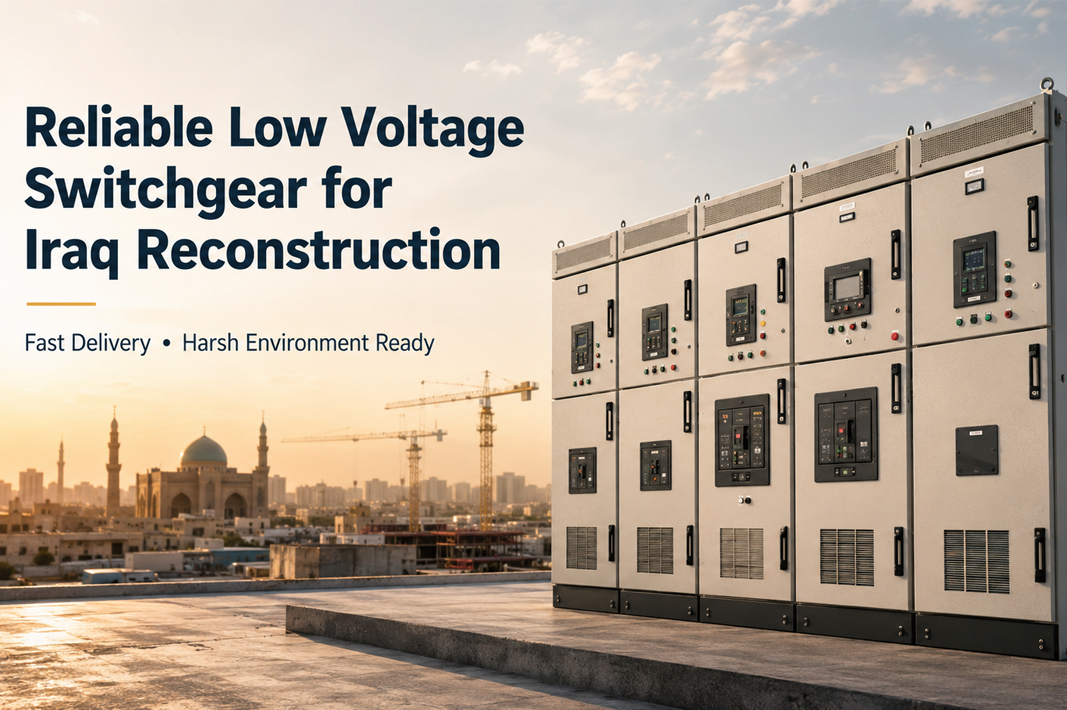
Cost-Effective Low Voltage Switchgear for Iraq: Compatible with Blokset, Okken & 8PT | Local Assembly Options

16

Sep

Cost-Effective Low Voltage Switchgear for Iraq: Compatible with Blokset, Okken & 8PT | Local Assembly Options

View More
Insulator dimensional tolerance controls assembly efficiency in switchgear.

25

Sep

Insulator dimensional tolerance controls assembly efficiency in switchgear.

Why Insulator Dimensional Tolerance Is the Silent Driver of Switchgear Assembly EfficiencyIn high-voltage switchgear, insulators do much more than prevent flashover—they serve as load-bearing anchors that dictate how quickly and precisely busbars, ci...
View More
What switchgear maintenance items prevent unexpected power outage risks?

10

Oct

What switchgear maintenance items prevent unexpected power outage risks?

Top 3 Root Causes of Switchgear-Related Power Outages Insulation degradation and partial discharge: leading precursors to cascade failure Insulation systems in switchgear degrade gradually under electrical, thermal, and environmental stress. Cracks...
View More
What electrical switchgear testing items are required before site commissioning?

21

Oct

What electrical switchgear testing items are required before site commissioning?

Insulation Integrity and Dielectric Strength Verification Megger testing of busbars, cables, and instrument transformer circuits Megger testing is a foundational pre-commissioning check for electrical switchgear, measuring insulation resistance (IR...
View More

Customer Testimonials

James Carter

Our production facility needed dependable sensors for equipment monitoring. Clear specification checks helped us integrate the selected components and improve visibility into operating conditions across multiple production stations.

David Wilson

We evaluated sensor compatibility before upgrading our automation cabinets. The selection process helped simplify installation planning and supported consistent signal transmission across our industrial control equipment.

Get a Free Quote

Our representative will contact you soon.
Email
Mobile/WhatsApp
Name
Company Name
Message
0/1000
Multiple Sensing Technologies for Industrial Applications

Multiple Sensing Technologies for Industrial Applications

Industrial applications require different sensing technologies depending on the physical parameter and operating environment. Inductive sensors detect suitable metallic targets without physical contact, while photoelectric sensors can detect objects using light. Temperature and pressure sensors provide measurement data for process supervision, and current sensors support electrical monitoring. Each technology has different limitations, detection ranges, and installation requirements. Engineers should evaluate accuracy, response time, output format, environmental ratings, and compatibility with existing controllers before making a selection. For manufacturers and automation integrators, choosing the right sensing principle helps improve system suitability and reduce unnecessary component changes during commissioning and future equipment upgrades.
Specification-Based Integration for Reliable Automation

Specification-Based Integration for Reliable Automation

Reliable sensor performance depends on correct specification, installation, and integration with the wider automation system. Factors such as signal type, supply voltage, mounting position, cable routing, electromagnetic interference, and operating temperature can affect measurement quality. For example, a packaging line may need fast object detection, while an electrical cabinet may require continuous temperature or current monitoring. These applications call for different sensor technologies and performance characteristics. Before purchasing, buyers should verify datasheets, wiring diagrams, supported interfaces, certifications, and environmental limits. A structured selection process helps equipment manufacturers and system integrators reduce compatibility risks and establish dependable monitoring across industrial operations.

Get a Free Quote

Our representative will contact you soon.
Email
Mobile/WhatsApp
Name
Company Name
Message
0/1000