High Voltage Switchgear Solutions: Utility, Industrial & Power Gen

All Categories
Customer Perspectives on High Voltage Switchgear Solutions

Customer Perspectives on High Voltage Switchgear Solutions

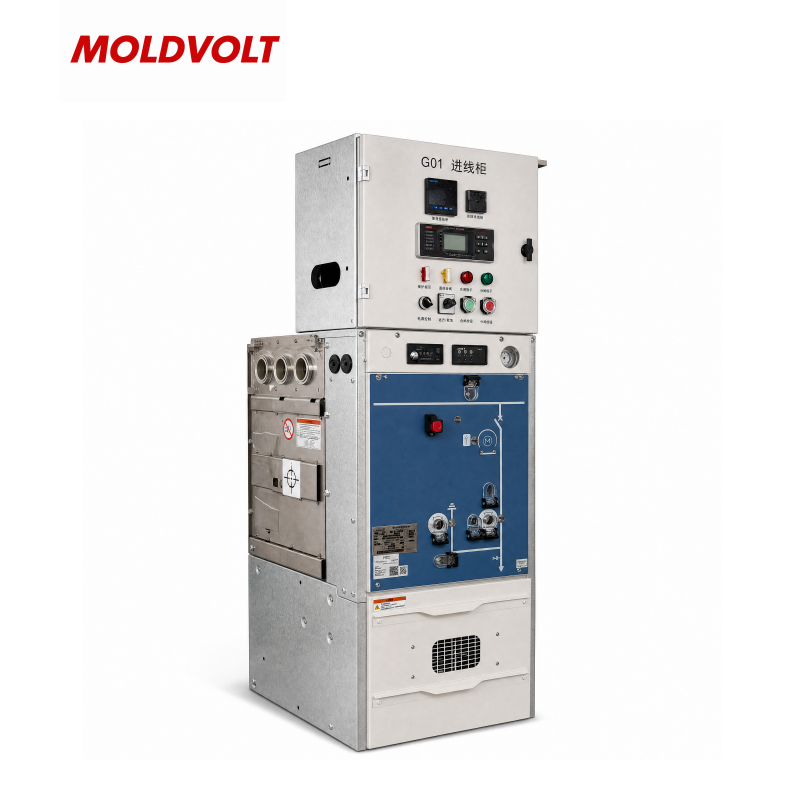
High voltage switchgear helps control, protect, and isolate electrical circuits in transmission networks, substations, power plants, and large industrial facilities. Depending on the application, equipment may incorporate circuit breakers, disconnectors, earthing switches, current transformers, voltage transformers, and protection systems. Rated voltage, continuous current, and short-circuit breaking capacity must match the network's electrical characteristics. For example, a utility substation connecting transmission lines to transformers requires coordinated switching and protection to manage faults and planned maintenance. Suitable insulation systems, mechanical interlocking, and monitoring options support safe operation when correctly specified. Evaluating applicable IEC standards, environmental conditions, and maintenance requirements helps project teams select equipment aligned with network reliability and operational objectives.
Get A Quote

Case Study

High Voltage Switchgear for Utility Substations

Utility substations use high voltage switchgear to connect transmission lines, transformers, and other major electrical assets. The equipment must accommodate the network's rated voltage, continuous current, insulation requirements, and prospective fault levels. Circuit breakers interrupt fault currents within their specified capabilities, while disconnectors provide isolation arrangements according to approved operating procedures. For a substation handling multiple transmission feeders, coordinated protection and clearly defined switching sequences are essential design considerations. Engineers should also assess ambient temperature, pollution, altitude, and maintenance access. Confirming equipment ratings, verification documents, and applicable standards before procurement helps ensure compatibility with the planned substation configuration.

High Voltage Switchgear for Power Generation

Power generation facilities require switching and protection equipment to connect generators, transformers, and outgoing network circuits. High voltage switchgear specifications depend on the generator interface, transformer capacity, fault contribution, and transmission connection requirements. Engineers must evaluate rated voltage, short-circuit performance, insulation coordination, and operating sequences before selecting equipment. For a power station supplying electricity to the grid, protection systems should coordinate with generator controls and external network protection. Monitoring functions can provide useful operational information, depending on the selected design. Detailed engineering reviews and manufacturer verification help confirm that the switchgear meets the plant's electrical requirements and applicable safety standards.

High Voltage Switchgear for Industrial Networks

Large industrial facilities may use high voltage switchgear to receive utility power and supply transformers serving production equipment and plant services. Equipment selection should reflect the incoming supply voltage, demand profile, fault levels, environmental conditions, and planned network configuration. Appropriate circuit breakers and protection relays help manage abnormal electrical conditions within the equipment's specified limits. For a mining or processing facility, engineers may need to account for demanding operating environments and continuity requirements. Clear equipment identification, maintenance access, and documented switching procedures support operational planning. A complete technical specification helps manufacturers propose suitable equipment for the facility's distribution architecture.

Related products

High voltage switchgear is used to control, protect, and isolate electrical equipment in power transmission networks, substations, generation facilities, and large industrial installations. Depending on the rated voltage and application, solutions may include circuit breakers, disconnectors, earthing switches, instrument transformers, protection relays, and monitoring systems. Equipment selection requires careful assessment of rated voltage, continuous current, short-circuit breaking capability, insulation coordination, and switching duty. High voltage applications may involve systems operating above 52 kV, although terminology and equipment classifications vary by standard and market. Air-insulated and gas-insulated designs offer different installation, insulation, and maintenance characteristics, so the choice should reflect site conditions and project requirements. For example, a utility substation may require switching equipment for several transmission feeders and power transformers. A generation facility may prioritize coordination between generator protection, transformer connections, and the external network. Each arrangement must be engineered around the actual electrical system rather than a generic equipment rating. Before requesting a quotation, buyers should prepare the single-line diagram, rated voltage, load current, fault-level calculations, environmental data, and applicable standards. IEC 62271 contains standards for relevant high-voltage switchgear and controlgear equipment. Reviewing technical documentation and verification requirements helps establish a suitable specification for procurement, installation, and commissioning.
Frequently Asked Questions

What is high voltage switchgear used for?

High voltage switchgear controls, protects, and isolates electrical circuits in transmission networks, substations, power plants, and large industrial facilities. It may include circuit breakers, disconnectors, earthing switches, and protection equipment. Its configuration depends on network voltage, fault levels, operating requirements, and the intended installation.
Depending on the design, high voltage switchgear can include circuit breakers, disconnectors, earthing switches, current transformers, voltage transformers, protection relays, and monitoring devices. Each component serves a specific switching, measurement, or protection function. The final arrangement should follow the electrical design and applicable equipment standards.
Evaluate rated voltage, continuous current, short-circuit breaking capability, insulation coordination, switching duty, and environmental conditions. Consider the network configuration, protection requirements, maintenance access, and installation footprint. Providing a single-line diagram and fault-level study helps the manufacturer assess the application and recommend suitable equipment.
Relevant IEC 62271 standards cover different types of high-voltage switchgear and controlgear equipment. The appropriate standard depends on the equipment category, rated voltage, and application. Buyers should confirm the required edition, design verification, routine tests, and local regulatory requirements before approving the technical specification.
Provide the rated system voltage, continuous current, short-circuit levels, single-line diagram, switching requirements, and installation environment. Include the required equipment type, protection functions, applicable standards, and project schedule. These details help manufacturers assess technical suitability and prepare a quotation aligned with the project's electrical requirements.

Related article

From High-Voltage Insulators to Low-Voltage Switchgear: A Vietnamese Manufacturer’s Transformation, Together with Us‌

08

Sep

From High-Voltage Insulators to Low-Voltage Switchgear: A Vietnamese Manufacturer’s Transformation, Together with Us‌

View More
Insulator dimension design follows international high voltage standards strictly.

16

Oct

Insulator dimension design follows international high voltage standards strictly.

Core IEC Standards Governing Insulator Dimension Design IEC 60383: Mechanical and Electrical Requirements for Ceramic and Glass Insulators The IEC 60383 series defines the mechanical and electrical test regimes that ceramic and glass insulators mus...
View More
What electrical switchgear testing items are required before site commissioning?

21

Oct

What electrical switchgear testing items are required before site commissioning?

Insulation Integrity and Dielectric Strength Verification Megger testing of busbars, cables, and instrument transformer circuits Megger testing is a foundational pre-commissioning check for electrical switchgear, measuring insulation resistance (IR...
View More
Cable clamp vs cable tie: which one delivers long term stability in panels?

27

Oct

Cable clamp vs cable tie: which one delivers long term stability in panels?

Mechanical Performance Under Thermal Stress Polymer creep and thermal expansion mismatch in nylon cable ties at 60–85°C Nylon 6/6 cable ties undergo measurable mechanical degradation when exposed continuously to 60–85 °C. At the...
View More

Customer Testimonials

Michael Turner

High voltage switchgear specifications must match network voltage, fault levels, and operating requirements. Clear technical documentation helps utility engineers coordinate protection, installation, and maintenance across substations and transmission infrastructure.

David Wilson

Selecting suitable switchgear ratings and protection functions supports reliable operation in substations and industrial power networks. Reviewing verification documents helps project teams confirm equipment suitability before installation and commissioning.

Get a Free Quote

Our representative will contact you soon.
Email
Mobile/WhatsApp
Name
Company Name
Message
0/1000
Engineered for High Voltage Performance

Engineered for High Voltage Performance

High voltage switchgear must be selected according to the network's electrical ratings, insulation requirements, switching duties, and prospective fault currents. Circuit breakers, disconnectors, and associated protection equipment should be coordinated with the wider power system. For example, a transmission substation may require several feeder bays and transformer connections, each with defined operating and protection requirements. Environmental factors such as altitude, temperature, and pollution can also affect equipment selection. Reviewing these conditions during engineering helps establish a specification suitable for the intended installation. Final selection should be supported by relevant technical documentation, verified equipment characteristics, and compliance with applicable standards.
Flexible Insulation and Installation Options

Flexible Insulation and Installation Options

High voltage switchgear may use air-insulated or gas-insulated designs, depending on the voltage class, available space, environmental conditions, and project requirements. Air-insulated arrangements generally require suitable electrical clearances, while gas-insulated designs can offer a more compact installation footprint. Neither option is universally preferable; lifecycle considerations, maintenance practices, site constraints, and environmental obligations should guide the decision. For example, a space-constrained urban substation may evaluate compact equipment, whereas a utility site with greater available space may consider alternative configurations. Comparing technical specifications and installation requirements helps project teams identify an appropriate solution for their network.

Get a Free Quote

Our representative will contact you soon.
Email
Mobile/WhatsApp
Name
Company Name
Message
0/1000