
 EN
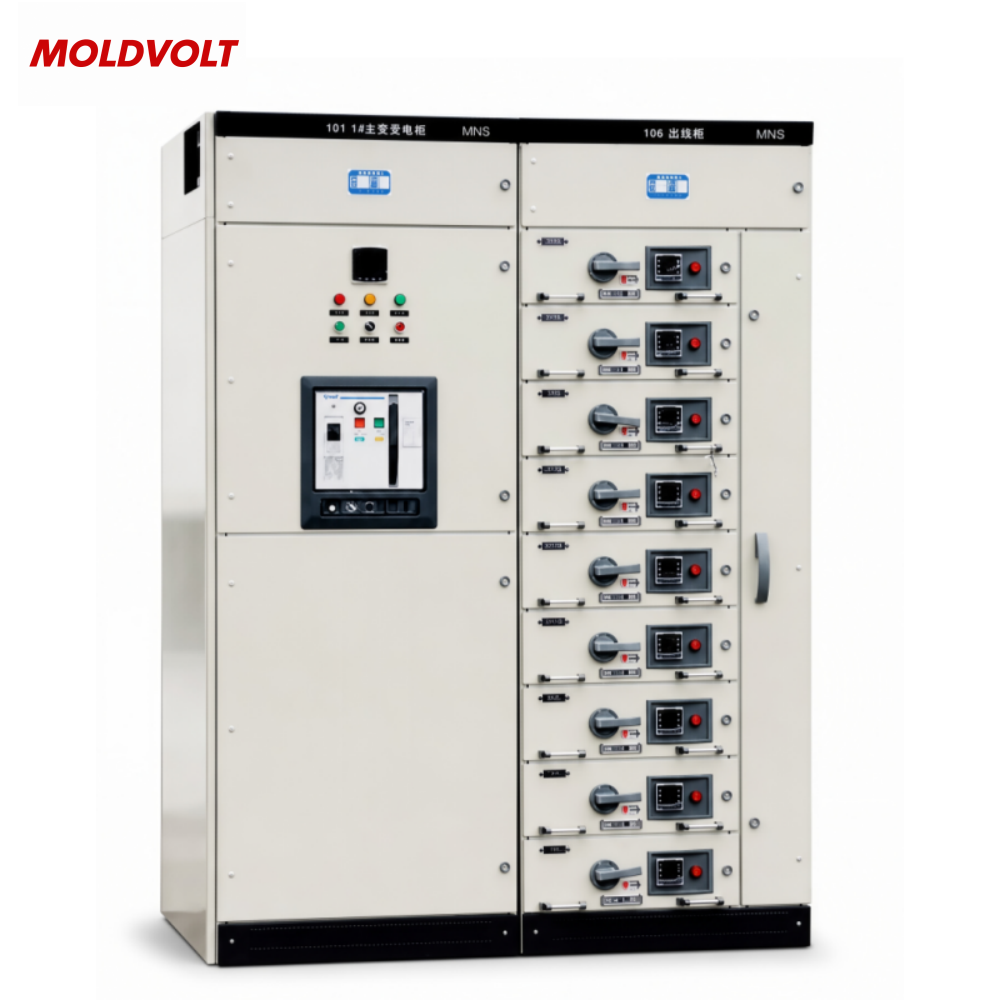
Top 3 Root Causes of Switchgear-Related Power Outages
Insulation degradation and partial discharge: leading precursors to cascade failure
Insulation systems in switchgear degrade gradually under electrical, thermal, and environmental stress. Cracks, voids, or moisture ingress create weak spots where partial discharge (PD) initiates. Once PD exceeds 50 pC, insulation loses its self-healing capacity—and breakdown can accelerate within months. Field data from CIGRE (2022) attributes nearly 44% of high-voltage switchgear outages to insulation failure. In medium-voltage gear, PD often remains undetected until it produces ozone or acoustic noise. Left unchecked, a single phase-to-ground fault may escalate into a destructive three-phase arc, triggering cascade failure across entire lineups. Regular PD surveys and dielectric withstand testing are the most effective early interventions.
Contact wear, thermal overload, and environmental stress: drivers of 68% of medium-voltage switchgear outages
A leading reliability organization’s analysis of outage records identifies contact wear, thermal overload, and harsh environmental conditions as the root cause of 68% of medium-voltage switchgear failures. Repeated arcing during breaker operations erodes contact surfaces, increasing resistance and generating excess heat. Loose bolted joints compound this effect—creating hot spots exceeding 120 °C. Dust, humidity, and corrosive atmospheres accelerate oxidation and surface tracking; in coastal installations, salt fog alone reduces busbar insulation life by 30%. Thermal imaging is the frontline diagnostic: a sustained 10 °C rise above ambient reliably signals developing trouble. Correcting loose connections and exercising seldom-operated breakers can reduce contact-related outage risk by up to 50%.
Hidden defects: installation errors and breaker reliability gaps revealed in EPRI’s 2023 Grid Reliability Assessment
EPRI’s 2023 Grid Reliability Assessment—based on failure data from over 12,000 switchgear assets—found that hidden defects cause 22% of unplanned outages occurring within the first three years of service. These include misaligned busbar joints, improperly torqued fasteners, and control wiring errors that evade factory tests and commissioning checks. Stored-energy breaker mechanisms also deteriorate when idle: lubrication breaks down, leading to sluggish operation and “fail-to-close” events during critical switching. The report further notes that 19% of circuit breakers older than 20 years exhibit reduced interrupting capacity due to worn arc-chute liners—a flaw invisible to routine visual inspection. EPRI recommends mandatory post-installation high-potential testing and mechanism timing analysis to eliminate these latent risks.

Key Early Warning Signs of Impending Switchgear Failure
Abnormal temperature rise and acoustic anomalies: predictive indicators of 92% of pre-outage thermal events
Abnormal temperature rise precedes 92% of all pre-outage thermal events, making hotspot detection the most actionable warning sign. Under normal operation, busbar connections, breaker contacts, and cable terminations maintain stable thermal profiles. When contact resistance increases—due to loosening, oxidation, or micro-pitting—localized heating begins. Infrared thermography detects these differentials well before insulation failure or arc flash occurs. Concurrently, acoustic anomalies such as buzzing, crackling, or high-frequency hissing strongly correlate with internal partial discharge or surface tracking. Electromechanical components under stress may emit ticking or chattering during operation. Field data from continuous online monitoring shows that combining thermal and acoustic deviations doubles prediction accuracy. Responding to a 5–10°C rise above baseline plus a >10 dB increase in ultrasonic emissions consistently prevents forced outages and collateral damage.
Ozone odor, visible corrosion, relay alarms, and breaker misoperation — recognizing convergent failure signals
Catastrophic switchgear faults rarely occur without converging low-grade symptoms. A sharp ozone smell confirms active electrical discharge in air-insulated compartments—even in the absence of visible arcing—indicating ongoing insulation degradation. Visible corrosion or moisture staining on bus supports and enclosure seams accelerates tracking and lowers dielectric strength, particularly in humid or coastal environments. Relay alarms that clear without apparent cause—such as unexplained earth-fault, overcurrent, or insulation-resistance trips—represent near-misses that cumulatively strain system integrity. Breaker misoperation—including slow closing, failure to latch, or delayed tripping—often stems from lubrication breakdown, contact welding, or undervoltage coil failure. When two or more of these signs appear within the same cubicle or feeder, the probability of imminent failure rises sharply. Cross-referencing thermal scans, acoustic profiles, visual evidence, and protection relay logs enables accurate risk grading and timely intervention.
High-Impact Preventive and Predictive Maintenance for Switchgear Reliability
Thermal imaging and contact resistance testing: evidence-based ROI per ANSI/NETA MTS‑2023
A single undetected loose connection in medium-voltage switchgear can trigger a $740 k outage (Ponemon 2023), yet ANSI/NETA MTS‑2023 demonstrates that thermal imaging and contact resistance testing deliver exceptional ROI. Thermographic surveys identify abnormal temperature rises at least three months before critical failure in 92% of cases—enabling targeted repairs during planned outages. Contact resistance measurements—using a low-resistance ohmmeter—verify that breaker and bus connections remain below NETA’s 50 µΩ acceptance threshold. An industrial consortium found facilities adopting this dual-test protocol reduced unscheduled switchgear downtime by 64%, with every dollar spent on inspection averting an average of $4.30 in recovery costs. These condition-based insights shift maintenance from reactive firefighting to cost-efficient, reliability-preserving interventions.
Breaker exercising, fiber-optic temperature monitoring, and online partial discharge detection — extending MTBF
Idle circuit breakers face a 37% higher risk of misoperation during faults due to lubricant stiffening and mechanical sticking (EPRI 2023). Regular exercising—manually cycling breakers through open-close operations—preserves mechanical integrity and directly improves mean time between failures (MTBF). Fiber-optic temperature sensors embedded in bus-bar joints and cable terminations provide continuous, real-time thermal data—eliminating blind spots inherent in periodic infrared surveys. When integrated with online partial discharge detection systems that monitor insulation health 24/7, the combined data stream reveals degradation patterns weeks before failure. A 2022 multi-site study found that deploying all three measures increased switchgear MTBF by 41% and halved emergency call-outs. This layered strategy transforms maintenance from calendar-driven routine into a reliability-centered discipline that protects both operations and capital investment.
Integrating Condition Monitoring into Proactive Switchgear Maintenance Planning
Shifting from time-based or reactive maintenance to a condition-based model fundamentally reshapes switchgear fleet management. IIoT-enabled sensors—tracking partial discharge activity, contact temperature rise, SF₆ gas pressure, and other key parameters—deliver real-time visibility into equipment health. This continuous data stream moves the maintenance trigger from a fixed calendar interval to an evidence-based threshold, enabling interventions only when trending deterioration warrants action. Industry surveys confirm such predictive strategies reduce unplanned downtime by up to 30% while extending MTBF for critical medium-voltage assets.
Integrating condition monitoring with asset performance management (APM) platforms creates a cohesive digital ecosystem. Sensor data feeds analytics engines that apply machine-learning algorithms to detect subtle, progressive anomalies—like a slow drift in contact resistance or incremental growth in PD magnitude—long before they register as overt alarms. Maintenance planners then prioritize work orders using risk scores rather than rigid schedules—eliminating unnecessary intrusive testing and focusing resources where they matter most. The result is a closed-loop process: real-time condition data drives proactive planning; those plans generate new data to refine predictive models; and switchgear reliability improves cycle after cycle—without increasing operating expense.
Frequently Asked Questions (FAQ)
What is partial discharge and how does it lead to switchgear failure?
Partial discharge refers to localized electrical discharges that occur within insulation voids or cracks, under high environmental stress. It weakens insulation gradually, leading to potential breakdown and subsequent switchgear failure if left unchecked.
How can temperature rise indicate a switchgear issue?
Abnormal temperature increases in components like busbar joints or breaker contacts signal excessive resistance or loosening connections. Infrared thermography can identify these hotspots early, preventing failures.
Why is maintenance critical for aging circuit breakers?
Aging circuit breakers often experience lubricant stiffening or mechanical sticking, leading to misoperation during faults. Regular exercising and condition-based monitoring can mitigate these risks.
What role does IIoT play in switchgear reliability?
IIoT sensors provide real-time data on critical parameters like partial discharge activity or SF₆ gas pressure. This allows proactive, evidence-based maintenance planning, enhancing reliability while reducing downtime.
Table of Contents
-
Top 3 Root Causes of Switchgear-Related Power Outages
- Insulation degradation and partial discharge: leading precursors to cascade failure
- Contact wear, thermal overload, and environmental stress: drivers of 68% of medium-voltage switchgear outages
- Hidden defects: installation errors and breaker reliability gaps revealed in EPRI’s 2023 Grid Reliability Assessment
- Key Early Warning Signs of Impending Switchgear Failure
- High-Impact Preventive and Predictive Maintenance for Switchgear Reliability
- Integrating Condition Monitoring into Proactive Switchgear Maintenance Planning
- Frequently Asked Questions (FAQ)