
 EN
Mechanical Performance Under Thermal Stress
Polymer creep and thermal expansion mismatch in nylon cable ties at 60–85°C
Nylon 6/6 cable ties undergo measurable mechanical degradation when exposed continuously to 60–85 °C. At these temperatures, the polymer’s amorphous regions soften, initiating progressive creep under static clamping load. Field measurements show a 30–50% loss in bundle compression within the first 200 hours at 85 °C. A second failure mechanism arises from thermal expansion mismatch: nylon expands at ~80 × 10⁻⁶ /°C, while copper conductors expand at just 17 × 10⁻⁶ /°C. Repeated temperature cycling induces micromovements that loosen knots and accelerate wear at contact points—leading to intermittent connections, insulation abrasion, and localized hot spots. In control panels where ambient temperature rises during peak load, this dual degradation pathway directly compromises long-term routing reliability.
Cable clamp retention force stability: ≥92% after 2,000 thermal cycles (IEC 60068-2-14)
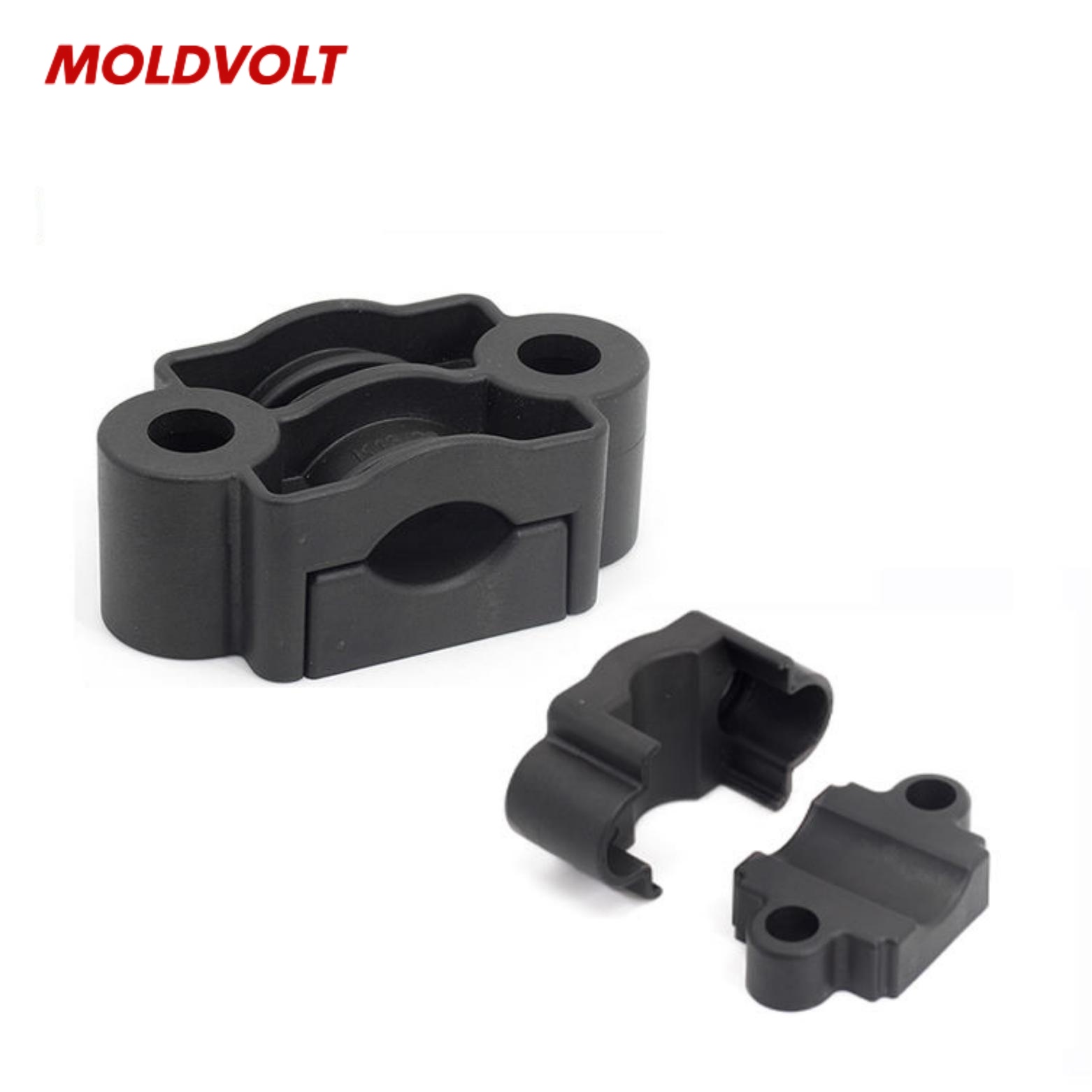
Cable clamps with a metallic clamping body and stable thermoplastic or elastomeric lining avoid the viscoelastic creep inherent in all-polymer fasteners. The metal frame resists deformation under sustained heat, while the compliant lining accommodates conductor expansion without grip loss. Per IEC 60068‑2‑14 testing across −40 °C to +85 °C for 2,000 cycles, properly specified clamps retain ≥92% of initial clamping force. Their symmetrical anchor geometry distributes thermal and mechanical stresses uniformly—minimizing localized loosening. Because the metal body expands at a rate closely matching typical panel enclosures, differential movement between cables and mounting points remains negligible. This preserves conductor alignment and insulation integrity, extending maintenance intervals and reducing thermal runaway risk at terminations in dynamically loaded electrical panels.
Vibration Resistance and Fatigue Durability in Industrial Panels
How cable clamp anchoring geometry reduces dynamic strain by 68% vs. cable ties
In industrial environments—such as automotive manufacturing, mining, and heavy machinery—persistent vibration challenges wiring security. Cable clamps mitigate this through rigid bracketing and a defined compression footprint that spreads mechanical energy over a broad surface area. Under IEC 60068‑2‑6 vibration profiles (10–500 Hz at 5 G), clamp anchoring reduced dynamic strain on wire bundles by 68% compared to nylon cable ties. The tie’s narrow cinch band concentrates oscillation energy at a single contact zone, amplifying high-frequency displacement. Clamps, by contrast, constrain lateral motion and dampen resonant peaks—maintaining conductor position and insulation integrity across thousands of cycles.
Failure modes: brittle fracture and knot slippage in cable ties under 5–500 Hz vibration
Nylon 6/6 cable ties commonly fail under industrial vibration via two mechanisms: brittle fracture of the ratchet head and knot slippage. Fatigue cracks initiate at stress risers in the locking mechanism under 5–500 Hz excitation, often culminating in sudden head separation and total bundle release. Simultaneously, micro-movement causes tooth wear or relaxation, allowing the tie to slide along the cable—abrading insulation and increasing short-circuit risk. Neither mode occurs in cable clamps, whose engineered fasteners and elastic linings provide consistent, non-slip retention. Panel rework logs confirm vibration-induced tie failures represent a disproportionate share of unplanned maintenance—underscoring the durability advantage of clamps in high-vibration applications.
Installation Consistency and Long-Term Reliability of Cable Clamps
Torque variability: ±40% clamping force deviation with hand-tightened cable ties vs. ±7% with cable clamps
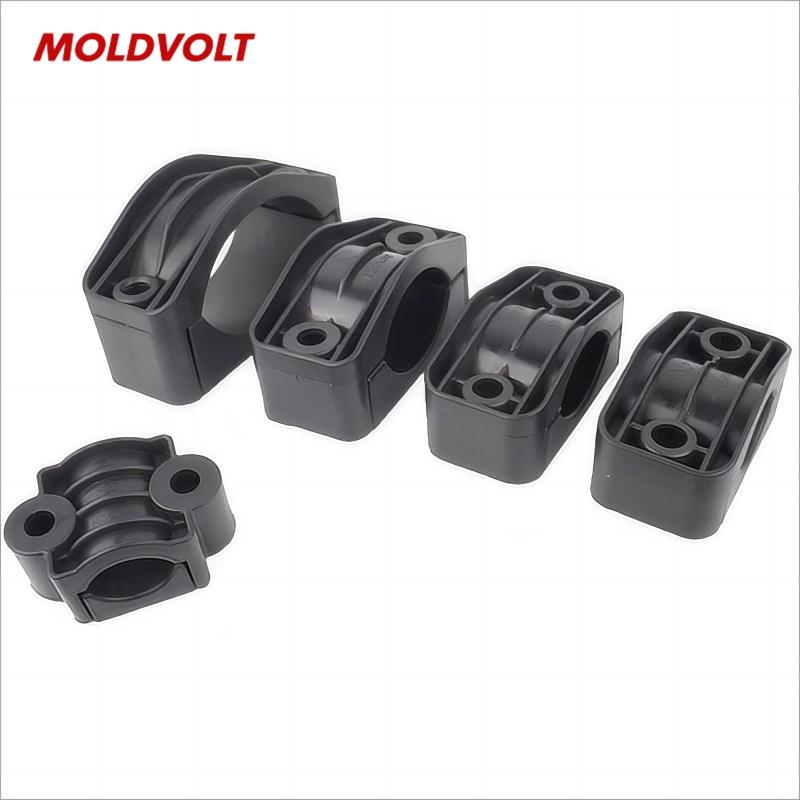
Hand-tightened cable ties exhibit ±40% variation in achieved clamping force—driven by differences in installer strength, technique, and material friction. This inconsistency risks both over-tightening (compressing insulation and inducing latent cold-flow damage) and under-tightening (leaving cables prone to movement and chafing). Cable clamps equipped with fixed-torque screws or calibrated ratcheting mechanisms deliver repeatable clamping force within ±7%, per installation test data. The controlled pressure prevents insulation deformation while ensuring secure hold across decades of thermal cycling. By eliminating subjective “hand-feel,” cable clamps remove the largest source of installation variability—delivering uniform, predictable performance critical for long-term panel reliability.
Total Cost of Ownership: Why Cable Clamps Reduce Lifecycle Costs
Field evidence: 3.2× more rework hours per panel for cable tie–based routing over 5 years
Field data from multiple industrial panel builders shows cable tie–based installations require 3.2 times more rework hours per panel over five years. This labor burden stems from tie degradation, thermal loosening, and routine replacement or retightening during inspections. Cable clamps—by maintaining stable clamping force through thermal cycling and vibration—cut unscheduled maintenance dramatically. The result is lower total cost of ownership: fewer technician call-outs, reduced system downtime, and less material waste. For facility managers, the switch delivers a predictable, low-maintenance routing solution that typically pays for itself within the first two to three years—while eliminating hidden costs tied to tie-based retrofits. This productivity gap explains why high-reliability sectors—including rail, aerospace, and mission-critical power systems—now mandate clamping hardware in their design standards.
FAQ Section
What is the main issue with nylon cable ties under thermal stress?
Nylon cable ties degrade under thermal stress due to polymer creep and thermal expansion mismatch, leading to bundle compression loss and damage to insulation and connections.
How do cable clamps help prevent mechanical degradation?
Cable clamps have metallic frames and elastic linings that resist deformation, accommodate conductor expansion, and maintain consistent clamping force even under thermal cycling and vibration.
Why are cable clamps preferred in industrial vibration environments?
Cable clamps reduce dynamic strain and prevent failure modes like brittle fracture and knot slippage, offering better durability in high-vibration applications.
What is the installation advantage of cable clamps compared to cable ties?
Cable clamps deliver repeatable clamping force within ±7%, eliminating variability from hand-tightening and ensuring long-term reliability.
How do cable clamps reduce lifecycle costs?
Cable clamps require fewer maintenance hours compared to nylon cable ties, resulting in lower total cost of ownership and increased system reliability for industrial panels.
Table of Contents
- Mechanical Performance Under Thermal Stress
- Vibration Resistance and Fatigue Durability in Industrial Panels
- Installation Consistency and Long-Term Reliability of Cable Clamps
- Total Cost of Ownership: Why Cable Clamps Reduce Lifecycle Costs
-
FAQ Section
- What is the main issue with nylon cable ties under thermal stress?
- How do cable clamps help prevent mechanical degradation?
- Why are cable clamps preferred in industrial vibration environments?
- What is the installation advantage of cable clamps compared to cable ties?
- How do cable clamps reduce lifecycle costs?