
 EN
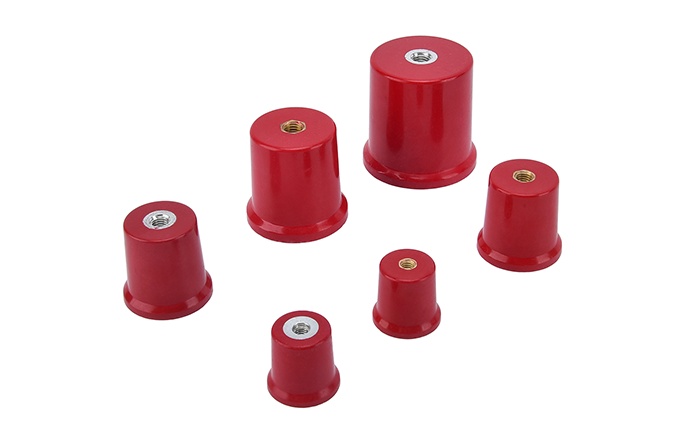
Why Insulator Dimensional Tolerance Is the Silent Driver of Switchgear Assembly Efficiency
In high-voltage switchgear, insulators do much more than prevent flashover—they serve as load-bearing anchors that dictate how quickly and precisely busbars, circuit breakers, and gas-filled compartments come together. Even a fraction-of-a-millimeter deviation in an insulator’s cast-resin body can cascade through the assembly sequence: mating flanges fail to seat flush, bolt holes misalign, and compressive force on sealing gaskets becomes uneven. Such disruptions rarely halt production outright; instead, they erode efficiency through repeated re-torquing, shimming, and occasional teardowns. Unlike issues visible on a bill of materials, tolerance drift accumulates silently across multiple insulator-mounted interfaces in a single bay. A 2024 internal benchmarking study across 12 OEM assembly lines found that for every 0.1 mm increase in worst-case insulator position error, average bay build time grew by approximately 8 %. The root cause is tolerance stack-up: cumulative microscopic offsets manifest as bolt-torque inconsistencies and elevated contact resistance—triggering extra inspection cycles. Manufacturers that actively monitor and narrow insulator dimensional variation—often by integrating in-process coordinate measuring machine (CMM) feedback—report steadier workflows and fewer last-minute design concessions. Recognizing insulator tolerance as a true process-control lever transforms it from a mundane drawing specification into a strategic driver of on-time delivery and first-pass yield.
The Physics of Tolerance Stack-Up: How Micro-Variations Disrupt Macro-Assembly Flow
In the complex geometry of a switchgear assembly, a single insulator is not an isolated component. It is a link in a rigid mechanical chain where micro-variations impose a heavy physiological tax on the assembly process. When flatness or hole-position tolerance is pushed to the limit on each successive insulator, these deviations do not cancel out—they aggregate linearly. This phenomenon transforms a collection of individually acceptable parts into a dysfunctional, misaligned assembly.
Cumulative misalignment in multi-insulator GIS bays
In a gas-insulated switchgear (GIS) bay, multiple epoxy-resin insulators are bolted together to support a continuous conductor run. If a leading manufacturer specifies a standard center-distance tolerance of ±0.1 mm for a single insulator, a series of six insulators can theoretically produce a cumulative hole-position error of 0.6 mm. Statistical process control data from high-voltage production lines confirms this linear stack-up is a daily reality—not a theoretical edge case. The result is forced conductor misalignment, which increases insertion force, creates dangerous particulate traps, and places undue radial stress on the insulator’s embedded metal inserts.
Real-world impact: bolt torque inconsistency and gasket compression failure
Forced alignment of misaligned holes turns a standard fastening sequence into an unpredictable stress exercise. When flange holes are offset by just 0.5 mm due to cumulative misalignment, the “running torque” required to drive a bolt home spikes erratically. A controlled assembly degrades into a chaotic condition where some fasteners are over-torqued while others remain loose. Data from 12 OEM production lines shows this torsional inconsistency consistently leads to uneven gasket compression. The immediate consequence—often detected only during factory leak testing—is a localized breach in the gas-tight seal, turning a micron-level physical deviation into a catastrophic functional failure.
Precision Engineering in Practice: Tightening Insulator Tolerances for Measurable Gains
When insulator tolerances are tightened from the standard ±0.1 mm to ±0.02 mm, the entire switchgear assembly line transforms. Micro-misalignments that once required manual knocking and re-torquing vanish, and stations synchronize. This precision-engineering shift is not merely about metrology—it rests on proven manufacturing strategies that deliver double-digit cycle-time improvements.
Case study: A leading manufacturer’s ±0.02 mm insulator tolerance upgrade cut assembly time by 37%
A top switchgear OEM adopted a tolerance-driven overhaul for its 145 kV GIS bays in 2022. Previously, epoxy-composite insulators exhibited a ±0.1 mm creepage-distance spread, forcing operators to trial-fit, measure, and adjust each phase-to-phase joint. By re-engineering the molding and post-curing fixture controls, the team narrowed the critical seat diameter and spigot run-out to ±0.02 mm. The immediate outcome was a 37% reduction in total bay assembly time—from 18.5 to 11.7 hours per three-phase module—while on-site gasket-leak rework dropped 28%, per an internal 2022 production audit. Crucially, the investment in tighter tooling controls repaid itself within 11 months through increased throughput alone.
Enabling technologies: In-process CMM feedback and kinematic-fit design for epoxy-composite insulators
To hold ±0.02 mm reliably, manufacturers pair in-process CMM (Coordinate Measuring Machine) feedback with kinematic-fit design. In one production line, a 5-axis CMM integrated into the machining center scans every third insulator and feeds deviation data to an adaptive tool-compensation loop. With real-time adjustments, the line consistently held the critical spigot profile within tolerance, cutting scrap by 22% versus open-loop machining (Advanced Manufacturing Research Centre, 2021). Meanwhile, kinematic-fit design defines interface geometry so that parts self-center even at maximum material condition, converting inevitable micro-errors into uniform bolt-load distribution. This dual approach—real-time dimensional correction plus tolerant mating architecture—enables epoxy-composite insulators to meet switchgear alignment demands without raising manufacturing cost.
Balancing Cost, Yield, and Reliability: When Tighter Insulator Tolerances Deliver ROI
Manufacturers often chase ever-tighter insulator dimensional tolerance to eliminate assembly misalignments, but over-specifying can quickly erode yield and inflate cost. Determining the scrap-vs-stability threshold is critical for switchgear OEMs seeking a robust return on investment.
The scrap-vs-stability threshold: Data from 12 OEM production lines
A 2023 cross-sectional study aggregated production data from twelve medium-voltage switchgear OEMs to map tolerance limits against scrap rates and field rework. The results revealed a clear economic ‘knee’ beyond which incremental tightening brought disproportionate scrap without further gains in assembly consistency. The table shows the aggregate relationship for epoxy-composite post insulators used in GIS bays:
| Insulator Dimensional Tolerance (mm) | Average Scrap Rate (%) | Assembly Rework Incidents per 100 Units |
|---|---|---|
| ±0.20 | 0.8 | 14.2 |
| ±0.10 | 1.2 | 5.8 |
| ±0.05 | 1.8 | 2.1 |
| ±0.03 | 4.6 | 1.9 |
The ±0.05 mm tolerance delivered the most favourable ROI: scrap remained below 2 % while rework incidents fell by 85 % compared with the ±0.20 mm baseline. Beyond that point, yield dropped steeply with only marginal stability improvement—confirming a precise economic threshold.
FAQ
What is the primary role of insulators in high-voltage switchgear?
Insulators in high-voltage switchgear serve as load-bearing anchors that ensure the proper alignment and assembly of components such as busbars, circuit breakers, and gas-filled compartments, while also preventing flashover.
What is tolerance stack-up, and why is it important in switchgear assembly?
Tolerance stack-up occurs when micro-variations in individual components accumulate across multiple interfaces, leading to misalignment and assembly inefficiencies. It significantly impacts the overall efficiency and reliability of switchgear assembly.
How does tightening insulator tolerances impact switchgear manufacturing?
Tightening insulator tolerances reduces micro-misalignments, improves assembly precision, and minimizes rework. It also enhances throughput and product reliability by eliminating issues like bolt torque inconsistencies and gasket compression failures.
What technologies aid in achieving tighter insulator tolerances?
Technologies like in-process Coordinate Measuring Machine (CMM) feedback, adaptive tool-compensation loops, and kinematic-fit designs are instrumental in maintaining tight insulator tolerances without increasing costs.
What is the optimal insulator tolerance for ROI in switchgear assembly?
According to studies, a dimensional tolerance of ±0.05 mm offers the best return on investment, balancing low scrap rates (below 2%) with significantly reduced assembly rework incidents.
Table of Contents
- Why Insulator Dimensional Tolerance Is the Silent Driver of Switchgear Assembly Efficiency
- The Physics of Tolerance Stack-Up: How Micro-Variations Disrupt Macro-Assembly Flow
- Precision Engineering in Practice: Tightening Insulator Tolerances for Measurable Gains
- Balancing Cost, Yield, and Reliability: When Tighter Insulator Tolerances Deliver ROI
-
FAQ
- What is the primary role of insulators in high-voltage switchgear?
- What is tolerance stack-up, and why is it important in switchgear assembly?
- How does tightening insulator tolerances impact switchgear manufacturing?
- What technologies aid in achieving tighter insulator tolerances?
- What is the optimal insulator tolerance for ROI in switchgear assembly?